

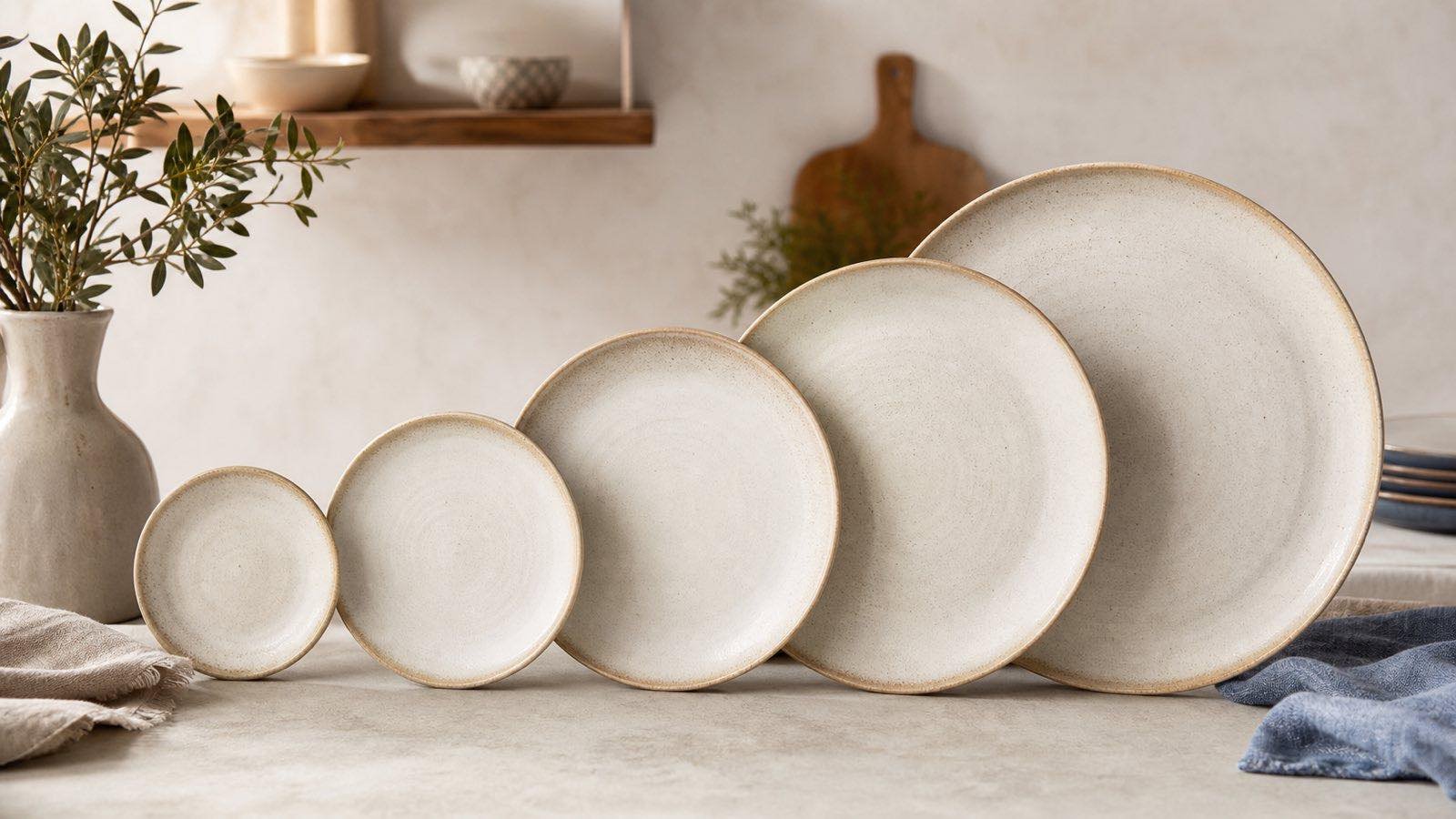
Plate diameter looks like a simple specification until two products with the same measurement perform very differently. Wholesale ceramic plate sizes must be considered alongside rim width, well depth, usable area, stack profile, serving style, and packing. This guide helps importers, retailers, restaurants, and hotels build practical plate specifications and a balanced assortment before requesting quotations.
How Ceramic Plate Sizes Are Measured
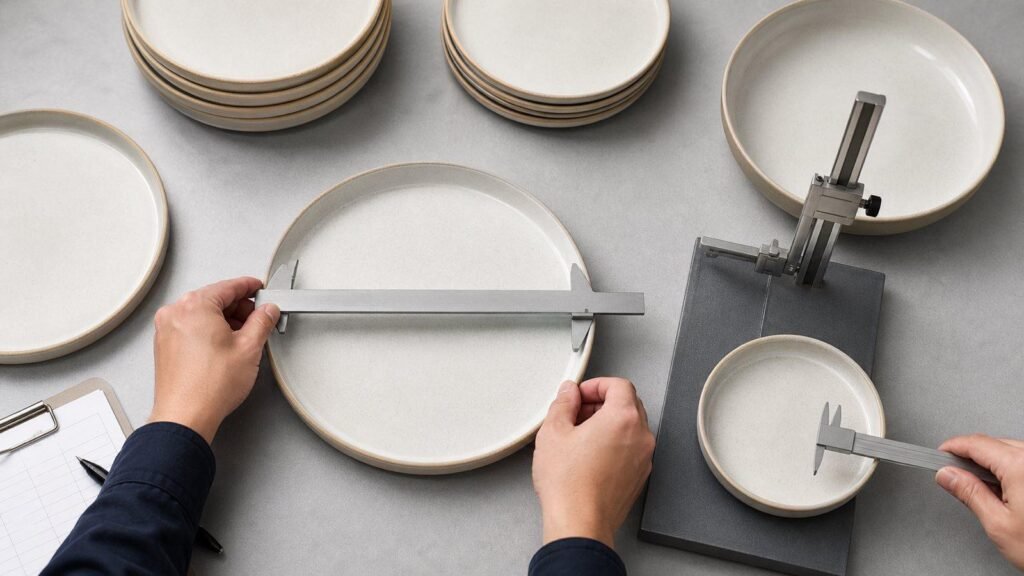
Suppliers usually state the maximum outside diameter of a round plate. For oval, rectangular, or irregular forms, record maximum length and width. These headline dimensions are essential, but they do not describe the complete serving area.
A 27 cm coupe plate may offer a broad uninterrupted surface, while a 27 cm wide-rim plate reserves more space for its rim and leaves a smaller center well. Both can be sold in the same nominal size category, yet they support different plating styles, food portions, shelves, and cartons.
Record at least:
- maximum diameter, or maximum length and width;
- overall height;
- internal well diameter or usable flat area;
- rim width and rim profile;
- foot-ring diameter and height;
- piece weight;
- stack height for a stated number of plates;
- pieces per inner pack and export carton;
- carton dimensions, net weight, and gross weight.
Use one measurement system consistently in the purchasing sheet. If a market sells plates in inches but a supplier works in millimeters, show both and identify which value controls approval. Since ceramic products can have controlled dimensional variation, state the agreed nominal measurement and acceptable tolerance rather than treating rounded inch conversions as exact.
Common Wholesale Ceramic Plate Size Ranges
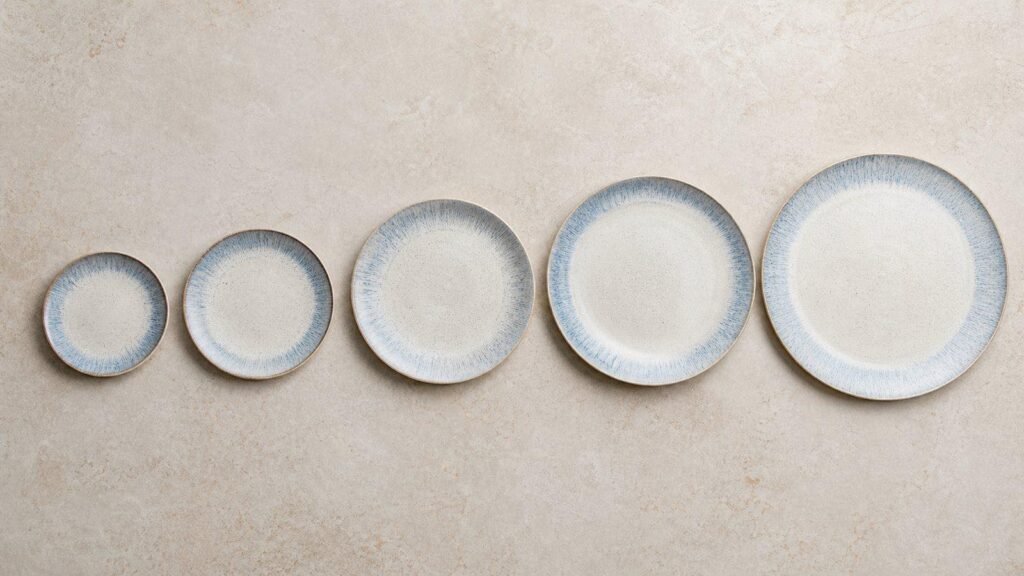
Plate roles overlap by market and menu, so the following ranges are planning references rather than universal rules. Confirm the actual design and customer use before assigning a product name.
| Plate type | Common approximate diameter | Typical role | Buyer consideration |
| Bread or side plate | 15–18 cm | Bread, small sides, snacks | Cup placement, small shelves, set count |
| Dessert plate | 18–21 cm | Cakes, starters, light meals | Usable area and fork space |
| Lunch or salad plate | 20–24 cm | Lunch, salads, casual meals | Portion strategy and set hierarchy |
| Dinner plate | 25–29 cm | Main courses and place settings | Table footprint, rack fit, carton weight |
| Large presentation plate | 29–33 cm | Plated presentation or shared food | Storage, handling, and usable center |
| Charger plate | 30–35 cm | Underplate and formal setting | Decoration, table spacing, care |
These measurements should not be used as promises about a particular item. A square plate may be listed by width, while its diagonal requires more carton and table space. An irregular organic plate needs a dimensioned drawing or a clearly photographed ruler reference.
Side Dessert and Salad Plates
Smaller plates often carry more roles than their names suggest. A retailer may use one 20 cm plate for desserts, breakfast, and light meals. A hotel may separate bread plates from dessert plates to support formal service. Define the application first, then choose the diameter and rim.
For boxed dinner sets, calculate whether the hierarchy is obvious. A 20 cm side plate paired with a 26 cm dinner plate creates a clearer visual step than two shapes separated by only a small amount. Also check whether smaller plates nest or stack safely without contacting decorated surfaces.
Dinner and Presentation Plates
Dinner plates commonly anchor the range and influence carton weight, shelf width, table capacity, and dishwasher rack fit. Increasing outside diameter does not always increase food capacity if the rim grows at the same time. Ask for the usable center measurement and test the intended portion.
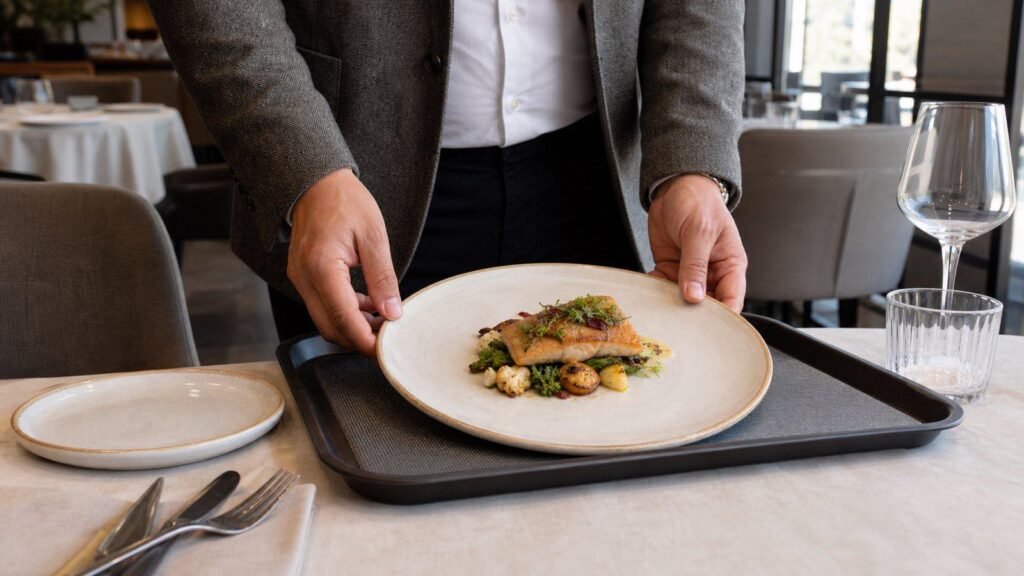
Presentation plates can create a premium visual effect, but large forms require more handling space. Review pass shelves, service trays, table settings, racks, and storage. A plate that photographs well may slow operations if it does not move smoothly through the customer’s workflow.
Browse ready stock ceramic tableware to compare coordinated plate, bowl, cup, and serving shapes rather than selecting diameter in isolation.
Choose Plate Dimensions for Retail and Foodservice
The right size depends on who buys the plate and how it will be used. A distributor serving several channels may need a compact core range plus selected alternatives rather than one large assortment.
Retail Dinnerware
Retail buyers should build an understandable size ladder. A core range might include a dinner plate, a smaller plate, and a bowl, with optional serving pieces. The exact mix should match local eating habits, cabinet sizes, dishwasher use, and target retail price.
Check how dimensions appear online and on packaging. List centimeters and inches where appropriate, but avoid converting rounded values into misleading precision. Product images should make scale clear, especially for wide-rim or irregular designs.
Boxed sets require quantity planning. Before choosing a 12-piece or 16-piece presentation, model which items customers actually replace or add. Open-stock availability and clear item codes can make a range easier for retailers to manage.
Restaurants and Catering
Foodservice buyers should start with the menu. Place a representative portion on the sample, including sauce, garnish, and required empty space. Measure the usable well rather than assuming outside diameter equals serving capacity.
Run the plate through the full operation:
- fit it on the kitchen pass and under heat equipment where applicable;
- place it on a loaded server tray;
- combine it with glassware, cutlery, and side plates on the table;
- clear and scrape it using the normal workflow;
- load it into the intended dishwasher rack;
- stack the working quantity on the actual shelf.
These checks reveal conflicts that a catalog measurement cannot. Wide shapes may reduce the number carried on a tray, and tall foot rings may increase stack height even when the plate diameter is compact.
Hotels and Banqueting
Hotels may need different plate families for restaurant service, breakfast, rooms, banquets, and events. Banqueting puts particular emphasis on tray density, fast setting, stable stacking, handling weight, and replacement consistency.
Compare the total weight of a working stack, not only one plate. A difference that feels minor in the showroom becomes meaningful when staff move many pieces. Record plates per stack and safe shelf capacity within the operator’s own procedures.
The wholesale ceramic dinnerware buying guide provides additional range, sampling, packing, and quotation considerations for complete assortments.
Compare Coupe Rimmed and Irregular Plate Shapes
Shape changes the relationship between outside size and usable area. It also affects handling, decoration, stack stability, and visual merchandising.
| Shape | Space characteristic | Useful for | Check before approval |
| Coupe | Broad surface with rising edge | Modern plating and versatile retail | Edge feel, sauce control, stacking |
| Wide rim | Defined center and framing rim | Formal presentation and classic service | Well diameter, rim contact, table space |
| Flat rimless | Large visual surface | Contemporary presentation | Spill control and edge handling |
| Square or rectangular | Strong visual geometry | Statement dishes and retail themes | Corner exposure, diagonal space |
| Oval | Long serving direction | Fish, shared food, platters | Maximum length and carton layout |
| Organic or irregular | Crafted visual character | Lifestyle ranges | Measurement method and variation limits |
Coupe plates are space-efficient on the visible surface, but buyers should test whether food or sauce remains comfortably contained. Wide-rim plates provide a framing area that chefs can use for presentation, yet the center well may be substantially smaller than the outside diameter suggests.
Square and irregular plates need special attention in logistics. The longest diagonal or protruding corner can control carton size. Corners may also be exposed during handling if the inner packing does not support them. Obtain packing photos and test representative cartons where the order volume justifies it.
Decoration must fit the shape. A border motif needs enough rim width and consistent placement; a central motif may be hidden by food. Reactive glazes can pool differently in deep wells and around irregular edges, so approve several representative pieces.
Plan a Commercial Plate Assortment
Begin with customer need, not the number of available designs. Define the target channel, price architecture, material direction, core color, and replacement strategy. Then assign each plate a clear role.
A practical assortment worksheet can include:
- item code and product photograph;
- customer-facing product name;
- outside and usable dimensions;
- height, foot, and stack data;
- weight and carton information;
- body, glaze, decoration, and care;
- current available quantity;
- target order quantity and pack multiple;
- sample approval status;
- approved alternative item.
For retail, map products to sets, shelf stories, and add-on purchases. For restaurants, map them to menu items and replacement demand. For distributors, calculate how many plate styles can be supported without fragmenting inventory across similar sizes.
Ready-stock buying can make mixed designs and faster range building possible, but available quantities should be confirmed at item level. Keep a first choice and an approved alternative for critical plate roles. Alternatives should match the important dimensions, finish, customer positioning, and carton plan rather than merely sharing a color.
Review the range visually. Place the dinner, side, dessert, and serving plates together with bowls, mugs, and cups. Confirm that scale, white tone or glaze color, rim language, and decoration form a coherent collection.
Verify Samples Packing and Quotations
Request labeled samples and compare several pieces where controlled ceramic variation matters. Measure them with the same method used in the specification. Photograph the measurement points, then retain approved references for inspection and receiving.
Check plate stability on a level surface, rim and foot finishing, stack contact, glaze coverage, decoration position, and coordination. Perform the intended food, utensil, washing, rack, shelf, and tray trials. Confirm exact care guidance for the item and decoration.
Packing data affects landed cost and handling. Ask for pieces per carton, separators or protective arrangement, carton dimensions, net and gross weights, and any retail-box specifications. Calculate cubic volume from outer carton dimensions and model both container space and weight constraints with the freight provider.
Normalize quotations before comparing them. Record currency, trade term, named place, price unit, quantity, packing included, payment terms, validity, current availability, and preparation schedule. A lower piece price can be offset by inefficient packing or an assortment that leaves unusable quantity imbalances.
Finally, include the destination market and customer channel in the inquiry. State required sizes, shapes, materials, glaze direction, quantities, packing, and timeline. This allows the supplier to propose relevant current options instead of sending an unstructured catalog.
Conclusion
Wholesale ceramic plate sizes should be specified through outside dimensions, usable area, rim, height, weight, stack profile, and packing—not diameter alone. Match every plate to a retail role, menu item, or operating workflow, and test representative samples in real conditions. Build a concise range with clear alternatives and compare quotations on equivalent terms. To receive current options, request a current plate quotation with your size plan, quantities, and destination.
FAQ
There is no single global standard. Many dinner plates fall approximately within 25–29 cm, but shape and rim width strongly affect usable area. Retail expectations, cuisine, portion style, racks, cabinets, and table size also differ. Buyers should specify outside diameter and usable center, then test the intended meal and operating equipment before approval.
The answer depends on the channel. A focused retail range may start with one dinner plate and one smaller plate, then add bowls and serving ware. Restaurants may need separate bread, starter, main, or presentation plates based on the menu. Each size should have a clear role; too many similar diameters can fragment inventory and confuse buyers.
Use the measurement system expected by the target customer and show both when it improves clarity. Identify the controlling specification, ideally in millimeters or another precise unit used with the supplier. Avoid presenting rounded conversions as exact values. Also state how irregular forms are measured and agree an acceptable dimensional tolerance for inspection.