

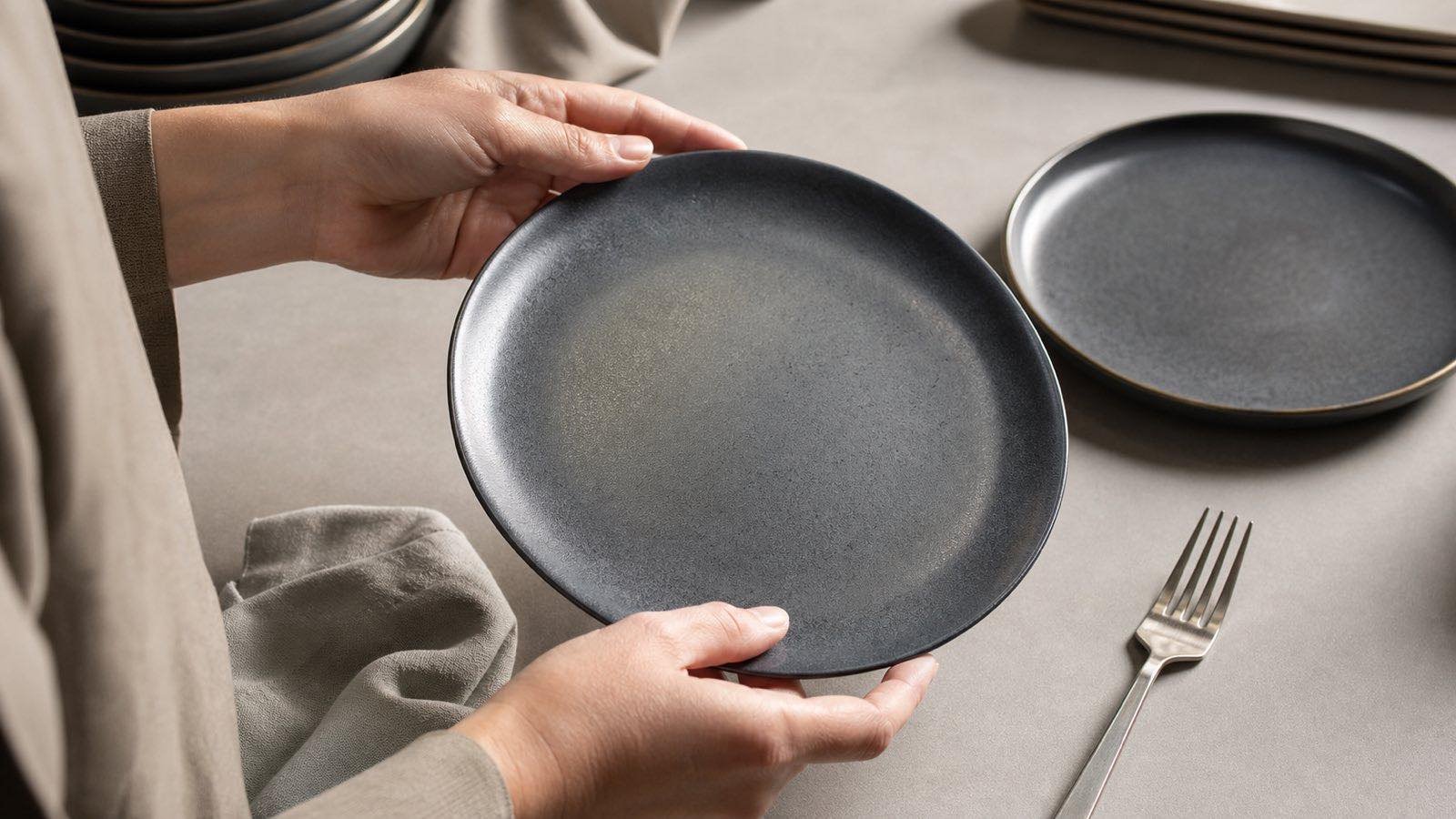
A glaze does far more than give a plate its color or shine. For wholesale buyers, understanding ceramic glaze types helps connect appearance with cleaning, utensil contact, handling, and long-term range performance. This guide explains the main glaze categories, the factors that influence tableware durability, and the practical sample checks buyers can use before approving dinnerware for retail or hospitality.
What a Ceramic Tableware Glaze Does
Ceramic glaze is a glass-like surface layer formed when a prepared coating is fired on a ceramic body. It can seal a porous body, create a cleanable food-contact surface, add color or texture, and support decorative effects. The final result depends on the glaze recipe, application, firing conditions, ceramic body, form, and quality control. A glaze name alone cannot guarantee performance.
Buyers should evaluate the body and glaze as one system. A hard-looking glossy surface cannot compensate for an unsuitable plate form, unstable foot, weak edge profile, or poorly matched firing process. Equally, a robust body can be commercially disappointing if the surface marks too easily or varies beyond the approved design standard.
A useful product specification records:
- body material and supplier item code;
- glaze color, finish, and intended variation;
- decorated and undecorated areas;
- diameter, height, capacity, and piece weight;
- care guidance for the exact design;
- intended retail, foodservice, or hospitality application;
- applicable documentation for the destination market.
This information gives inspection teams an observable reference. It also helps sales teams describe the product accurately without turning terms such as glossy, matte, or reactive into unsupported performance claims.
Common Ceramic Glaze Types and Surface Effects
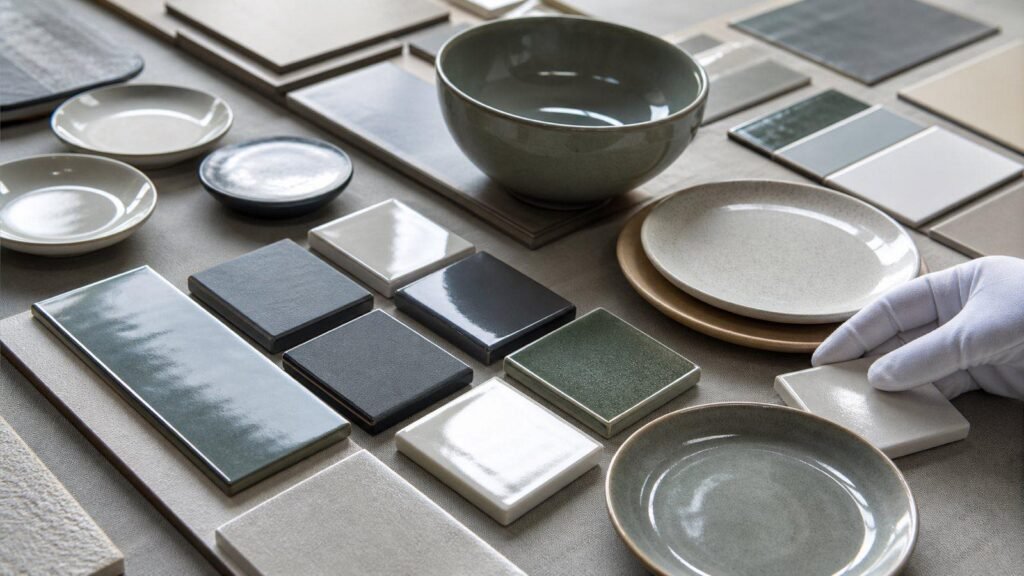
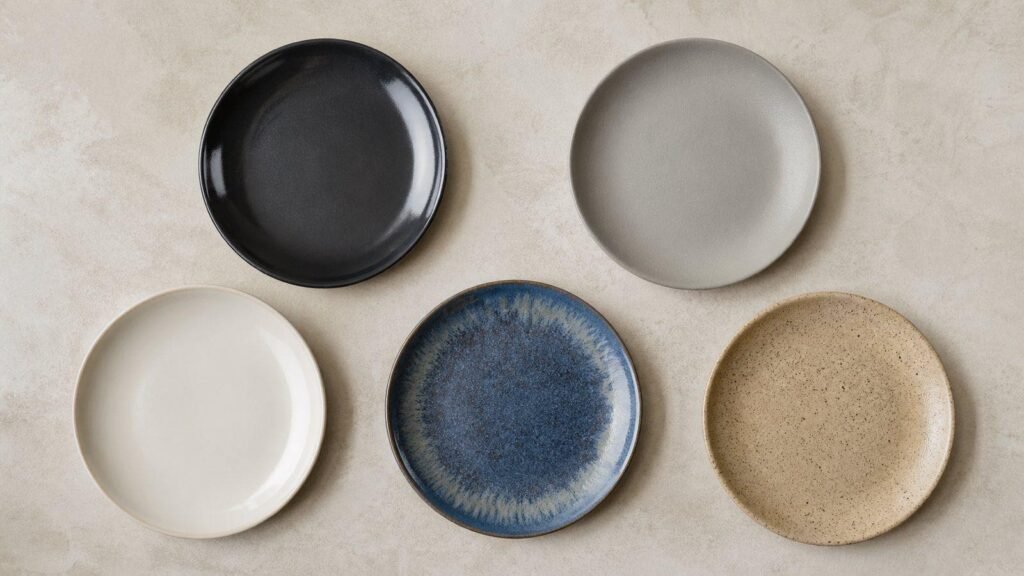
Commercial ceramic tableware uses many glaze formulations, but buyers usually encounter a smaller set of visible finish directions. Each can work well when the product is properly designed and suitable for its intended use.
Glossy Glazes
Glossy glaze reflects light clearly and often gives colors a bright, saturated appearance. Its smooth visual character suits classic white dinnerware, decorated porcelain, hotel plates, mugs, and broad retail collections. On dark glossy colors, fingerprints, water spots, and metal transfer can appear more visible even when the surface remains serviceable.
Inspect glossy pieces under angled light. Look for consistent coverage, clean rims, an appropriate foot finish, and a surface character that matches the approved sample. Small visual features associated with ceramic firing should be assessed against written acceptance criteria, not against an unrealistic expectation of machine-made uniformity.
Matte and Satin Glazes
Matte glazes diffuse light and create a soft, contemporary appearance. Satin finishes sit between high gloss and fully matte, providing a lower sheen with a smoother visual transition. Both are popular for modern restaurants and lifestyle retail ranges.
The buying issue is not that matte automatically means fragile. Rather, some dark or highly textured matte surfaces can make utensil traces, oils, or handling marks more noticeable. Buyers should run meal, washing, and stacking trials on the exact item. A sample viewed only on a display shelf does not show how the surface behaves during service.
Reactive and Variegated Glazes
Reactive glazes are selected for tonal movement, speckling, flowing edges, or color pooling. Firing and glaze interaction can make every piece visually individual. This variation is part of the design, but it still needs boundaries.
Approve a representative sample set instead of one especially attractive piece. Define acceptable light-to-dark range, rim effects, speckle distribution, and coordination across plates, bowls, and cups. Product photography should show natural variation so retailers and end users receive an accurate expectation.
Speckled Colored and Transparent Glazes
Speckled glazes add visible particles or contrasting marks to a base color. Colored glazes may be transparent, translucent, or opaque, depending on the formulation and body. A transparent glaze can reveal an underglaze pattern or the natural tone of the ceramic beneath it.
Evaluate color under consistent lighting and across multiple shapes. Glaze thickness and form can change how color gathers near rims, wells, handles, and relief details. Buyers assembling a coordinated range should compare the complete family rather than approving every shape separately.
| Glaze direction | Typical appearance | Commercial use | Primary buyer check |
| Glossy | Bright and reflective | Classic retail and hospitality ranges | Coverage, visible marking, consistency |
| Satin | Soft sheen | Transitional and modern collections | Touch, cleaning, color coordination |
| Matte | Low reflection and tactile | Contemporary restaurants and retail | Utensil and handling trials |
| Reactive | Tonal movement and variation | Statement collections | Approved variation range |
| Speckled | Contrasting flecks | Casual and natural themes | Distribution across shapes |
Browse ready stock ceramic tableware by complete design family, then compare glaze appearance on flat plates, deep bowls, curved cups, and serving pieces.
How Glaze Affects Tableware Durability
Tableware durability is a system-level result. The glaze influences surface behavior, but body composition, firing, thickness, edge geometry, foot design, decoration, washing, stacking, and use conditions also matter. Buyers should therefore avoid ranking glaze types with a simple strongest-to-weakest list.
Surface Wear and Utensil Contact
Cutlery can leave gray-looking traces on some glazed surfaces. These may be metal transfer rather than scratches in the glaze. Visibility depends on glaze color, texture, hardness, utensil material, pressure, and cleaning method. Dark matte plates may show a trace that would be difficult to notice on a light glossy plate.
Run a controlled dining trial using the intended knives, forks, foods, and cleaning process. Examine the plate before and after washing under the same light. Record whether marks clean off and whether the visual result remains suitable for the customer’s service standard.
Chipping and Edge Performance
Glaze does not independently determine chip resistance. Plate thickness, rim profile, body strength, thermal history, handling, and the way pieces contact one another all contribute. Rolled or reinforced-looking rims may support demanding service, while fine profiles may better suit premium presentation. Neither should be approved without physical trials.
Check the entire circumference, foot ring, handle joints, and contact points in a working stack. Simulate loading racks, clearing tables, shelving, and carton handling. A plate that feels solid individually may still contact the next plate at a vulnerable glazed edge.
Thermal and Cleaning Conditions
Rapid temperature changes can stress ceramic ware. Microwave, oven, freezer, and dishwasher suitability should be confirmed for the exact item and decoration rather than inferred from glaze appearance. Metallic decoration, special effects, or mixed-material attachments can change care guidance.
Foodservice buyers should test the actual dishwasher chemistry, water temperature, rack, and cycle frequency. Retail buyers should request clear consumer care instructions. Harsh abrasives or inappropriate cleaning tools may alter the visible finish even when the piece remains structurally intact.
Glaze Fit and Crazing
Crazing appears as a network of fine lines in a glaze. It can be intentional in decorative ware, but unintended crazing on food-contact tableware requires careful evaluation. Glaze and body expand and contract during firing and later temperature changes; compatibility between them is important.
Do not diagnose glaze fit from a photograph alone. Isolate affected samples, document when the lines appeared, and ask the supplier or a qualified testing provider to investigate. Acceptance requirements should state whether a crackle effect is intentional and where it may be used.
Test Glazed Tableware Before a Wholesale Order
A repeatable sample plan turns subjective finish preferences into purchasing evidence. Request several pieces from the intended supply, label every item, and retain an approved reference. If multiple colors or shapes are involved, sample the range rather than assuming one plate represents every item.
Use this sequence:
- Confirm item codes, body description, glaze finish, dimensions, and stated care.
- View dry, clean pieces in daylight and the customer’s normal interior lighting.
- Compare color and variation across at least several representative pieces.
- Check stability, rim feel, foot finishing, stacking contact, and handle comfort.
- Serve representative foods and beverages with the intended utensils.
- Wash pieces using the planned process and inspect them again when fully dry.
- Repeat practical cycles when the application involves frequent foodservice use.
- Photograph approved variation and record any unacceptable conditions.
- Review inner packing, carton count, dimensions, and gross weight.
- Confirm applicable documentation and care wording for the destination market.
For mugs and cups, inspect glaze coverage around the handle, inner base, rim, and foot. Compare options from the wholesale ceramic mugs category and test them filled, not empty. Balance and handle comfort can matter as much as the finish.
Written acceptance criteria should distinguish functional concerns from deliberate aesthetic variation. For a reactive collection, for example, specify an approved visual range rather than demanding identical pieces. For a glossy white hotel plate, the specification may place more emphasis on consistent tone, smooth cleaning, stacking, and replacement matching.
Match Glaze Choice to the Sales Channel
Retail collections need a clear visual story and realistic customer communication. Glossy white and softly colored glazes can create dependable core ranges, while matte, reactive, or speckled finishes can supply seasonal or statement options. Packaging photography should represent the actual finish and the expected degree of variation.
Restaurants should balance presentation with operations. Ask how plates move through kitchen passes, tables, clearing stations, dishwashers, racks, and storage. A visually dramatic surface may be a strong menu fit when the operator accepts its care and variation. A simpler glaze may be more practical where rapid replacement matching is essential.
Hotels and catering businesses often manage larger working quantities. Stack height, rack fit, piece weight, edge contact, and availability of core shapes deserve special attention. Buyers can combine a versatile foundation range with selected accent pieces instead of applying one glaze direction to every service item.
Distributors should also plan substitutions. Ready-stock availability can change, so define acceptable alternatives by body, color family, finish, size, shape, and target price band. Keep approved photography and sample records attached to the assortment sheet.
Finally, compare quotations on equivalent terms. Confirm whether decoration and packing are included, the trade term and named place, quantity by item, current availability, sample status, and preparation schedule. Glaze appearance attracts the customer, but a coherent specification protects the transaction.
Conclusion
Ceramic glaze types shape the appearance, cleaning experience, variation, and visible wear of tableware, but they do not determine durability by themselves. Evaluate glaze, body, form, decoration, stacking, care, and intended use as one system. Approve representative samples and record practical acceptance limits before ordering. To discuss available finishes for your market, contact our ceramic tableware team with your required shapes, quantities, and sales channel.
FAQ
No glaze category is automatically the most durable in every product. Performance depends on the glaze and body match, firing, form, edge profile, decoration, cleaning, and use conditions. Compare finished samples made for the same application. Practical utensil, washing, stacking, and handling trials provide more useful evidence than choosing only by labels such as glossy or matte.
Matte glaze does not necessarily scratch more easily, but some matte colors and textures can make metal transfer or handling traces more visible. Test the exact plate with the intended utensils and washing method, then determine whether marks clean away. Buyers should also inspect several pieces because surface texture and color can influence the visual result.
Review a representative group of pieces across all planned shapes, not a single sample. Photograph acceptable light and dark limits, speckling, pooling, rim effects, and coordination. Attach these references to the specification and inspection instructions. Retail photography and product descriptions should also show that controlled variation is an intended feature of the reactive glaze design.