

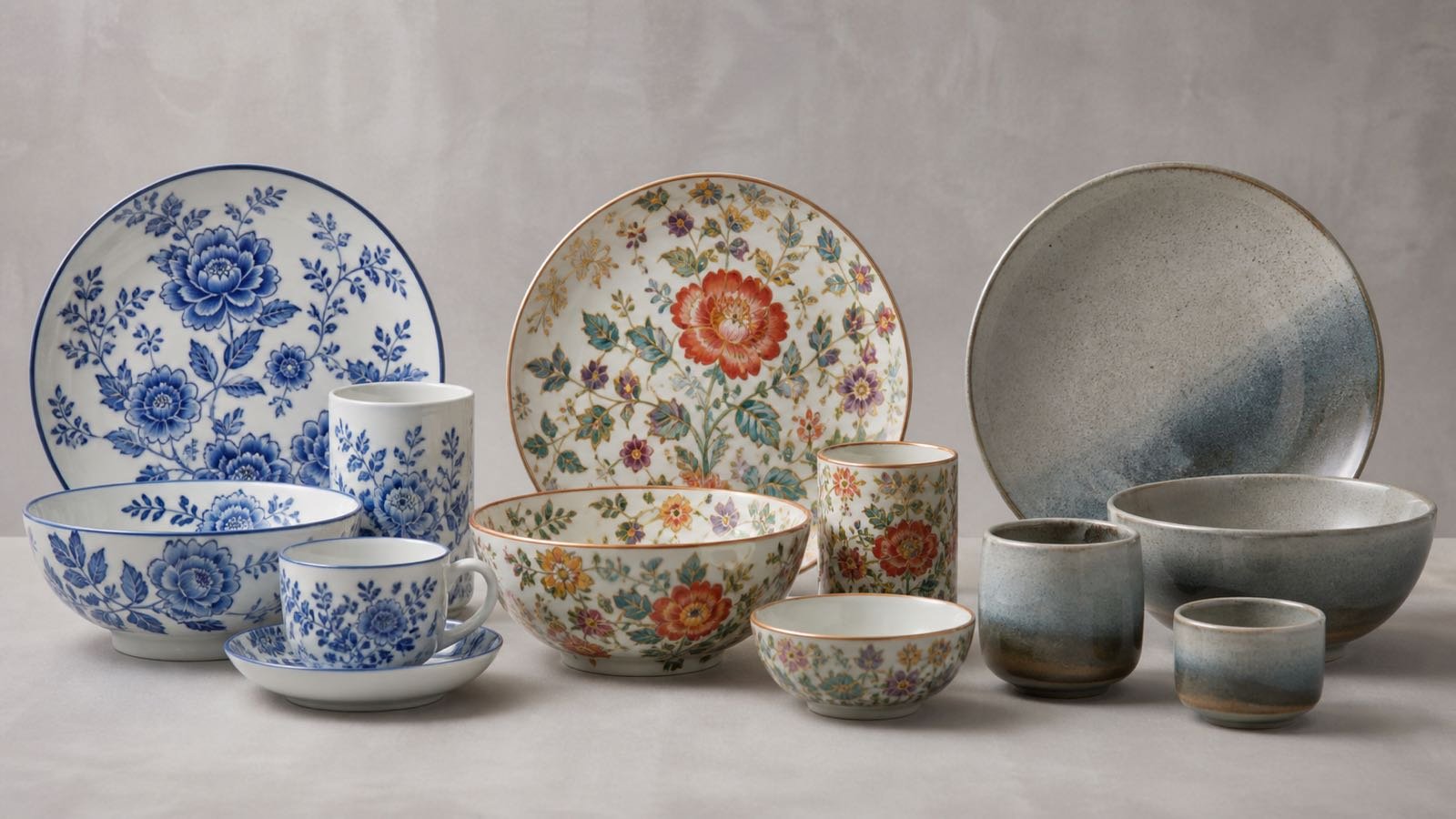
Decoration changes more than the appearance of a plate or cup. The position of color relative to the glaze can influence surface feel, visual detail, care instructions, and suitability for a buyer’s channel. This guide compares three broad ceramic tableware decoration approaches—underglaze, overglaze, and inglaze—and gives wholesale buyers a practical framework for samples, specifications, testing, and inspection.
Understand Where Ceramic Tableware Decoration Sits
Glaze forms a glass-like surface on a fired ceramic body. Decorative color may be placed beneath that glaze layer, on top of a previously fired glaze, or fired so that it becomes integrated into the glaze surface. These broad positions are the basis of the terms underglaze, overglaze, and inglaze.
The names describe process relationships, not one universal performance level. Results depend on the ceramic body, glaze, color system, firing schedule, application method, design coverage, shape, and quality control. Two products using the same broad decoration category can look and behave differently.
Buyers should therefore ask for the decoration type together with a physical sample and product-specific evidence. Record the item code, body, glaze, color, application method where known, intended use, care statement, destination, and applicable testing. The ceramic glaze types guide provides additional context for comparing the underlying surface.
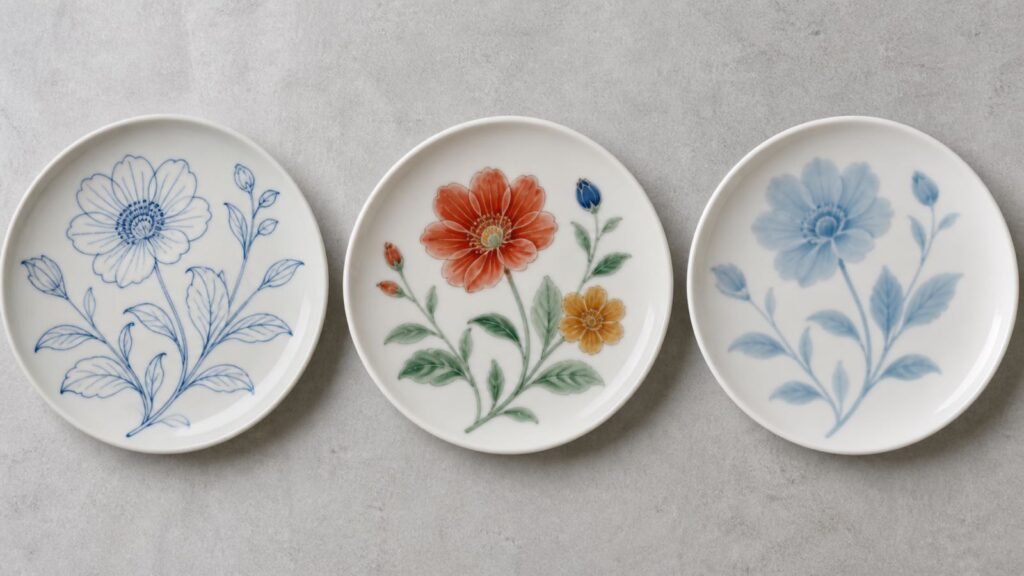
Examine decoration under neutral lighting and at normal viewing distance. Then inspect edges, curves, handles, rims, wells, and stacking contact points more closely. Color density, line definition, texture, and alignment can change across these areas even on one item.
Compare Underglaze Decoration
Underglaze color is applied before the covering glaze is fired. The decoration is viewed through the glaze layer, so the finished surface usually feels continuous where the glaze covers it. This approach is familiar in blue-and-white motifs, line work, painted effects, and many contemporary patterns, although available colors and appearance depend on the materials and firing system.
Because the image sits beneath the glaze, it is physically separated from direct surface contact when the glaze is complete and properly fired. However, that position alone does not prove resistance to every detergent, utensil, temperature, or long-term use condition. Glaze fit, firing, body, edge treatment, and the actual product remain important.
Underglaze designs can show soft interaction with the glaze, especially where application or firing creates tonal variation. Fine lines may appear crisp on one system and slightly diffused on another. Buyers should approve the real product rather than assume that artwork on a screen will reproduce exactly.
What Buyers Should Check on Underglaze Items
Review color density, missing areas, smudging, line continuity, motif position, and consistency between pieces. Inspect whether the covering glaze is smooth and complete over decorated food-contact areas. Check pinholes, crawling, cracks, inclusions, exposed body, and unintended color bleeding.
For intentionally varied brushwork or reactive effects, approve a visual range rather than one ideal sample. A set of light, medium, and dark references can define commercial boundaries more clearly than descriptive words such as natural or handmade.
Underglaze can be a practical option for repeated-use programs when the complete product meets the buyer’s requirements, but buyers should avoid treating the category name as a durability guarantee. Validate the intended dishwasher, microwave, hospitality, or retail claims with appropriate evidence.
Compare Overglaze Decoration
Overglaze decoration is applied onto an already glazed and fired surface, followed by an additional firing at a temperature suited to the decoration system. Since the decorative layer sits on the glaze surface, it can support detailed images, varied color palettes, luster effects, and metallic accents that may not be produced in the same way at higher glaze-firing temperatures.
The surface position also means that application thickness, adhesion, edge definition, abrasion, detergent exposure, and care conditions deserve attention. Some overglaze products are designed for regular table use, while specialized metallic or luster decorations may carry restrictions. The correct care statement must come from the exact product and decoration, not from the word overglaze alone.
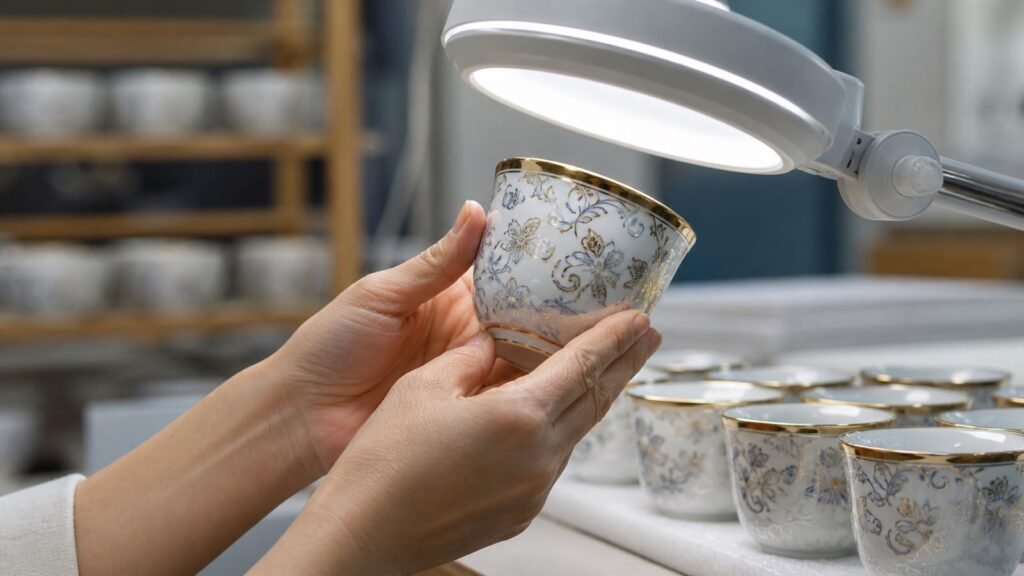
Run a fingertip carefully across a sample. Some decoration may be perceptible as a slight surface change; the accepted feel should be consistent and free of sharp or loose areas. Examine motif edges on curves and around handles, where transfers or other applications may distort or join.
What Buyers Should Check on Overglaze Items
Compare color, registration, position, opacity, line quality, joins, and surface cleanliness with the approved sample. Look for scratches, missing sections, unintended overlap, trapped particles, rough edges, and decoration too close to functional contact points.
Map where utensils, stacking feet, racks, lids, and hands contact the item. Decorative placement can be adjusted to reduce repeated abrasion in some designs. When decoration enters a food-contact or drinking area, confirm that the product and market requirements have been specifically addressed.
Do not assume that every bright color, gold-tone line, or metallic-looking accent has the same composition or care needs. Request accurate declarations and relevant reports for the specific item. If microwave or dishwasher use matters, require an explicit, substantiated statement and test the intended operating conditions.
Compare Inglaze Decoration
Inglaze decoration is fired so that the color becomes embedded in or integrated with the glaze surface rather than remaining clearly above it. It is often selected when buyers want detailed decoration with a smoother surface relationship and suitable resistance for the intended program. Actual results still depend on the color system, firing, glaze, and ceramic body.
The boundary between process labels may be described differently across suppliers and technical traditions. Buyers should not settle a purchasing decision through terminology alone. Ask how the offered product is made, what care and use claims apply, and which evidence covers the specific model.
On samples, compare surface continuity and image definition. Check whether colors have shifted, spread, faded, or reacted during firing. A color shown in artwork may change after it interacts with the glaze and firing atmosphere, so approve fired samples under controlled lighting.
Inglaze decoration may suit hospitality and repeated-use concepts when the full product is validated, but the label is not a substitute for testing. Dishwashing chemistry, rack contact, cutlery, stacking, and thermal conditions should reflect the buyer’s real environment.
| Decoration position | Typical visual or surface relationship | Key buyer checks |
| Underglaze | Color viewed through covering glaze | Glaze coverage color spread and visual range |
| Overglaze | Detail applied on fired glaze surface | Adhesion abrasion contact points and care |
| Inglaze | Color integrated into glaze surface | Fired color definition surface and validation |
Match Decoration to Product and Sales Channel
Begin with the channel rather than a preferred process name. A retail gift set may prioritize detailed color, coordinated presentation, and packaging. A restaurant program may prioritize repeat washing, stack contact, replacement consistency, and clear care instructions. A distributor may need several price and style positions across one assortment.
Consider the food and beverage presentation. Decoration near the rim can frame a dish, while a motif in the well may be hidden during service and revealed afterward. Dark, complex, or reflective surfaces affect food contrast differently under store, restaurant, or home lighting. Photograph samples with representative food where appropriate.
Review the complete set. The same artwork may need changes across flat plates, deep bowls, cups, saucers, and irregular shapes. Define scale, orientation, distance from edges, handle relationship, and which parts of the motif may be cropped or joined.
Ready stock can provide a faster path to decorated assortments because fired samples and current products can be reviewed directly. Nevertheless, ready stock ceramic tableware should be confirmed by exact item code, current quantity, carton multiple, design, color, and finish for every order.
Build a Decoration Specification
Include an approved fired sample, artwork revision, item code, ceramic body, glaze, decoration type, color references where necessary, motif dimensions, position tolerances, orientation, acceptable variation, care instructions, packing, and inspection criteria. Photographs should supplement, not replace, the physical standard.
If exact visual matching is essential, define the viewing conditions and reference. Digital screens and printed paper do not reproduce fired ceramic color reliably. A physical limit range may be more useful for colors that naturally vary through application and firing.
Test Safety Durability and Care Claims
Food-contact and labeling obligations vary by destination, material, decoration, use, and sales channel. Buyers should identify current requirements with qualified advisers and request evidence linked to the exact ceramic body, glaze, decoration, model, and intended market. A report for a plain item should not automatically be applied to a decorated version.
Testing should follow the commercial claim and risk. Relevant evaluation may include chemical resistance, dishwasher exposure, microwave suitability, abrasion, utensil contact, thermal use, or other customer-specific protocols. The appropriate method, laboratory, sample, and acceptance criteria depend on the market and intended use.
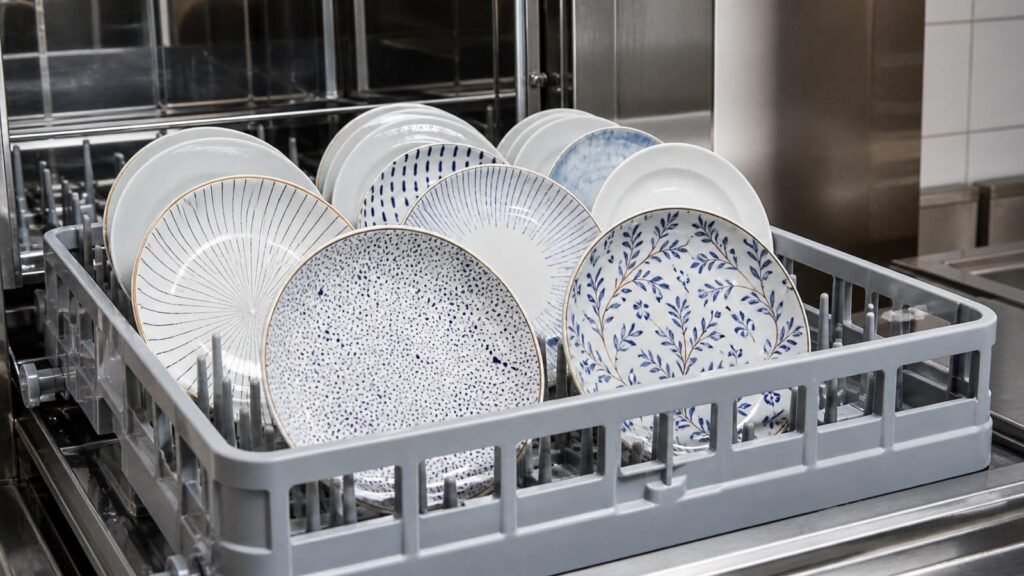
Simulated use can reveal immediate issues even when it does not prove an entire service life. Wash samples using the intended machine, detergent, water, temperature, rack, and cycle. Inspect at planned intervals under consistent lighting, comparing them with an untested reference. Record changes in gloss, color, line definition, adhesion, roughness, staining, or surface damage.
Metallic decorations require particular care in claims because conductive materials may be incompatible with microwave use. Do not rely on appearance to identify composition. Obtain a product-specific statement and communicate care instructions through packaging, product information, and customer training where relevant.
Inspect and Pack Decorated Ceramic Tableware
Turn the approved decoration into observable inspection criteria. Define critical, major, and minor issues; motif position; color range; missing or extra decoration; scratches; smudges; joins; surface feel; and the permitted frequency or size of cosmetic variation. Link criteria to clear photographs and samples.
Inspect several pieces together because set consistency matters. Arrange plates in the same orientation, line up cups by handle, and compare patterns across shapes. Check the top, side, underside, rim, foot, handle, and all contact areas. Verify item codes and carton labels so similar designs are not mixed.
Packing must prevent decorated surfaces from rubbing against rough feet, rims, handles, or separators. Review sleeves, tissue, dividers, nesting, stack pressure, carton strength, pieces per carton, dimensions, and gross weight. Assemble a complete carton with the actual products and inspect how pieces move during normal handling.
At receiving, compare item identity, carton condition, quantity, decoration, and packing with the approved record. Track findings by item and carton. This evidence supports decisions on future selection, inspection, packing, and replenishment.
Conclusion
Underglaze, overglaze, and inglaze describe where decoration relates to the glaze, but they do not determine quality on their own. Wholesale buyers should compare fired samples, surface relationships, visual ranges, contact points, care needs, product-specific evidence, and real-use performance. A clear decoration specification and inspection plan make appearance and function easier to control. Browse current designs or request current decorated tableware options with your market, product list, quantities, and use requirements.
FAQ
No single category is automatically the most durable in every product and use environment. Performance depends on the body, glaze, color system, firing, application, design placement, washing, stacking, and care. Compare product-specific evidence and representative samples under the intended use conditions rather than choosing solely from the labels underglaze, overglaze, or inglaze.
Some overglaze products may be suitable for dishwasher use, while specialized colors, lusters, or metallic details may require different care. Buyers should obtain an explicit statement for the exact product and test the intended machine, detergent, water, rack, temperature, and cycle. General decoration terminology is not enough to support a dishwasher claim.
Review multiple fired samples under consistent neutral lighting and define an acceptable physical range. Record artwork, item code, motif position, viewing conditions, and representative light, medium, or dark limits where variation is intentional. Use photographs for communication, but retain fired references because screens and printed paper can change the perceived ceramic color.