

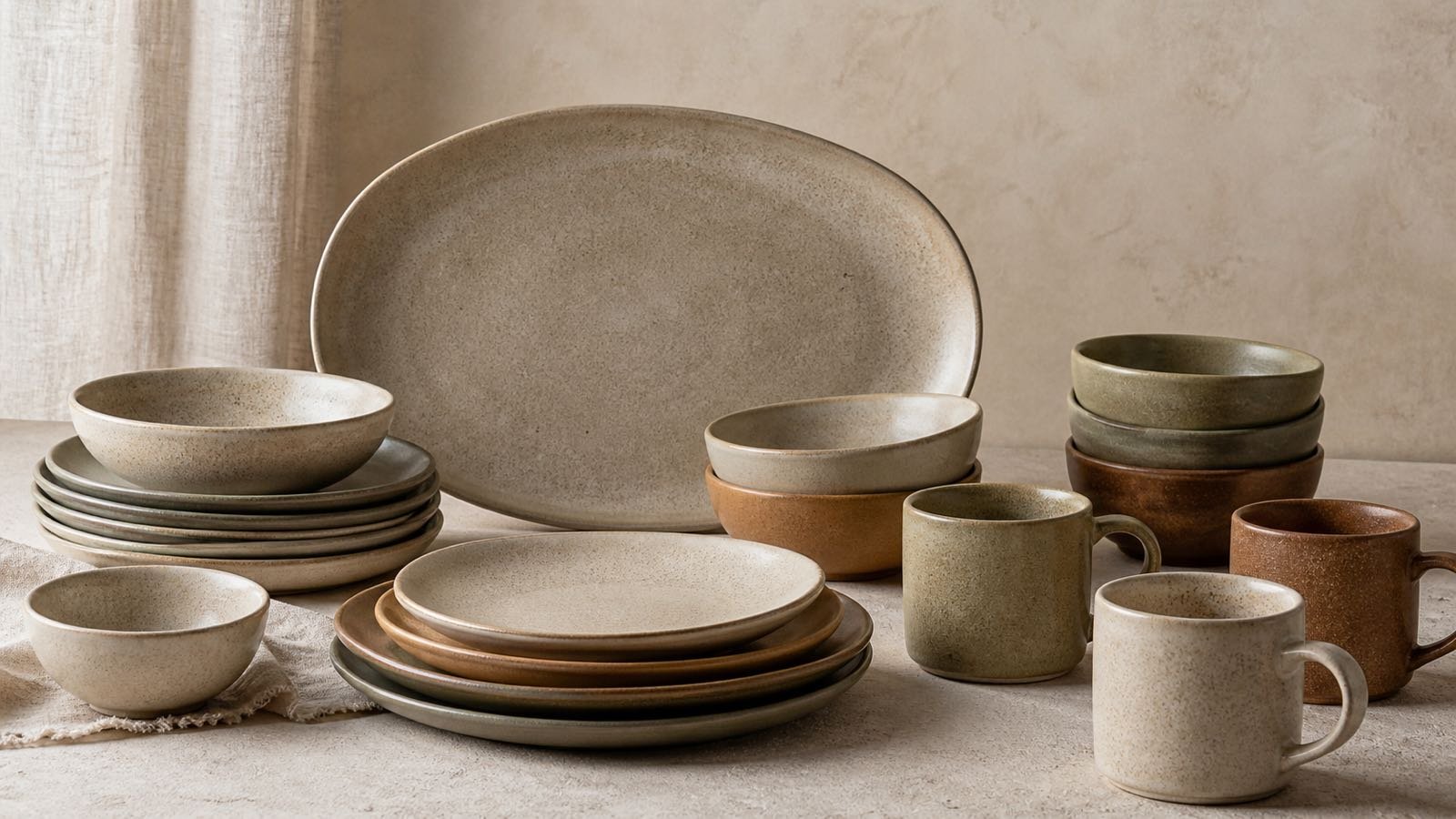
Earth tone ceramic tableware can give a retail collection warmth and visual continuity, but a commercially sound range requires more than choosing attractive brown or beige glazes. Retail buyers must compare undertones, finish variation, shape coverage, shelf presentation, packing, and available quantities. This guide provides a practical framework for building an earth-inspired assortment that is coordinated, understandable to customers, and suitable for repeatable wholesale purchasing.
Define an Earth Tone Ceramic Tableware Palette
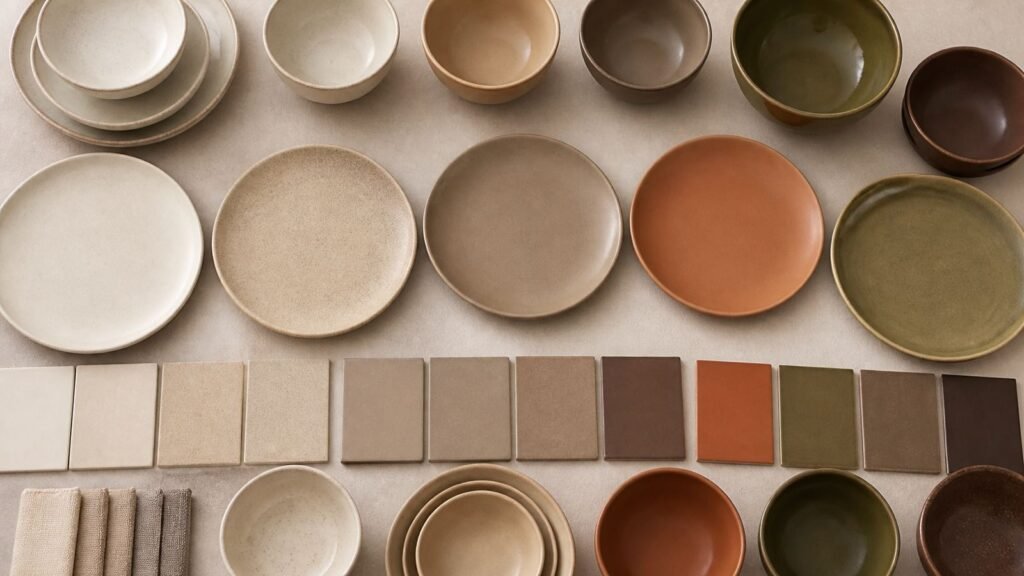
Earth tones include warm white, sand, oatmeal, taupe, terracotta, clay brown, olive, and muted mineral shades. Start with one or two core neutrals, then add a darker supporting tone and a restrained accent. Compare every sample under daylight and the lighting used in the target store because warm and cool undertones can look mismatched even when both products are described as beige. Photograph the approved pieces together and record item codes, glaze names, and acceptable color limits. A palette board prevents purchasing teams from treating descriptive
color names as precise specifications. It also helps e-commerce teams maintain consistent photography and lets sales staff explain intentional variation clearly.
Evaluate Glazes Texture and Acceptable Variation
Earth-inspired ranges often use matte, satin, speckled, reactive, or subtly variegated glazes. These finishes create depth, yet they must be evaluated on several pieces rather than one ideal sample. Ask for representative light and dark examples and inspect the rim, center, foot, and textured areas. Check for stability, clean foot finishing, easy cleaning, and a comfortable hand feel. Run utensil-contact and normal washing trials appropriate to the intended use. Variation should be described in objective terms and shown in product images so customers
understand the visual character before purchase. Retailers should distinguish intentional glaze movement from unacceptable damage or inconsistent workmanship.
Select Shapes That Build a Usable Retail Range
Build the assortment around recognizable eating occasions. A dinner plate, side plate, cereal bowl, mug, and one serving item create a clear foundation. Coupe plates and low bowls suit relaxed contemporary presentation, while softly irregular rims reinforce a handmade visual character. Measure usable area, capacity, piece weight, stack height, and shelf footprint instead of relying on nominal product names. A dramatic bowl that consumes too much shelf space or a mug that cannot sit securely in a gift box may weaken the range. Browse our ready stock ceramic tableware to compare coordinated shapes and available designs.

| Decision area | Buyer action | Record to keep |
| Product fit | Match items to customer and occasion | Range brief and item matrix |
| Quality | Approve representative samples | Specification and approval photos |
| Quantity | Convert cartons into selling units | Quantity plan and alternatives |
| Logistics | Compare packing and shipment inputs | Landed cost worksheet |
Use Samples and Specifications to Control Quality
A photograph and product name are not enough for approval. Request representative samples and record material, dimensions, weight, capacity, glaze and decoration, foot finish, stability, stack height, and packing. Review several pieces when color or reactive glaze variation is part of the design. Test products in conditions relevant to the customer: shelf display, food presentation, tray and rack fit, ordinary washing, and handling. Keep the approved sample and dated images as references. Agree on inspection scope and acceptable limits before shipment.
This process protects both urgent stock purchases and longer programs without confusing speed with reduced control.
Plan Quantities Displays and Buying Decisions
Assign every item a role: core volume, supporting color, accent, or serving piece. Give deeper quantities to the shapes that customers replace or combine most often. Convert order quantities into complete place settings and display stories before approving the purchase; this reveals imbalances that piece totals conceal. Confirm pack multiples, carton dimensions, gross weight, labeling, and the available preparation schedule. Test a small shelf plan or online collection page using actual dimensions and images. Ready-stock availability may change, so define acceptable alternatives by material, size, color family, finish, and price position rather than selecting unrelated items simply to complete an order.

Calculate Landed Cost on a Comparable Basis
A useful buying decision compares like with like. Record the currency, trade term, named place, price unit, packing included, payment terms, quotation validity, available quantity, carton dimensions, gross weight, and expected preparation date. Then add inspection, inland transport where applicable, freight, insurance, duties, taxes, destination handling, warehousing, financing, and a reasonable allowance for loss. Divide total cost by the expected saleable units, not simply the ordered pieces. Scenario planning for freight and quantity changes helps the distributor understand which items remain commercially workable before committing cash and warehouse space.
Prepare Packing and Product Information Early
Packing is part of the product plan, not a final administrative detail. Confirm the inner pack, dividers, retail box where required, master carton quantity, carton dimensions, gross weight, shipping marks, barcodes, and language needs. Check how rims, handles, feet, and raised decoration contact adjacent pieces. A larger carton may reduce carton count but become difficult to lift, store, or pick. Product information should use the same item codes and measurements as the commercial documents. Provide accurate dimensions, capacities, material descriptions, set contents, care guidance, and variation notes. Consistent data reduces questions from sales teams and customers and prevents a visual range from becoming operationally confusing.
Retailer Checklist Before Confirming an Order
Use a written approval checklist across merchandising, quality, logistics, and sales. Confirm the target customer, retail price position, approved color range, dimensions, capacities, glaze character, sample limits, assortment ratios, packing, and labeling. Compare quotations on the same trade term, named place, currency, price unit, and packing basis. Keep an approved sample and a dated photo record. Ask the supplier to reconfirm current quantities shortly before order confirmation. Finally, prepare accurate customer-facing copy that explains color variation, care, dimensions, and set contents without making unsupported performance claims. For a current selection matched to your range plan, contact our wholesale team.
Create an Approval Record and Alternative Plan
Use one controlled order sheet rather than decisions scattered across messages. List the approved item code, photograph, specification, quantity, unit, packing, price basis, availability date, and responsible approver. Mark unresolved points and do not treat silence as approval. For each commercially important item, define whether substitution is allowed and what an acceptable alternative must preserve. Material, function, dimensions, capacity, color family, finish, quality expectation, price position, and packing compatibility may all matter. When availability changes, evaluate the alternative against the written rule and the overall range, then update every affected sales and logistics record. This disciplined process supports flexibility without losing assortment coherence.
Turn the Range into a Clear Sales Tool
A wholesale range is easier to sell when commercial information is organized before launch. Prepare a concise line sheet with one consistent photograph, item code, material, dimensions, capacity where relevant, color and finish description, packing quantity, order unit, current availability note, and price basis for every product. Group items by eating occasion or coordinated family instead of presenting an undifferentiated file of images. Explain which pieces are core items and which are optional accents. Sales teams should know the approved variation, the valid alternative, and the date on which availability was checked. For digital catalogs, use honest color, show scale, and state whether products are sold individually, by set, by inner pack, or by carton. Collect questions from buyers because repeated uncertainty often reveals missing specifications or a weak assortment decision. After launch, record quotations, sample requests, orders, reasons for rejection, returns, and product feedback. These observations are more useful than general assumptions when deciding whether to deepen, adjust, or retire a line. Review the range on a defined schedule, but allow an immediate review if availability, freight, quality findings, or customer requirements change materially.
Conclusion
Earth tone ceramic tableware is most effective when selection, quality approval, quantities, packing, and logistics are planned together. Give every item a clear commercial role, compare quotations on the same basis, and confirm current availability before commitment. Keep written specifications and realistic alternatives so faster sourcing does not create avoidable risk. Browse our ceramic tableware buying resources or contact our wholesale team to discuss a current wholesale requirement.
FAQ
Warm white, sand, oatmeal, taupe, and muted clay shades usually provide a flexible foundation because they coordinate with wood, linen, and many food colors. The exact undertone still matters. Compare samples together under the intended store lighting, then introduce olive, rust, or dark brown through selected accent pieces rather than dividing stock evenly across too many colors.
Use clear product photography showing several representative pieces and describe the expected variation in tone, speckling, and glaze movement. Approve a reasonable visual range with the supplier instead of relying on one sample. Staff and product pages should explain that controlled variation is part of the design while still giving customers accurate dimensions, set contents, care guidance, and return information.
Begin with high-use shapes such as dinner plates, side plates, bowls, and mugs, then add one serving piece or accent shape. Keep the core palette narrow and verify that dimensions, stackability, packing, and available quantities fit the retail plan. Expanding later is easier when the first assortment has a coherent scale, clear customer use, and documented alternatives.