

Social platforms can move a table setting from a niche visual idea to a familiar retail reference in a short time. Ceramic tableware design trends now travel through restaurant videos, home styling posts, recipe content, and product photography, but visibility does not guarantee sustained demand. Wholesale buyers need a disciplined way to separate useful design signals from short-lived novelty. This guide turns online observation into practical decisions about color, shape, finish, assortment depth, and testing.
How Social Media Changes Tableware Discovery
Short videos and image-led feeds present tableware in context: food is plated, a shelf is styled, or a café table is assembled. This makes color and silhouette easy to notice, while technical details such as dimensions, glaze limits, stackability, and carton efficiency remain hidden. Repetition can also create a false sense that a style is universal when it may be concentrated in one audience or region. Buyers should record the source, date, customer segment, and recurring design feature rather than simply saving attractive images. Look for patterns across independent creators, retailers, hospitality accounts, and customer questions. Treat engagement as an observation, not a sales forecast.

Design Features That Perform Well on Camera
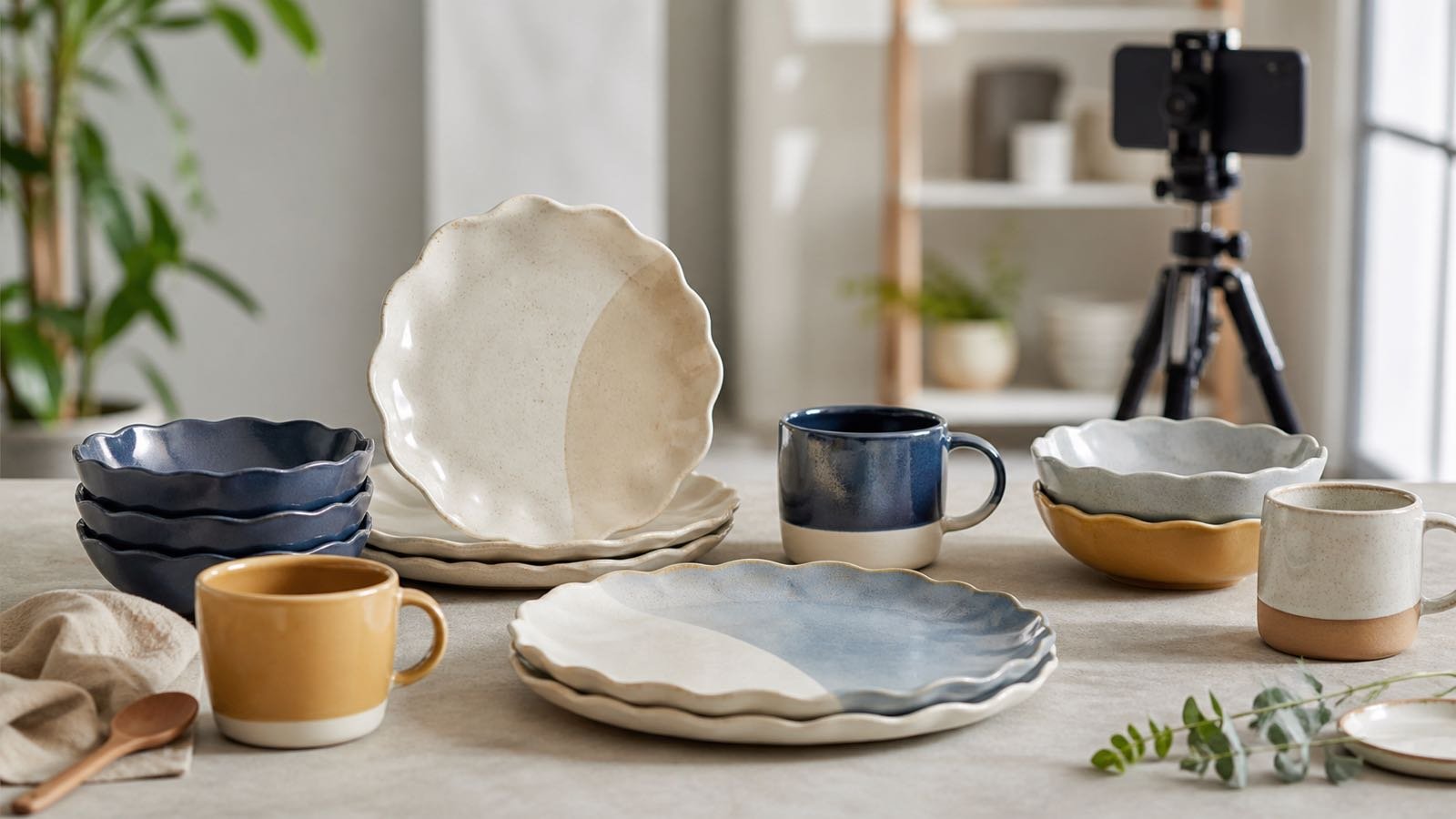
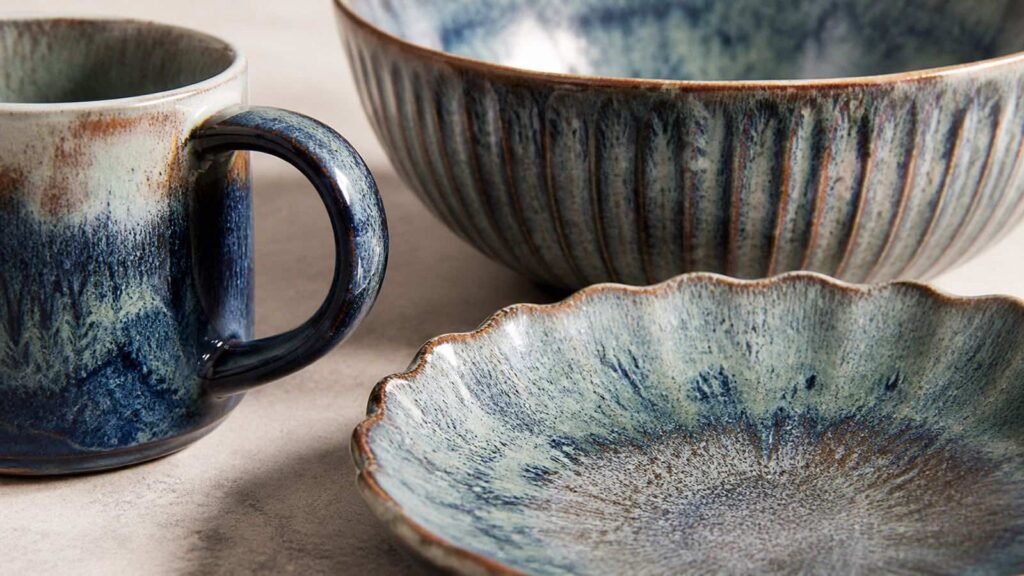
Tactile matte surfaces, reactive glazes, irregular rims, bold handles, low bowls, scalloped edges, and coordinated color blocking often produce clear visual contrast. Close-up video makes speckles, ridges, glaze pools, and hand-feel cues particularly prominent. These features can support strong merchandising, but the physical product must still work away from the camera. Inspect rim comfort, stability, usable capacity, stacking contact points, cleaning, and how the finish responds to ordinary utensil contact. Dark or highly glossy surfaces may reveal reflections or marks in photography. A design should be approved for customer use first and content production second.
Translate Online Signals into a Wholesale Assortment
Break each observed trend into controllable attributes: material, shape, dimension, glaze, color, decoration, and intended occasion. Then build a narrow hypothesis. For example, test a scalloped edge on side plates and serving dishes instead of applying it to every piece. Keep familiar plates, bowls, and mugs as the commercial backbone, with expressive shapes providing focus. Compare options through ready stock ceramic tableware and request current quantities before planning a campaign. A six-item coordinated family can tell a clearer story than a large group of unrelated products selected because each looked engaging online.
| Decision area | Buyer action | Record to keep |
| Product fit | Match items to customer and occasion | Range brief and item matrix |
| Quality | Approve representative samples | Specification and approval photos |
| Quantity | Convert cartons into selling units | Quantity plan and alternatives |
| Logistics | Compare packing and shipment inputs | Landed cost worksheet |
Use Samples and Specifications to Control Quality
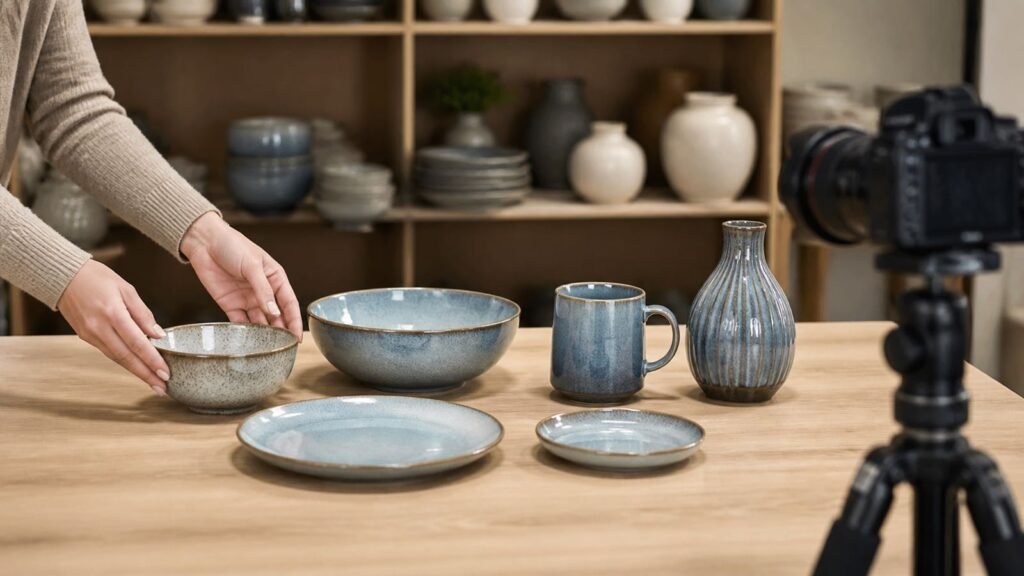
A photograph and product name are not enough for approval. Request representative samples and record material, dimensions, weight, capacity, glaze and decoration, foot finish, stability, stack height, and packing. Review several pieces when color or reactive glaze variation is part of the design. Test products in conditions relevant to the customer: shelf display, food presentation, tray and rack fit, ordinary washing, and handling. Keep the approved sample and dated images as references. Agree on inspection scope and acceptable limits before shipment.
This process protects both urgent stock purchases and longer programs without confusing speed with reduced control.
Test Demand Without Chasing Every Trend
Create a scorecard covering customer relevance, price position, functional fit, range compatibility, content potential, available quantity, and replacement plan. Use samples to stage the target shelf, table, or online collection. Gather feedback through buyer appointments, sales teams, controlled product drops, or existing customer requests. Set a review date and a measurable decision rule, such as whether the design earns additional space relative to a current item. Keep strong core lines separate from experiments so a temporary visual theme does not destabilize replenishment or cash flow. Trend testing is more useful when the budget and exit criteria are defined before ordering.
Calculate Landed Cost on a Comparable Basis
A useful buying decision compares like with like. Record the currency, trade term, named place, price unit, packing included, payment terms, quotation validity, available quantity, carton dimensions, gross weight, and expected preparation date. Then add inspection, inland transport where applicable, freight, insurance, duties, taxes, destination handling, warehousing, financing, and a reasonable allowance for loss. Divide total cost by the expected saleable units, not simply the ordered pieces. Scenario planning for freight and quantity changes helps the distributor understand which items remain commercially workable before committing cash and warehouse space.
Prepare Packing and Product Information Early
Packing is part of the product plan, not a final administrative detail. Confirm the inner pack, dividers, retail box where required, master carton quantity, carton dimensions, gross weight, shipping marks, barcodes, and language needs. Check how rims, handles, feet, and raised decoration contact adjacent pieces. A larger carton may reduce carton count but become difficult to lift, store, or pick. Product information should use the same item codes and measurements as the commercial documents. Provide accurate dimensions, capacities, material descriptions, set contents, care guidance, and variation notes. Consistent data reduces questions from sales teams and customers and prevents a visual range from becoming operationally confusing.
Content Accuracy and Supplier Coordination
Online product content must show the actual item, not an idealized reference. Use consistent lighting, include scale, state dimensions and capacities, and show several pieces when glaze variation is relevant. Avoid filters that materially change color. Confirm item codes, available quantities, packing, lead time, and acceptable alternatives before publishing launch dates. Give creators a product brief covering correct names, care, variation, and intended use. If a design becomes popular, ask the supplier what can actually be reserved rather than assuming permanent availability. Request current ceramic tableware options with screenshots used only as direction plus a written list of required attributes.
Create an Approval Record and Alternative Plan
Use one controlled order sheet rather than decisions scattered across messages. List the approved item code, photograph, specification, quantity, unit, packing, price basis, availability date, and responsible approver. Mark unresolved points and do not treat silence as approval. For each commercially important item, define whether substitution is allowed and what an acceptable alternative must preserve. Material, function, dimensions, capacity, color family, finish, quality expectation, price position, and packing compatibility may all matter. When availability changes, evaluate the alternative against the written rule and the overall range, then update every affected sales and logistics record. This disciplined process supports flexibility without losing assortment coherence.
Turn the Range into a Clear Sales Tool
A wholesale range is easier to sell when commercial information is organized before launch. Prepare a concise line sheet with one consistent photograph, item code, material, dimensions, capacity where relevant, color and finish description, packing quantity, order unit, current availability note, and price basis for every product. Group items by eating occasion or coordinated family instead of presenting an undifferentiated file of images. Explain which pieces are core items and which are optional accents. Sales teams should know the approved variation, the valid alternative, and the date on which availability was checked. For digital catalogs, use honest color, show scale, and state whether products are sold individually, by set, by inner pack, or by carton. Collect questions from buyers because repeated uncertainty often reveals missing specifications or a weak assortment decision. After launch, record quotations, sample requests, orders, reasons for rejection, returns, and product feedback. These observations are more useful than general assumptions when deciding whether to deepen, adjust, or retire a line. Review the range on a defined schedule, but allow an immediate review if availability, freight, quality findings, or customer requirements change materially.
Conclusion
Ceramic tableware design trends is most effective when selection, quality approval, quantities, packing, and logistics are planned together. Give every item a clear commercial role, compare quotations on the same basis, and confirm current availability before commitment. Keep written specifications and realistic alternatives so faster sourcing does not create avoidable risk. Browse our ceramic tableware buying resources or contact our wholesale team to discuss a current wholesale requirement.
FAQ
Track the feature across several sources and customer groups, then convert it into a specific product hypothesis. Test real samples in the intended price band and channel, collect feedback, and compare results with existing items. Views and likes alone do not show purchase intent, acceptable price, available quantity, or repeat demand, so they should remain one input in a broader buying decision.
Strong silhouettes, tactile textures, reactive glaze movement, distinctive handles, irregular rims, and controlled color contrasts are easy to recognize on a small screen. Buyers should still prioritize stability, comfort, capacity, stacking, cleaning, and packing. A visually distinctive feature creates value only when the physical product also fits the customer and the intended retail or hospitality use.
Not automatically. Confirm the target audience, sample quality, price position, available quantity, packing, and sales evidence before increasing depth. A controlled first order or a limited accent group can test the idea while protecting the core assortment. Define alternatives and a review point in advance because online attention may move faster than purchasing, shipping, and retail sell-through cycles.