


Sustainability claims are easy to print on a quotation but harder to verify across a real order. Wholesale buyers evaluating sustainable ceramic tableware need a purchasing method that considers useful life, material evidence, packing, transport efficiency, and supplier transparency together. This guide turns broad environmental goals into measurable questions for samples, specifications, quotations, and receiving checks.
Before contacting suppliers, establish a working budget, target arrival window, decision team, and the evidence needed for approval. Keep product taste separate from commercial requirements, and record uncertainties rather than filling them with assumptions. The result should be a brief that another colleague can review and a supplier can answer item by item. That clarity reduces repeated messages and exposes gaps while samples, quantities, packing, or timing can still be adjusted.
Use one controlled worksheet from research through receiving. Give each item a model code, intended channel, specification, sample status, quoted terms, carton data, landed-cost estimate, and final decision. Attach dated evidence instead of relying on memory or chat history. When a field changes, preserve the earlier value and record the reason. This audit trail helps buyers compare offers consistently, brief inspectors accurately, and explain assortment choices to colleagues. It also makes the next order faster because unresolved questions and successful criteria remain visible. Review the worksheet with every responsible department before approval.
Define Sustainable Ceramic Tableware for Your Business
A practical definition should connect the product to the buyer’s own policy, market, and use case. Begin with durability, fitness for purpose, efficient packing, documented material claims, and the ability to reorder compatible pieces. Do not treat a natural color, recycled-looking carton, or handmade appearance as proof. Ask which exact product and process each statement covers, who issued the supporting document, and whether the evidence remains current. A retailer may prioritize low packaging volume and a long selling life, while a hotel may value repeated service performance and replaceable core shapes. Convert those priorities into an approval sheet before requesting prices. This prevents vague language from outweighing measurable product performance. Record material description, glaze, dimensions, weight, care instructions, country of origin, pack count, carton dimensions, and the evidence requested for any environmental statement. If a claim cannot be substantiated, leave it out of marketing copy and compare the item on verified attributes instead. Put the decision owner, evidence source, review date, and acceptance threshold beside each requirement. This small discipline separates a preference from a purchasing condition and makes later quotation comparisons fair. It also gives sales, quality, logistics, and finance teams one shared record. Where the market evidence is incomplete, label the point as an assumption and define how it will be tested before a larger commitment.
| Sustainability purchasing priorities | What to verify |
| Long useful life | Sample performance in intended use |
| Efficient packing | Pieces per carton and carton volume |
| Material statement | Scope and issuer of supporting evidence |
| Replaceable range | Current availability and acceptable alternatives |

Evaluate Durability and Intended Use
A product that remains attractive and functional through its expected service life can reduce premature replacement. Durability is not a single label, so test the exact item under realistic conditions. Check rim and foot finishing, stability, glaze coverage, handle attachment, stacking contact, utensil interaction, washing response, and thermal-use instructions. Use the intended dishwasher, rack, detergent, food, and serving process where possible. Retail buyers should also test shelf handling and consumer-facing care information. Compare several samples rather than one ideal piece because normal variation matters. Keep labeled reference samples and photographs under controlled lighting. Record pass or fail criteria before the order so inspection is based on the approved standard. Avoid unsupported lifetime numbers: a short trial cannot prove years of performance. It can, however, identify immediate incompatibility with racks, cutlery, microwave expectations, or cleaning methods. Browse our ceramic tableware material guide when defining body and performance questions for the inquiry. Check the range as a system as well as item by item. A dinner plate, bowl, mug, and serving piece may look coordinated in a catalogue yet differ in scale, stack behavior, or price position. Assemble a sample setting, measure the working footprint, and photograph it under the intended light. Note which pieces are essential, optional, or interchangeable so budget changes do not destroy the assortment logic.
| Durability check sequence |
| 1. Measure and photograph several samples |
| 2. Test the planned food and utensils |
| 3. Wash and dry using the intended process |
| 4. Inspect rims feet glaze and stacking points |
| 5. Retain approved samples for order comparison |
Review Materials Glazes and Product Claims
Ceramic bodies and glazes involve different raw materials, firing conditions, and performance characteristics. Buyers should request an accurate supplier description without assuming that one body is automatically the responsible choice in every situation. Product weight affects material use and freight, but reducing weight is valuable only when handling and strength remain suitable. Reactive or highly variable glazes may create distinctive pieces, yet the approved variation range must be clear to avoid unnecessary rejection. For statements involving recycled content, restricted substances, food contact, energy, or emissions, request evidence that identifies the product, test scope, method, date, and responsible organization. Legal requirements depend on destination and intended use, so confirm them with a qualified laboratory, customs adviser, or local authority. A generic certificate, an unrelated factory document, or a logo in a catalogue does not establish compliance for the ordered item. Keep verified claims in the specification and separate them from aspirations that are not yet documented. Write tolerances only where they are meaningful and measurable. Excessively narrow cosmetic limits can create disagreement without improving customer value, while vague functional criteria leave genuine risk uncontrolled. Ask the supplier to comment on the draft specification before order confirmation. Resolve conflicts in terminology, measurement method, sampling, and visual references while samples are still available and changes remain inexpensive.
| Claim review questions |
| – Which model and production period does the evidence cover |
| – Is the document a test report certification or supplier declaration |
| – Which standard method and limits were applied |
| – Is the issuing body identifiable and relevant |
| – Can the claim be used legally in the destination market |
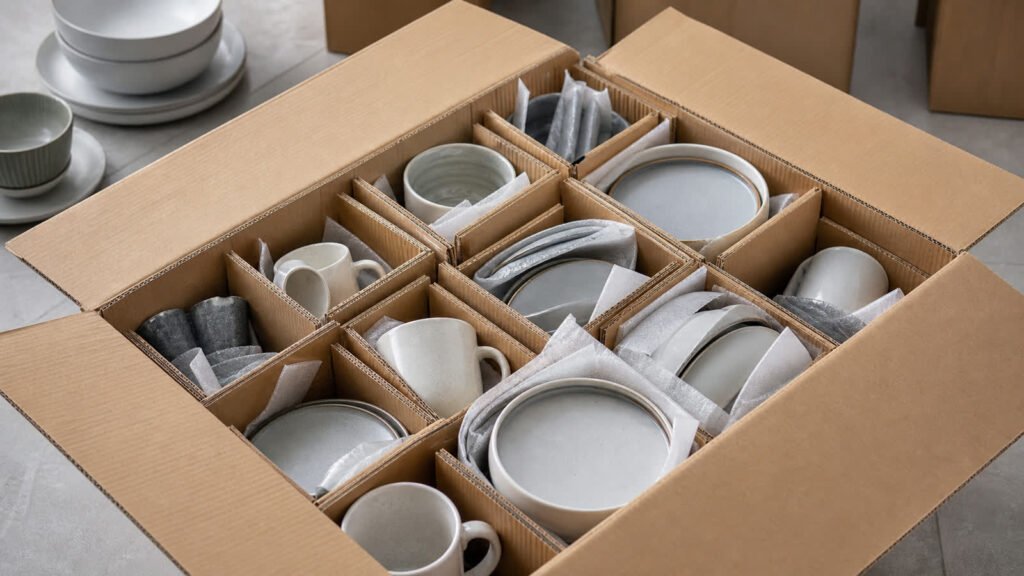
Reduce Packaging and Logistics Impact
Packing must protect ceramic tableware while avoiding unnecessary volume. A damaged shipment wastes product, freight, time, and customer confidence, so the objective is right-sized protection rather than the least packaging at any cost. Request inner-pack count, master-carton count, divider arrangement, carton dimensions, net weight, gross weight, and packing photographs. Calculate cubic volume per piece and compare options with equivalent protection. Mixed designs should use clearly labeled cartons and a packing list that supports receiving. Ask whether packaging materials are separable and whether printed surfaces or laminates affect local recycling routes; local acceptance differs, so do not promise recyclability without destination evidence. Review pallet or container utilization using final carton data, not estimates. Small changes in shape, rim width, or nesting can materially affect volume. A slightly higher unit price may produce a lower landed and environmental burden if it improves pack density and damage control. Request representative packing tests when the order value or route justifies them. Recalculate from final packing data whenever the assortment changes. Adding one bowl or changing a plate profile can alter carton count, volume, weight distribution, and the number of complete sets delivered. Keep the commercial comparison version-controlled and record who supplied each input. A transparent calculation is easier to update when freight, currency, quantities, or destination charges change.
| Packing data to compare |
| – pieces per inner pack and carton |
| – carton length width and height |
| – net and gross weight |
| – protective material by type |
| – calculated volume and weight per sellable piece |
Build a Supplier Scorecard and Order Plan
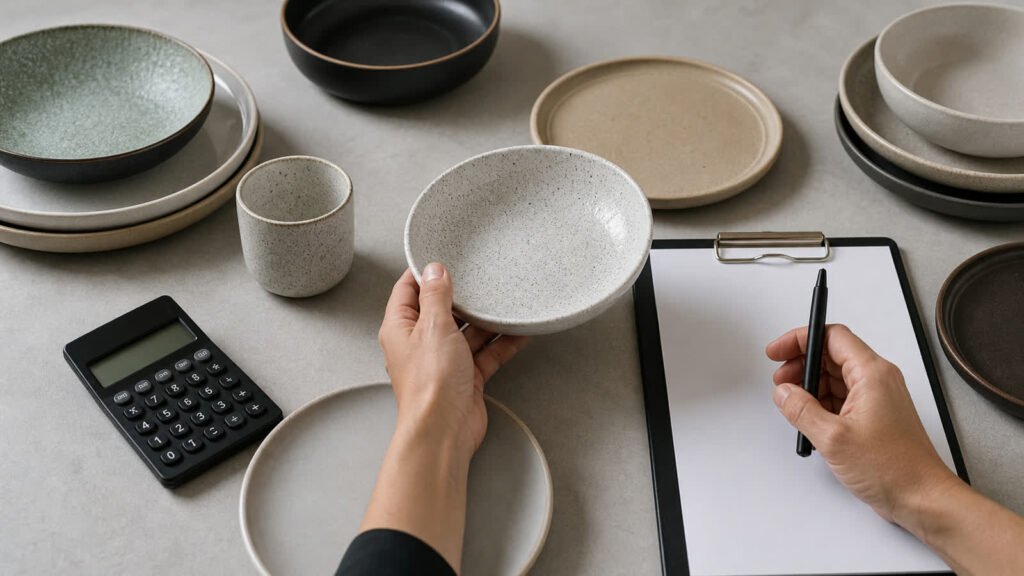
A scorecard makes tradeoffs visible. Assign weights based on the buying program rather than using a universal sustainability ranking. Product fitness and verified compliance should be mandatory gates. Other categories can include durability trial, packing efficiency, claim quality, assortment compatibility, current availability, price, lead time, and communication. Score only documented information and mark unknowns clearly. Ask shortlisted suppliers the same questions and normalize trade terms, named place, currency, price unit, payment terms, packing included, quotation validity, and shipment preparation time. Ready-stock quantities can change, so confirm availability close to commitment and agree acceptable substitutions in writing. Begin with samples and, where appropriate, a controlled first order. At receiving, verify counts, carton condition, labels, dimensions, appearance range, and critical measurements against retained references. Track damage, returns, washing issues, and replacement demand after sale or service. These records improve the next purchase and turn sustainability from a claim into an operational improvement process. Set a formal review after the goods enter the channel. Compare actual results with the assumptions used for selection, costing, and quantity planning. Record slow and fast sellers, common customer questions, missing companion pieces, packaging complaints, and operational issues. Use those findings to revise the specification and assortment map. Reordering should be a fresh availability and cost decision, not an automatic copy of the first purchase.
Conclusion
Sustainable ceramic tableware purchasing works best when buyers translate policy into verifiable product, packing, and logistics criteria. Test the exact items, substantiate every public claim, and compare carton efficiency without weakening protection. Use a weighted scorecard and post-order records to improve each sourcing cycle. To review currently available options, contact Chengguo for a tableware quotation with your quantities, destination, and evidence requirements.
FAQ
Ask for evidence tied to the exact model and claim, including the scope, test or assessment method, date, and identifiable issuer. Check whether the document supports the wording you plan to use in your destination market. Treat colors, textures, packaging graphics, and general company policies as context rather than product proof. When evidence is incomplete, describe only verified attributes.
No. Lower weight may reduce material and freight per piece, but only if the item remains suitable for handling, washing, stacking, and its intended service life. Compare weight together with performance, carton protection, pack density, and replacement risk. Test several samples and avoid making a broad environmental claim from weight alone.
Request pieces per inner pack and carton, protective arrangement, material types, carton dimensions, net and gross weight, labels, and packing photographs. Use these figures to calculate volume and weight per sellable piece. Confirm that the system protects rims, handles, and glazed surfaces on the actual transport route before attempting to reduce packaging.