

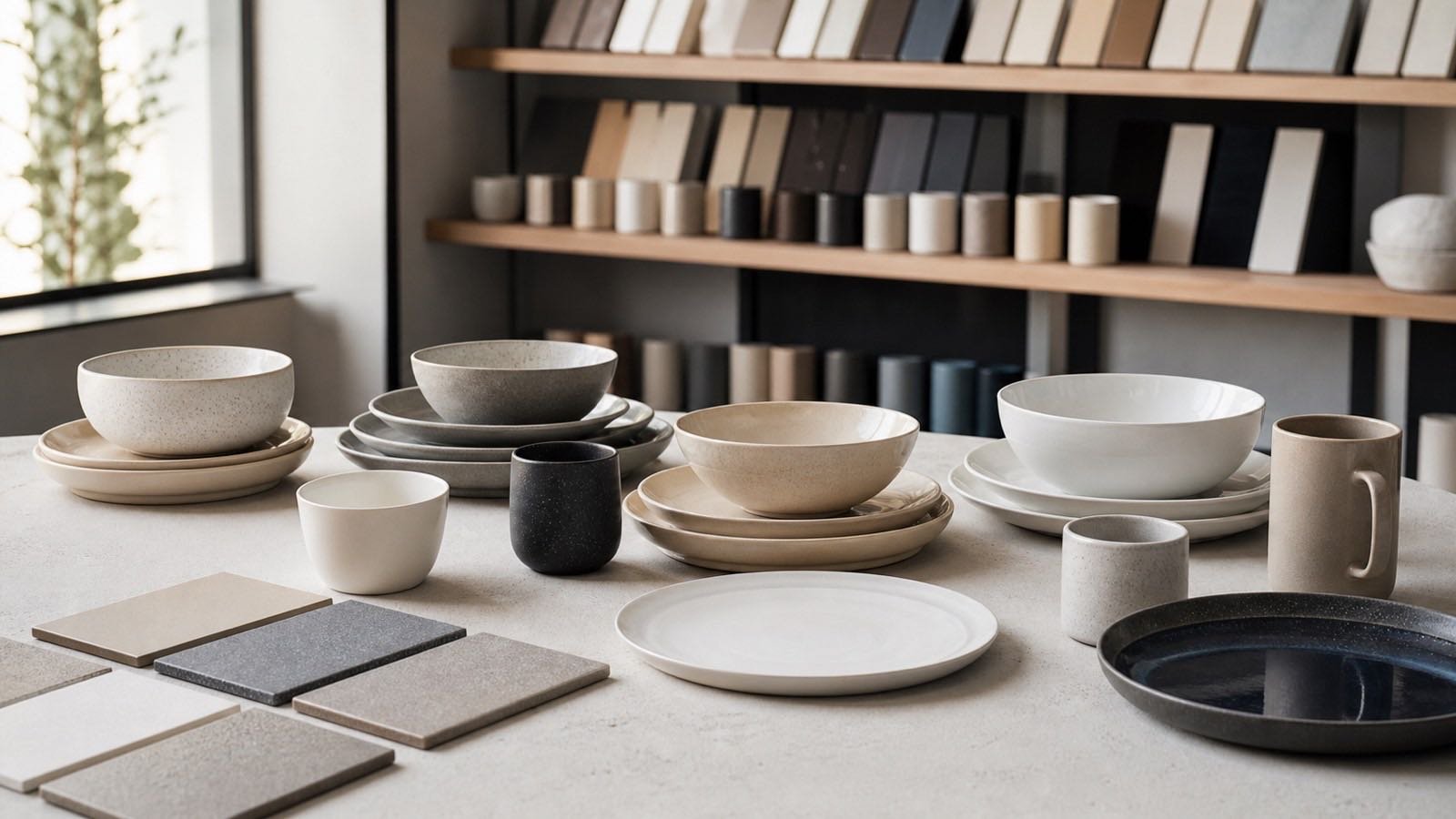
Wholesale buyers often receive product descriptions that combine body, glaze, finish, and decoration into a few words. Understanding ceramic tableware materials makes those descriptions easier to evaluate and helps buyers ask better questions. This guide explains the layers of a finished ceramic item, compares common body families, and shows how material decisions affect assortment, service, packing, care, and quality control.
Read a Ceramic Product as a Material System
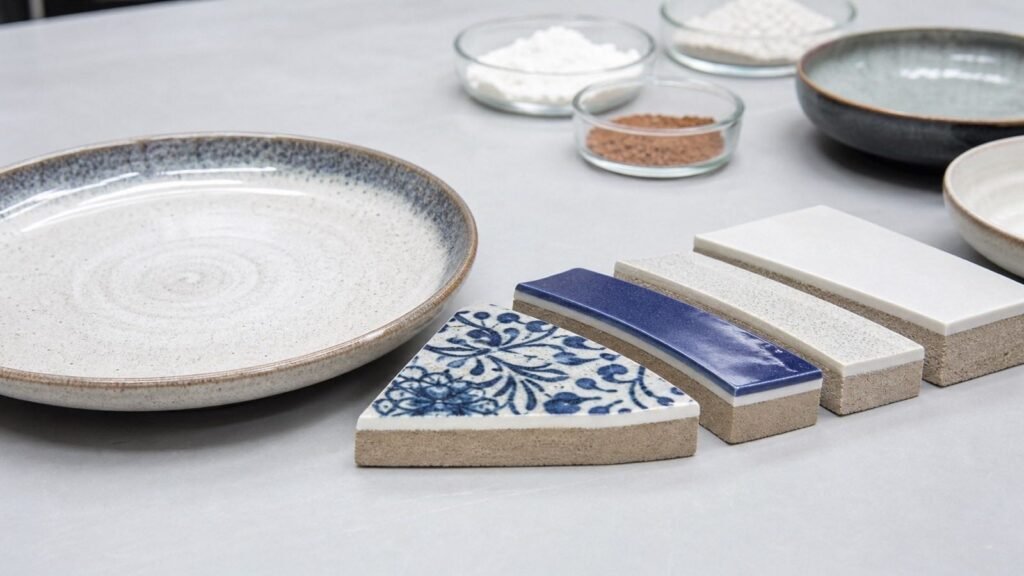
A dinner plate is not defined by its body alone. The ceramic body forms the shape, the glaze creates a glass-like surface, and decoration adds color or pattern. Firing brings these elements together. Geometry, thickness, foot design, and edge profile then influence how the finished piece handles and stacks.
This layered view prevents common misunderstandings. A matte appearance is usually a surface description, not a body type. A speckled plate may use a colored body, a speckled glaze, or decoration. Two products called porcelain may have different whiteness, weight, translucency, or rim profiles.
Ask suppliers to separate the description into:
- body category;
- glaze color and finish;
- decoration method and location;
- fired appearance and normal variation;
- dimensions, capacity, and piece weight;
- product-specific care guidance;
- supporting documents relevant to the destination market.
Use stable item references so that samples, quotations, packing lists, and inspection records describe the same product.
Compare Common Ceramic Body Families
Porcelain is widely used across homeware, hospitality, and gift ranges. It can produce refined white forms, from durable hotel-style pieces to lighter contemporary profiles. Buyers should inspect the finished item for rim geometry, foot finish, stability, glaze consistency, and stacking rather than assuming every porcelain range performs alike.
Stoneware commonly provides a substantial hand feel and supports rich surface treatments. Neutral, earth-tone, speckled, matte, and reactive looks are popular applications. The body and glaze may create intentional variation that gives each piece character. Buyers need representative samples and agreed appearance boundaries, especially for online retail or coordinated sets.
Traditional bone china is associated with lightness, translucency, and formal or premium table settings. New Bone China is a different body category that often offers a warm light appearance and accessible route to elegant collections. Buyers should keep the two names distinct and request the actual material description.
Earthenware is another broad family, often valued for color and decorative character. Depending on the specific product, it may be more porous before glazing and may require different care. It can suit decorative or casual ranges when the finished item meets the intended market and use requirements.
| Body family | Typical buying appeal | Common range role | Key sample questions |
| Porcelain | Refined, versatile appearance | Core dinnerware and hospitality | How do rim, weight, whiteness, and stack compare |
| Stoneware | Tactile color and surface depth | Lifestyle and casual dining | What variation is normal and how heavy is the piece |
| Bone china | Light, translucent, premium feel | Formal dining and tea service | What is the exact body and decoration care |
| New Bone China | Warm light appearance | Elegant mid-to-premium ranges | How does the finished sample perform and coordinate |
| Earthenware | Decorative, colorful character | Casual and specialty ranges | What care and use guidance applies |
These are planning descriptions, not performance guarantees. Verify the exact product.
Understand Glazes and Surface Finishes
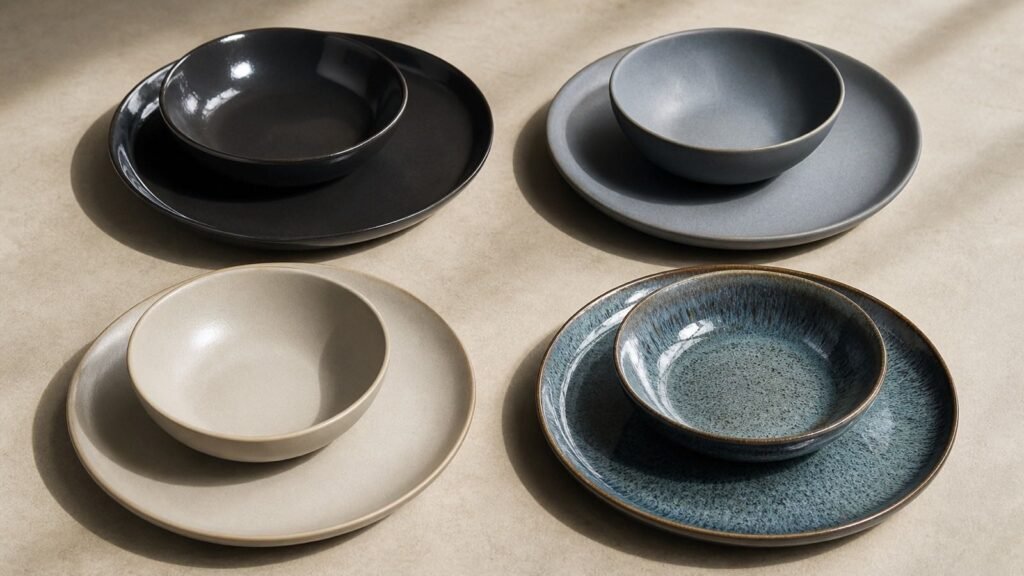
Glaze contributes color, cleanability, texture, sheen, and resistance to normal service contact. Gloss glazes reflect light and often present food clearly. Matte and satin glazes create a softer modern appearance. Reactive glazes develop variation through material and firing interactions, producing tonal movement that is part of the design.
Surface decisions affect customer expectations. A matte dark plate may show metal marking or oily fingerprints more visibly than a glossy light plate. A reactive bowl may vary in color distribution. A textured outer wall may offer grip but require closer cleaning checks around relief. None of these outcomes is universal; they should be evaluated on samples.
Inspect multiple pieces in daylight and typical retail or restaurant lighting. Look at the center, rim, underside, and foot. Test normal utensils and foods, then clean the item according to the intended process. Ask what variation is expected between pieces and cartons.
For a coordinated ceramic dinnerware selection, compare glaze families across every required form. The same named color may appear different on a flat plate, deep bowl, and vertical mug because glaze thickness and light change.
Evaluate Decoration Methods and Placement
Decoration can be applied at different stages and positions. Buyers may encounter underglaze, in-glaze, and overglaze approaches, along with hand-applied lines, decals, printing, or colored glaze effects. The correct choice depends on design detail, color, budget, expected use, and care requirements.
Placement matters. Decoration in the food-contact or utensil-contact area can face different wear than a motif on the exterior wall. Metallic effects often require special care and may not suit microwave use. Request specific guidance and do not generalize from another design.
Review:
- color accuracy and normal variation;
- registration and placement relative to the form;
- continuity around rims or handles;
- visibility of joins where patterns wrap;
- care instructions for metallic or special effects;
- the exact scope of any supporting test documentation.
Where formal compliance evidence is required, consult qualified testing services and current destination-market requirements. Product body, glaze, decoration, and intended market can affect the relevant scope.
Match Material Choices to the Buyer’s Channel
Hospitality buyers usually prioritize operational fit: stacking, rack compatibility, manageable weight, stable feet, replacement planning, and simple care. A body and glaze combination that looks impressive but slows washing or consumes excessive storage may not work at scale.
Retail buyers balance shelf impact, price architecture, set building, and customer expectations. Stoneware can create a strong design statement; porcelain can offer broad coordination; lighter bodies can support premium positioning. Product descriptions and images must accurately explain normal variation.
E-commerce buyers should consider individual parcel protection, item weight, photography, and return reasons. A finish that varies naturally needs representative images and clear wording. A large serving platter may be commercially attractive but costly to fulfill if its carton is inefficient.
Distributors need adaptable ranges. Ready-stock ceramic tableware can provide mixed designs and faster purchasing, but exact quantities should be confirmed at item level. Define which characteristics must remain fixed—material, diameter, capacity, color, or price—and where alternatives are acceptable.
Review wholesale bowls and plates by application, not simply by body label. A coherent range often uses one body family for core items and selected complementary materials for differentiated pieces.
Test Finished Products Before a Wholesale Order
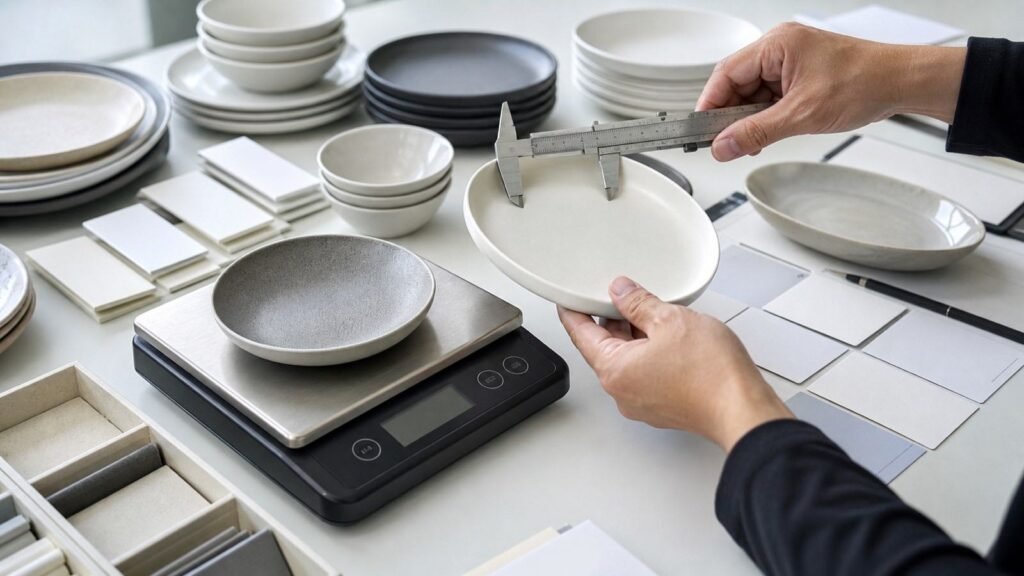
Build a sample evaluation around actual use. Measure dimensions, capacity, weight, and stack height. Place pieces on a flat surface and compare several samples. Handle them with wet and dry hands, use intended cutlery, serve representative foods, and run the planned washing process.
Create a scorecard:
| Evaluation area | Evidence | Why it matters |
| Form and stability | Measurements and flat-surface check | Service safety and presentation |
| Weight and balance | Piece weight and handling trial | Staff and customer comfort |
| Surface | Multiple samples under consistent light | Appearance expectations |
| Stacking | Planned stack quantity | Storage and contact pressure |
| Cleaning | Normal wash trial | Operational suitability |
| Packing | Inner pack and carton data | Transport and receiving |
| Documentation | Product-specific records | Market and customer requirements |
Avoid making formal performance claims from informal tests. Use qualified laboratories when regulated or contractual evidence is needed.
Plan Packing Cost and Replenishment
Material and form influence logistics. Heavy items raise carton gross weight; wide shapes increase volume; irregular silhouettes may require extra protection. Request pieces per carton, carton dimensions, net and gross weight, inner protection, and pallet or container assumptions before finalizing the assortment.
Compare total commercial cost rather than unit price alone. Include current freight estimates, duties and taxes where applicable, destination handling, inspection, retail packing, and expected channel margin. Keep volatile assumptions dated.
For replenishment, store an item record with photographs, material, glaze, dimensions, piece weight, carton pack, and approved sample reference. If exact continuity matters, discuss it before ordering. If the business accepts design rotation, define functional alternatives so a future range still fits existing shelves, racks, and customer price points.
Conclusion
Ceramic tableware materials should be evaluated as a complete system of body, glaze, decoration, form, and finish. Material family helps narrow the search, but finished samples and product-specific documentation support the actual buying decision. Match each item to its channel, test it in realistic workflows, and include packing and replenishment in the specification. Browse current selections or request current product information from Chengguo for your wholesale brief.
FAQ
Porcelain and stoneware are both common restaurant choices, while other bodies can also suit specific concepts. The finished design matters more than the category alone. Buyers should compare rim profile, weight, stackability, foot stability, glaze behavior, rack fit, and care guidance. Test several samples in the restaurant’s real serving and washing workflow before selecting a range.
The body is the formed ceramic material that gives the item its structure. Glaze is a fired surface layer that contributes color, sheen, texture, and cleanability. Decoration may be added beneath, within, or above the glaze depending on the method. Buyers should identify all three elements because each can affect appearance, care, documentation, and quality expectations.
Ceramic firing and surface processes can produce controlled variation, particularly with reactive or hand-finished looks. Several samples show whether color, shape, decoration, weight, and stability stay within a commercially acceptable range. They also help buyers define inspection criteria and create accurate product photographs. Retain labeled approved references for comparison during shipment inspection and receiving.