

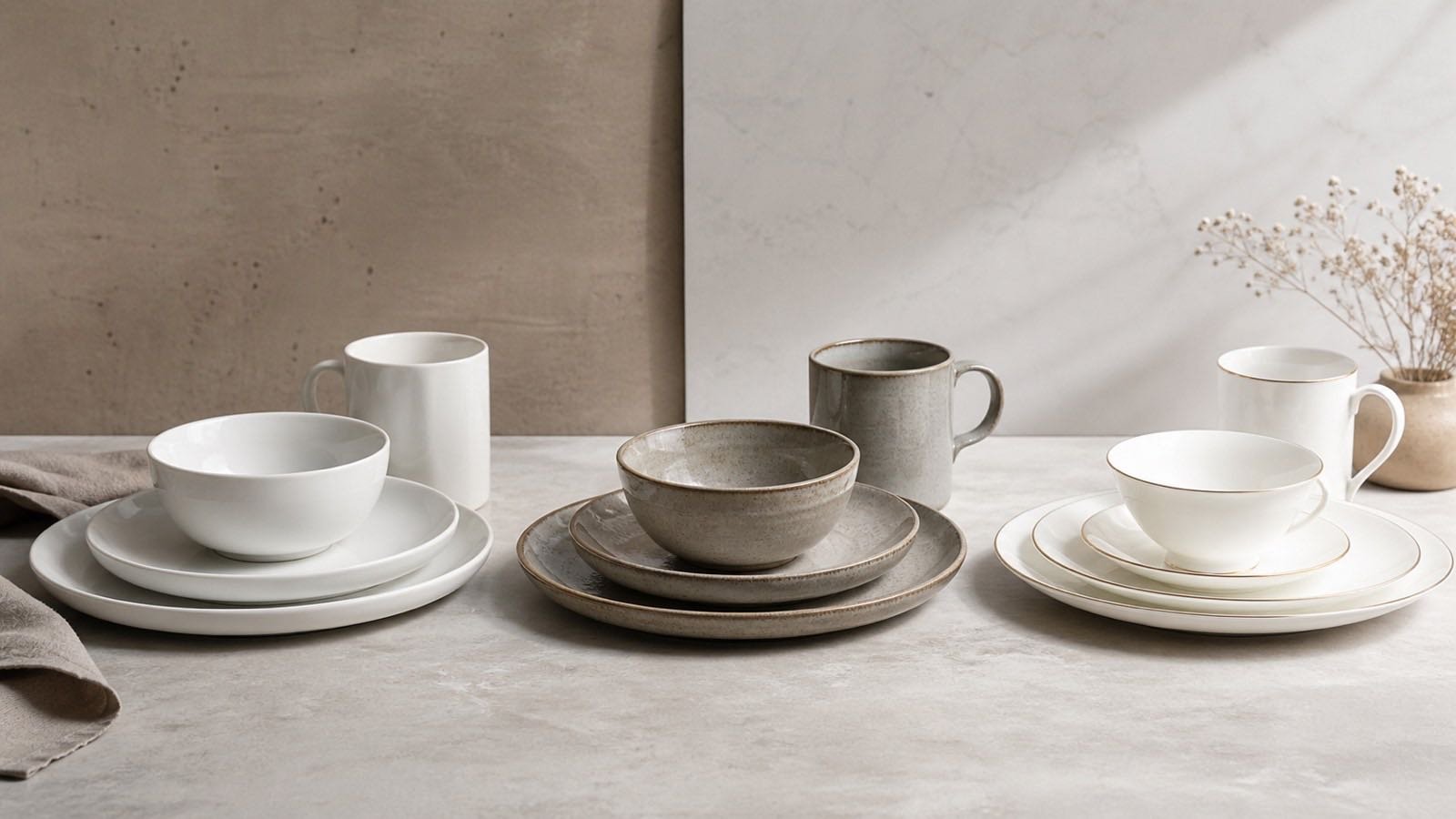
Material names shape buyer expectations, yet they do not tell the whole performance story. A useful porcelain stoneware and bone china comparison must consider the finished item: body composition, firing, thickness, glaze fit, form, and quality control all matter. This guide helps wholesale buyers compare visual character, handling, service applications, care, packing, and commercial range strategy without relying on labels alone.
Understand What the Material Name Can Tell You
Porcelain, stoneware, and bone china are families of ceramic bodies rather than single recipes. Suppliers, markets, and standards may use definitions with specific technical details, so buyers should request the actual product description and relevant documentation for the destination market. Visual inspection can support a decision, but it cannot replace technical information where compliance matters.
Porcelain is generally associated with a vitrified, light-colored body, a refined surface, and the potential for relatively thin profiles. Stoneware is commonly thicker and more substantial, with a wide range of natural, colored, matte, or reactive finishes. Bone china traditionally contains bone ash and is known for whiteness, translucency, and a favorable strength-to-weight relationship. New Bone China is a separate ceramic category that can offer a warm light appearance without being the same formulation as traditional bone china.
These descriptions are directional. Two porcelain plates from different ranges may differ more in weight and durability than a porcelain and a stoneware item of similar geometry. Compare actual pieces with the same intended use.
Compare Appearance Weight and Guest Experience
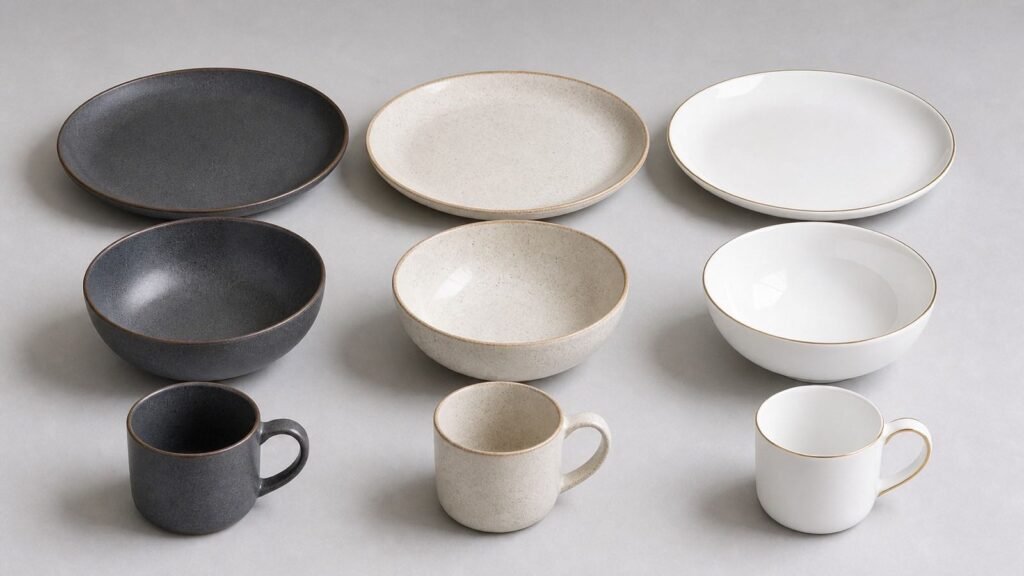
Material selection affects how a range feels in the hand and how food appears on the table. Porcelain often supports a clean, bright presentation. It works well for classic white hotelware, decorated dinner sets, and contemporary thin-rimmed forms. A white surface gives chefs and retailers a neutral background, but white tone can vary between ranges; mix only after comparing pieces together.
Stoneware offers visual depth. Colored bodies, speckled glazes, exposed feet, and reactive effects can create a crafted, casual character. Its substantial feel can be valuable for modern restaurants and lifestyle retail. However, added weight affects tray handling, shelf loads, carton gross weight, and freight planning. Reactive surfaces also require an agreed appearance range because controlled variation is part of the design.
Bone china is associated with elegant proportions, translucency, and a light hand feel. It can suit premium dining, tea service, and gift-oriented retail. Thinness should not automatically be interpreted as weakness; geometry and body performance matter. Buyers should still examine rim and handle design, decoration care, and the intended use environment.
Use a blind handling test. Give evaluators unlabelled samples, serve a representative meal or beverage, and ask about balance, weight, rim feel, utensil sound, and visual impression. This separates customer experience from assumptions attached to a material name.
Evaluate Practical Performance by Finished Product
Performance should be assessed through supplier specifications and relevant testing, not generalized claims. The same body can behave differently when formed into a wide coupe plate, a tall mug, or a footed bowl. Thin rims, abrupt transitions, large flat surfaces, and poorly supported handles can influence vulnerability regardless of material.
| Buying factor | Porcelain | Stoneware | Bone china |
| Visual direction | Refined and versatile | Tactile and expressive | Light and elegant |
| Common weight impression | Light to medium | Medium to substantial | Relatively light |
| Finish range | White, colored, decorated | Broad glaze and body effects | White or warm white, decorated |
| Range-planning strength | Easy coordination | Strong lifestyle identity | Premium positioning |
| Buyer checks | Rim, whiteness, glaze, stack | Weight, variation, stack, marking | Rim, translucency, decoration, care |
For food-contact products, verify applicable destination-market requirements and the exact scope of supporting reports. Glaze color and decoration can matter, and a report for one item or design may not cover another. For operational claims such as dishwasher, microwave, oven, or freezer suitability, obtain guidance for the specific finished product.
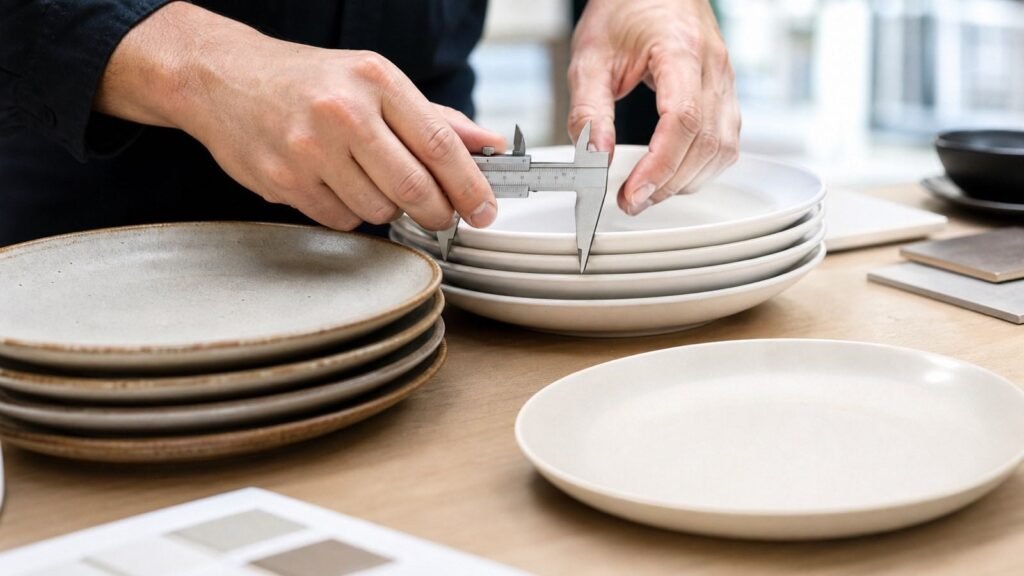
Conduct practical trials with several samples. Check stability on a level surface, stacking pressure points, drainage after washing, utensil marking, stain cleanup, and fit in racks or cabinets. Avoid improvised impact or thermal tests that create unsafe conditions or misleading results; use qualified laboratories where formal evidence is needed.
Browse ready stock ceramic tableware by finished form and application, then use the body category as one part of the evaluation.
Match Materials to Sales Channels and Applications
The right material depends on the promise made to the customer. A high-volume hospitality distributor may need consistent dimensions, efficient stacking, replacement flexibility, and a neutral range that crosses several dining concepts. Porcelain frequently fits that brief, but a well-designed stoneware range may be ideal for casual dining or boutique hospitality.
Lifestyle retailers often use stoneware to create color stories and seasonal displays. Reactive glazes and tactile finishes make individual pieces visually interesting, while coordinated shapes allow customers to build sets. Buyers must decide how much variation their market will accept and communicate it through product photography and store presentation.
Premium department stores, tea specialists, and formal dining programs may favor bone china for its lightness and refined appearance. Decoration quality, gift packaging, and set completeness become important commercial factors. Replacement and continuity expectations should be discussed early.
E-commerce introduces its own requirements. Product photographs must represent normal variation, especially for reactive finishes. Item weight and carton size influence fulfillment cost. Individual retail packs may need more protection than bulk transport cartons. Return reasons should be monitored so product descriptions and quality limits can be improved.
A diversified importer does not need to choose one material for every customer. Use a portfolio:
- porcelain for versatile core dinnerware and broad coordination;
- stoneware for tactile, color-led, or casual collections;
- bone china for light, refined, premium programs;
- approved alternatives for channels where design rotation is acceptable.
Compare Total Commercial Cost
Material can influence price, but buyers should not use a fixed ranking. Form complexity, decoration, order quantity, packing, assortment, current availability, and commercial terms all affect the offer. Compare the complete order on a consistent basis.
Record unit price, pieces per carton, carton dimensions, gross weight, expected retail or contract price, and target margin. Then model freight and destination charges using current quotations. A heavier stoneware range may cost more to transport, while a light premium range may require more protective retail packaging. A lower unit price can be offset by inefficient carton volume or an unbalanced assortment.
Also consider operational cost. A plate that does not fit standard racks creates handling problems. A finish that requires special care may not suit a fast-turn restaurant. A color with wide variation may increase e-commerce returns if the listing does not set expectations. These are commercial consequences even when they do not appear on the supplier invoice.
When examining wholesale ceramic plates, compare dinner, side, pasta, and serving shapes as a system. A commercially strong material choice should support the needed price ladder and applications.
Specify Samples Packing and Quality Expectations
Turn the selected direction into a purchase specification. Each item should have a stable reference, material description, finish, dimensions, capacity where relevant, piece weight, approved sample or image, carton pack, and labeling requirements. For reactive or intentionally varied finishes, document representative appearance boundaries.
Retain approved samples and arrange inspection appropriate to the order. Check goods across multiple cartons for model, color family, decoration placement, stability, glaze coverage, edge condition, and carton integrity. Confirm quantities at item level, particularly for ready-stock mixed orders.
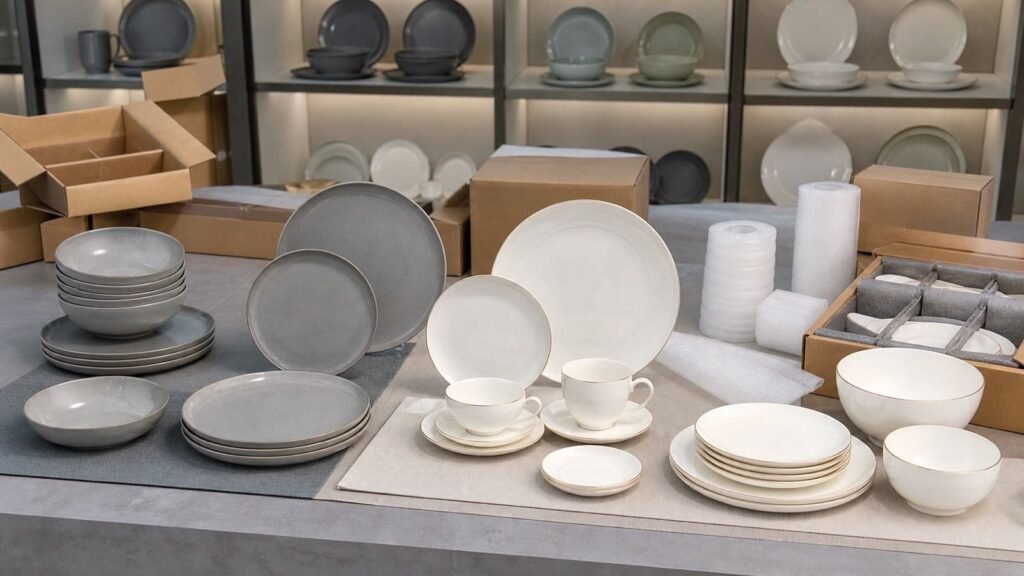
Packing should suit both transport and the downstream channel. Wholesale inner packs, retail gift boxes, and e-commerce individual packs solve different problems. Ask for carton dimensions and gross weight before finalizing quantities, and provide barcode or carton-mark instructions with enough time for checking.
Build a Coherent Mixed Material Range
Mixing materials can work when there is a clear reason. A retailer might pair stoneware dinnerware with porcelain serving pieces, or a hotel might use porcelain for banquets and a distinctive stoneware line in one restaurant. Problems arise when colors, dimensions, care messages, and price tiers conflict.
Create common rules for the assortment:
- define the target customer and dining occasion;
- choose a limited color palette;
- align key diameters and capacities;
- separate care instructions when necessary;
- establish a logical opening, middle, and premium price point;
- photograph mixed pieces together before approval;
- confirm carton and labeling data for every material.
This approach preserves variety while keeping merchandising and operations understandable.
Conclusion
A sound porcelain stoneware and bone china comparison begins with customer use and ends with finished-product evidence. Porcelain offers broad versatility, stoneware supports tactile design stories, and bone china can deliver a light premium experience, but no label guarantees suitability. Compare samples, specifications, packing, care, and total commercial cost for the exact items under consideration. To discuss a mixed ready-stock range, contact Chengguo with your channel and product brief.
FAQ
Material name alone cannot establish which finished item is stronger. Body formulation, firing, thickness, geometry, glaze fit, and handling all influence performance. A restaurant buyer should compare representative samples, inspect rims and feet, test stacking and washing workflows, and review product-specific supplier guidance. Select the item that fits the service system rather than relying on a general hierarchy.
Traditional bone china contains bone ash and is commonly valued for translucency, whiteness, and lightness, while porcelain uses a different ceramic body system and covers a broad range of forms and weights. Definitions and specifications can vary by market. Buyers should request the material description, compare actual samples, and verify relevant documentation for the intended destination and use.
Yes, when the combination follows a clear merchandising or operational plan. Coordinate color, key dimensions, food applications, and price levels; then photograph and handle the pieces together. Keep care instructions and product records distinct where necessary. For ready-stock orders, confirm quantities, carton data, and item references separately for each body and finish.