

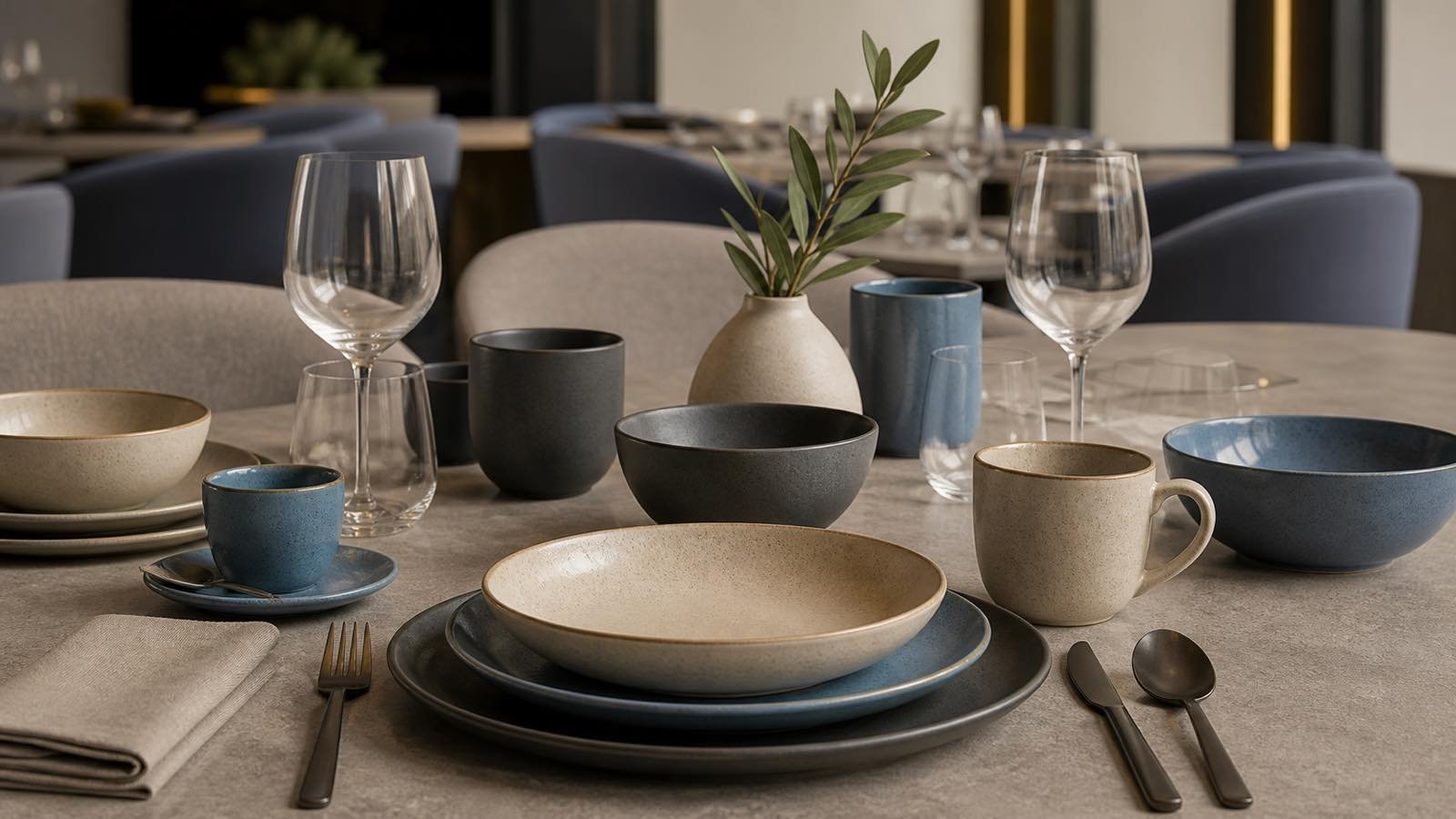
Matte tableware can give food presentation a calm, tactile, contemporary frame, but hospitality buyers need more than a showroom impression. Matte finish ceramic tableware should be tested with the actual menu, utensils, dishwasher process, racks, stacks, and replacement workflow. This guide explains how hotels and restaurants can evaluate matte surfaces, choose practical forms and colors, approve samples, and prepare a reliable wholesale specification.
Understand What Matte Finish Means
Matte describes a low-reflection surface, not one universal glaze formula or performance level. Two matte plates can differ in texture, color, hardness, cleaning response, and interaction with metal utensils. Satin finishes occupy a middle ground, showing a soft sheen while retaining a restrained appearance.
The finished result depends on glaze, ceramic body, application, firing, form, and quality control. Buyers should evaluate the complete item rather than assuming that all matte surfaces behave alike. A rough-looking plate may not actually feel rough; a smooth matte plate may show traces differently from a glossy plate of the same color.
Record the specification:
- supplier model and material description;
- glaze color, finish, and intended variation;
- diameter, height, usable area, capacity, and weight;
- rim, foot, and stacking profile;
- decoration and any unglazed-looking areas;
- stated care for the exact product;
- carton pack, dimensions, and gross weight;
- intended menu and service environment.
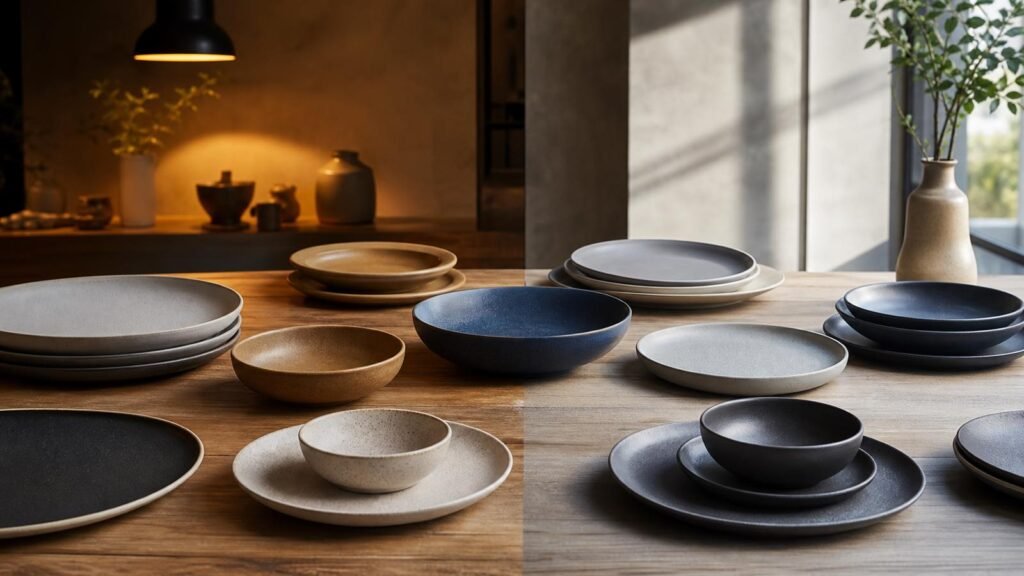
Use the same controlled lighting for sample comparisons. Dark matte colors can appear different under warm restaurant lamps, cool kitchen light, and daylight. Photographs should be color-managed and should not promise a finish that the physical product cannot consistently represent.
Evaluate Utensil Marks Cleaning and Surface Wear
Metal cutlery can leave gray-looking traces on some ceramic surfaces. These may be metal transfer rather than scratches in the glaze. Their visibility depends on the exact glaze texture and color, utensil material, pressure, food, and cleaning method. Dark matte plates can make a trace more noticeable than light glossy ware.
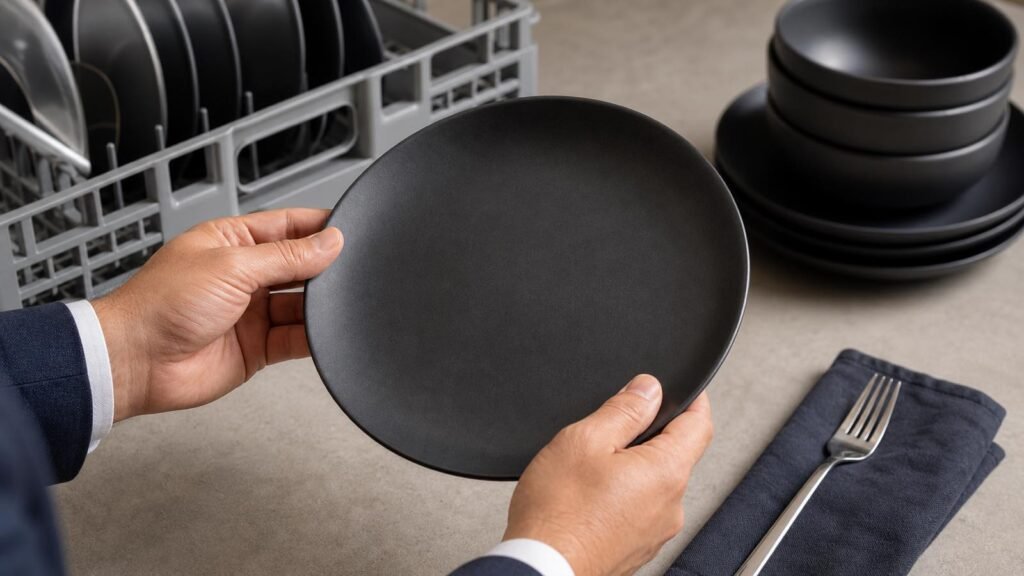
Run a controlled trial rather than relying on a quick scratch demonstration. Use the restaurant’s intended knives, forks, and spoons with representative food. Wash the pieces in the planned process, allow them to dry, and inspect them under the same light. Record whether traces clean away and whether the result remains acceptable for service.
Repeat the process for high-frequency applications. One meal cannot simulate long-term use, but repeated cycles can reveal immediate compatibility issues. Include oily sauces, strongly colored ingredients, and acidic foods only where they reflect the actual menu. Do not turn an unrealistic stress test into a product claim.
Cleaning chemistry matters. Confirm detergent, rinse aid, water condition, temperature, cycle, and rack. Avoid abrasive tools unless they are part of the approved care method. Ask the supplier for item-specific guidance and train staff accordingly.
The guide to ceramic glaze types and durability explains why surface appearance must be considered alongside body, firing, form, and use conditions.
Choose Matte Colors and Forms for the Menu
Matte ware changes how food is framed. Warm beige, sand, gray, charcoal, muted blue, olive, and terracotta-inspired colors can support natural or contemporary menus. The correct choice depends on food color, interior lighting, linen, table material, and brand direction.
Test real portions. Pale food may disappear on a light plate, while dark sauces may gain contrast. Highly colorful food can work on neutral surfaces. The chef should assess usable area, sauce control, garnish space, and edge height, not only color.
Form also affects operations. Coupe plates provide a broad modern surface. Wide rims create a defined presentation area but reduce the center. Low bowls can support pasta and composed dishes, while deeper bowls suit soups and grains. Irregular forms add character but require clear measurement and variation limits.
| Item direction | Presentation benefit | Operational check |
| Light neutral matte | Soft versatile background | Staining visibility and wash result |
| Dark matte | Strong food contrast | Metal transfer and fingerprints |
| Speckled matte | Natural visual depth | Approved speckle variation |
| Reactive matte | Individual character | Color range and replacement match |
| Satin matte | Restrained sheen | Cross-shape consistency |
Check plate diameter, usable center, weight, stack height, tray fit, rack fit, and shelf capacity. For bowls, check filled handling and spoon access. For mugs and cups, test balance, handle comfort, rim feel, and glaze coverage around attachment points.
Test Hospitality Handling and Stackability
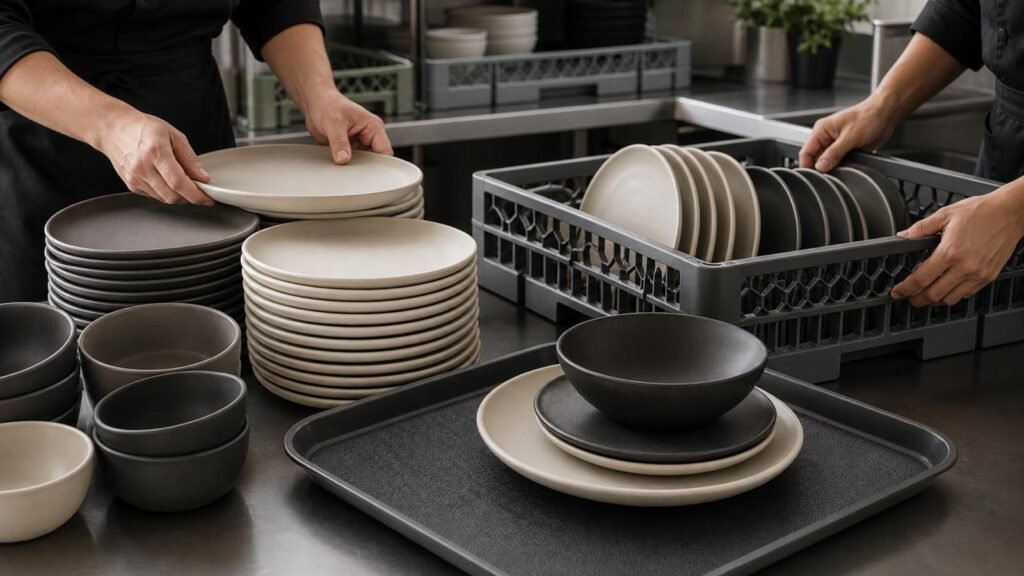
Hotels and restaurants move tableware through a demanding sequence: receiving, shelving, kitchen preparation, pass, table, clearing, washing, rack, and storage. A matte piece should be tested through this whole path.
Create an operational trial:
- inspect and measure several labeled samples;
- stack the planned working quantity;
- load plates on the actual tray or trolley;
- test the kitchen pass and table footprint;
- serve representative menu items;
- clear and scrape with the normal method;
- wash in the intended rack and cycle;
- inspect pieces when dry;
- return them to the actual shelf;
- record staff observations and visible changes.
Stack contact is important. One plate may rest against the glazed center or rim of another, creating visible contact over time. Check how feet are finished and whether separators are needed during storage or transport. Tall feet and irregular profiles can increase stack height and reduce rack density.
Weight should be evaluated by working stack, not only by piece. A modest difference becomes significant when staff carry many plates. Balance visual substance with practical handling and the operator’s own safety procedures.
Approve Variation Quality and Packing
Matte and reactive matte designs may include intentional tonal, speckled, or edge variation. Approve a representative sample group showing acceptable limits. Record the lightest and darkest outcomes, texture, speckle distribution, rim effects, and coordination across shapes.
Acceptance criteria should distinguish function from aesthetics. Functional checks can include stability, edge condition, glaze coverage, handle attachment, count, and packing integrity. Aesthetic checks can define color range, texture, pattern position, and intended variation. Use photographs and retained samples where words are insufficient.
Packing protects rims, feet, handles, and textured surfaces. Request pieces per inner pack and carton, protective arrangement, carton dimensions, net and gross weights, and packing photographs. Test representative cartons when handling risk or order value justifies it.
For hotel replacement planning, identify core items and forecast working quantities according to the operator’s own breakage records and service model. Ready-stock availability may change, so agree acceptable alternatives by body, size, form, finish, color family, and price position.
Review ready stock ceramic tableware as coordinated families. Confirm that dinner plates, side plates, bowls, cups, saucers, and serving pieces share an appropriate color and finish even though glaze may appear differently on flat and curved forms.
Plan the Order and Compare Commercial Terms
Prepare an itemized inquiry with hotel or restaurant type, destination, menu direction, required shapes, dimensions, color, finish, quantity, packing, and schedule. Note critical equipment such as rack dimensions or tray limits. Attach photographs for design direction while keeping measurable requirements in the specification.
Request current quantities, prices, model codes, specifications, sample options, carton data, care guidance, and preparation time. If continuity is important, discuss it before commitment and document the requirement.
Normalize quotations using currency, trade term, named place, price unit, packing included, payment terms, validity, and schedule. Model freight from current carton dimensions and gross weights. Wide rims or unusual profiles can consume more volume even when their piece price is attractive.
Calculate quantities by service location and item role. Avoid ordering equal numbers of every shape without considering menu frequency and replacement demand. Confirm pack multiples and convert totals into complete table settings or operational par levels.
Samples, written acceptance criteria, and a controlled assortment sheet should remain linked through ordering, inspection, receiving, and later replacement decisions. This preserves both the design intent and the operational reasoning behind the selection.
Conclusion
Matte finish ceramic tableware can support distinctive hotel and restaurant presentation when the exact surface, form, and color pass real operational tests. Evaluate utensil traces after washing, confirm stack and rack behavior, and approve representative variation with written references. Build quantities around menu use and replacement needs, then compare packing and commercial terms consistently. To explore suitable designs, request current matte tableware options with your menu, required pieces, quantities, and destination.
FAQ
Not every matte surface behaves the same way. Some show metal transfer or handling traces more visibly, especially in dark colors, but a visible gray line may not be a glaze scratch. Test the exact product with the intended utensils, food, dishwasher chemistry, and repeated cycles. Inspect only after cleaning and drying before deciding whether performance suits the service standard.
It may be suitable when the specific item’s care guidance and test results support the hotel’s process. Use the actual rack, detergent, rinse aid, temperature, water condition, and cycle. Check stacking, drying, visible residue, and surface appearance over repeated trials. Do not infer dishwasher suitability from the matte appearance or material name alone.
Neutral beige, gray, charcoal, muted blue, and earthy tones can all work, depending on the menu and lighting. Test real dishes because food color, sauce, garnish, and empty space change the result. Include the chef and operations team in approval, and check whether the selected color also remains practical for cleaning, replacement matching, and photography.