

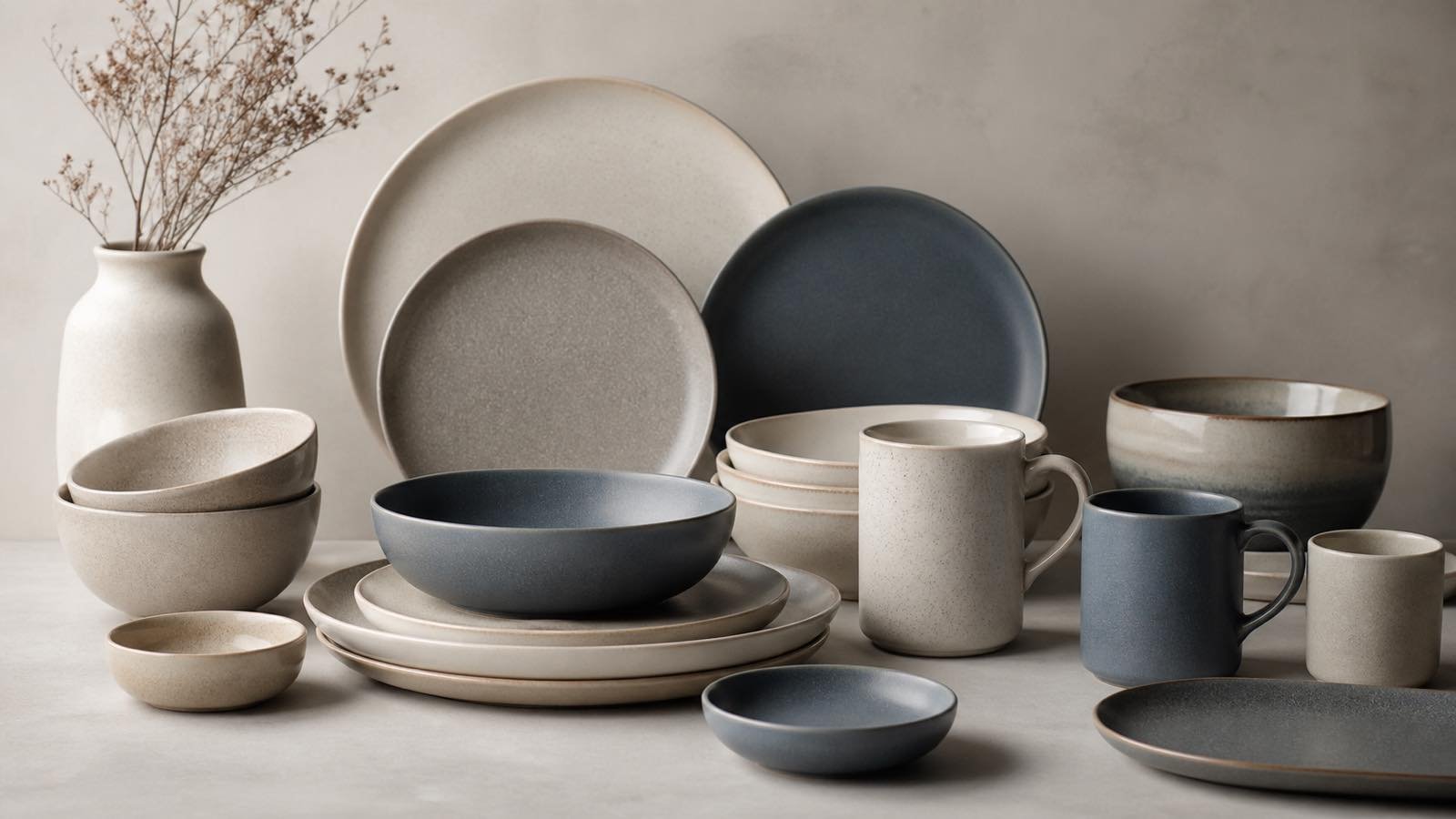
Minimalist dinnerware looks simple, but simplicity makes every proportion, surface, and junction more visible. Wholesale buyers choosing minimalist ceramic tableware must evaluate form, color, function, range logic, and packing with unusual care. This guide explains how to identify commercially useful minimalist designs, compare samples, create a disciplined assortment, and prepare a clear inquiry for retail, distribution, or hospitality purchasing.
Define Minimalist Tableware in Commercial Terms
Minimalism is not merely plain white ceramic. In a purchasing brief, it can mean restrained silhouettes, a limited palette, minimal decoration, balanced proportions, and details that support function. The goal is visual clarity rather than the absence of design.
Translate the concept into observable requirements:
- round, oval, angular, or softly organic silhouettes;
- bright white, warm white, neutral, or muted color family;
- glossy, satin, or matte glaze;
- plain surface, subtle speckle, fine relief, or narrow rim detail;
- coupe, wide-rim, or deep-plate profile;
- retail, restaurant, hotel, or mixed-channel use;
- required pieces and target price position.
Two ranges can both be minimalist while serving different customers. A thin-looking white porcelain set may suit refined retail presentation. A heavier warm-gray stoneware range may support casual dining. A stackable glossy white series may be better for a hotel. The commercial brief should state which interpretation is intended.
Avoid choosing from isolated photographs. Request dimensions, weight, capacity, carton data, and views from the side and underside. Minimal designs depend on small decisions such as rim radius, foot height, bowl curve, handle thickness, and the transition between surfaces.
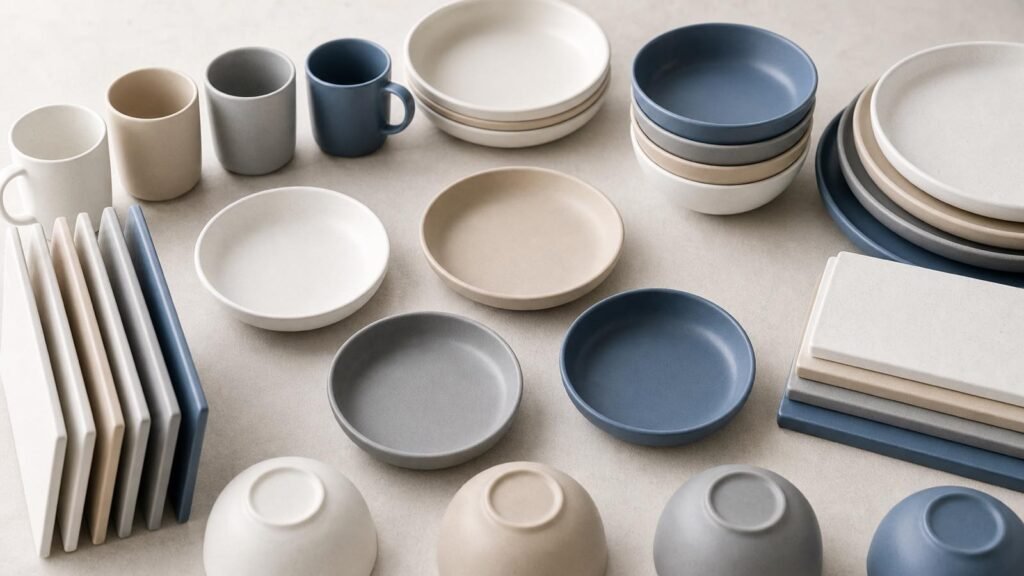
Evaluate Shape Proportion and Function
Minimalist forms reveal proportion clearly. A plate with an oversized rim, an unstable foot, or an awkward curve has little decoration to distract from the problem. Evaluate each item alone and as part of the full family.
For plates, record outside diameter, usable center, height, rim width, foot-ring diameter, weight, and stack height. A coupe plate can offer a broad modern surface, while a wide rim creates a more formal frame. Use the wholesale ceramic plate size guide to compare nominal size with usable area and operational fit.
For bowls, check usable capacity, spoon access, stability, and how the profile supports soup, cereal, rice, pasta, or shared dishes. Very shallow bowls may photograph well but spill during service. Narrow bases can reduce stability, while wide bases consume table and carton space.
For cups and mugs, test them filled. Assess rim feel, handle opening, balance, attachment points, and whether the capacity suits the intended drink. A visually delicate handle still needs comfortable finger space and practical packing protection.
| Design element | Minimalist objective | Practical test |
| Rim | Clean visual line | Carrying, food area, edge contact |
| Foot | Light stable appearance | Level-surface and stack test |
| Bowl curve | Continuous simple profile | Spoon access and usable capacity |
| Handle | Integrated proportion | Filled balance and finger comfort |
| Relief | Restrained texture | Cleaning and cross-shape consistency |
Measure several samples because ceramic ware can show controlled variation. Identify critical interfaces such as cup-and-saucer fit, lid fit, rack fit, and gift-box inserts.
Select Colors Glazes and Surface Details
A limited palette must still provide enough distinction for merchandising. Bright white communicates clarity and coordinates broadly. Warm white and beige soften the presentation. Gray, muted blue, sage, and charcoal can add identity without requiring complex decoration.
Compare every color under consistent daylight and the target interior lighting. Warm and cool whites may clash when mixed. Dark matte surfaces can make fingerprints, water spots, or utensil transfer more visible. Pale glossy surfaces may show reflected surroundings in photography.
Glaze choice affects touch, cleaning, variation, and visual wear. Glossy glaze supports a crisp classic appearance. Satin gives a quieter sheen. Matte creates a tactile contemporary character but should be tested with intended utensils and washing. Speckles or reactive edges can add depth, although excessive variation may conflict with a tightly controlled minimalist brief.
Use small details deliberately:
- a narrow colored rim can connect several shapes;
- fine vertical relief can add touch without dominating;
- a contrasting unglazed-looking foot can define the profile;
- subtle speckling can warm a neutral body;
- one accent color can organize mix-and-match displays.
Approve a representative group, not one ideal sample. Record acceptable color, speckle, texture, and edge variation with photographs. Ensure product listings communicate natural variation accurately.
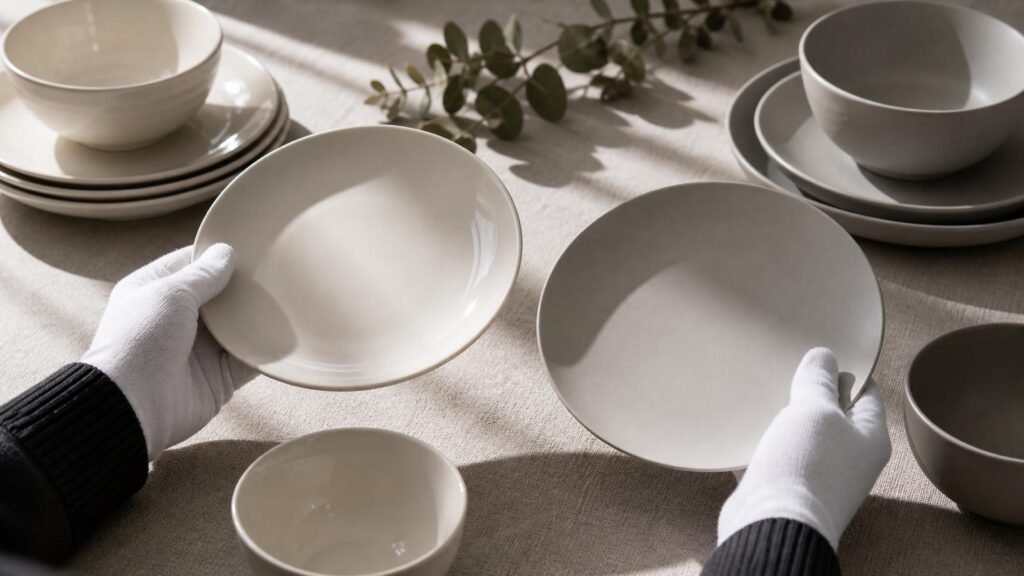
Build a Focused Wholesale Assortment
Minimalist ranges work when every item has a purpose. Begin with the eating occasions and channel, then select shapes. A retail foundation might include dinner plate, side plate, versatile bowl, and mug. A restaurant may need several plates and bowls mapped directly to menu items. A hotel may prioritize stackable core pieces and replacement continuity.
Create a range matrix with item code, image, role, dimensions, capacity, weight, color, glaze, carton pack, current quantity, target quantity, and sample status. Convert proposed quantities into complete retail sets or place settings. This reveals when there are too many mugs but too few side plates, or when pack multiples create imbalance.
Use a core-and-accent structure. Core items carry volume and should coordinate easily. Accent items can include a colored small plate, serving bowl, textured platter, or special mug. If every piece is an accent, the collection stops feeling restrained.
Review ready stock ceramic tableware in complete families. Ready-stock purchasing can support faster selection and mixed designs, but exact quantities may change. Define alternatives by body, white tone or color, form, finish, dimensions, and price band. A substitute should preserve the visual system.
Test merchandising before ordering. Build a shelf mockup, table setting, or e-commerce grid. Check relative scale and whether products remain distinctive when photographed on white backgrounds. Remove duplicate shapes that add inventory complexity without creating a meaningful customer choice.
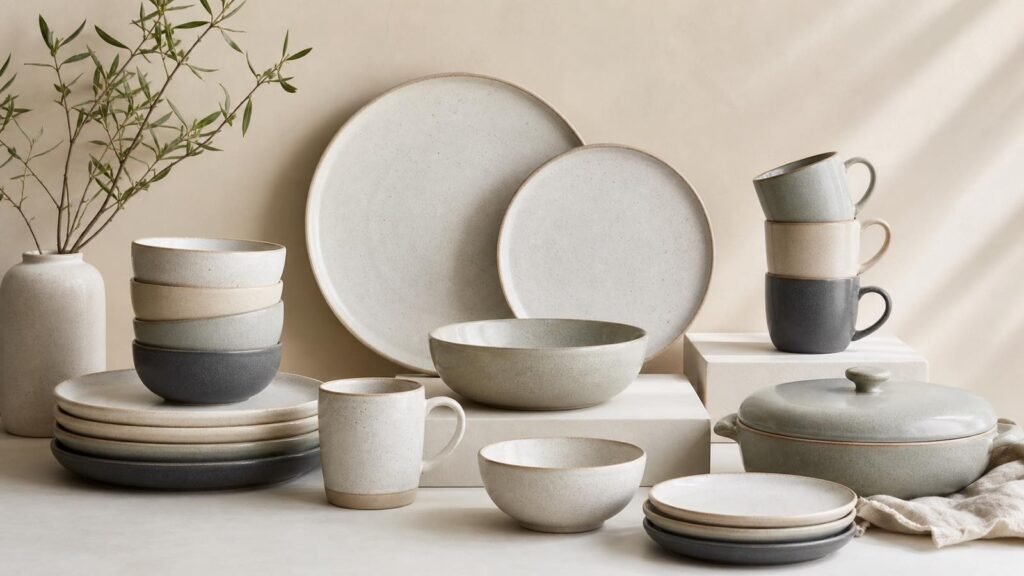
Inspect Samples Packing and Daily Use
Minimal surfaces make inconsistencies visible, so sample approval should be structured. Confirm item reference and material description, then measure dimensions, capacity, weight, and stack height. Check stability on a level surface, rim and foot finishing, glaze coverage, color, and decoration placement where applicable.
Run real-use trials. Serve representative foods, use the intended cutlery, wash pieces with the planned method, and inspect them fully dry under the same light. For hospitality, test loaded trays, dishwasher racks, shelves, and working stacks. For retail, review cabinet fit, consumer care wording, and parcel protection.
Packing must protect simple profiles and exposed edges. Ask for pieces per inner and outer carton, protective arrangement, carton dimensions, net and gross weights, and retail-box information. Wide rims, fine handles, and unusual feet may require more space even when the product itself looks visually light.
Write acceptance criteria that distinguish functional concerns from normal ceramic variation. Include stability, edge condition, glaze coverage, color range, piece count, packing integrity, and approved references. State who will inspect, when the inspection occurs, and how samples are selected.
Care claims must relate to the exact item. Do not infer microwave, dishwasher, oven, or freezer suitability from a minimalist appearance. Decorations or special surface effects may change guidance. Verify documentation relevant to the product and destination market through qualified providers.
Prepare a Clear Inquiry and Compare Offers
A useful inquiry identifies destination, customer channel, preferred minimalist direction, material, required shapes, dimensions or capacities, colors, finish, quantity by item, packing, and required schedule. Attach visual references while clarifying which features are essential.
Ask suppliers to return itemized photographs, model codes, specifications, available quantities, prices, carton data, preparation time, care guidance, and sample options. Keep revisions in one controlled assortment sheet so similar-looking products are not confused.
Normalize commercial terms before comparing. Record currency, trade term, named place, quantity, price unit, packing included, payment terms, quotation validity, and preparation schedule. Estimate freight using current carton data and date all variable cost assumptions.
The lowest piece price is not automatically the strongest choice. Consider usable assortment balance, packing efficiency, sample quality, replacement plan, and how well every item supports the customer brief. A disciplined comparison protects the clarity that made the minimalist range attractive in the first place.
Conclusion
Minimalist ceramic tableware succeeds when restrained appearance is supported by careful proportion, practical use, consistent surfaces, and a focused range. Define the visual direction in measurable terms, test representative samples, and balance core items with limited accents. Review packing and commercial terms as closely as the design. To explore available options, ask for a minimalist tableware quotation with your required shapes, quantities, market, and target finish.
FAQ
No. White is common because it emphasizes form and coordinates easily, but minimalist ranges can use beige, gray, muted blue, sage, charcoal, or a controlled mix. The defining features are restraint, clear proportions, and a coherent palette. Buyers should compare colors under target lighting and confirm that every shade works across the required shapes.
A practical retail foundation often includes a dinner plate, smaller plate, versatile bowl, and mug or cup. Restaurants should select pieces around actual menu items, while hotels may prioritize stackable plates, bowls, cups, and saucers. Start with clear functions and add serving or accent pieces only when they support a real merchandising or service need.
Inspect several labeled samples for dimensions, stability, rim and foot finishing, glaze coverage, color, stack contact, and handle comfort. Then test real food, cutlery, washing, shelving, and packing. Minimal designs make proportion and surface consistency especially visible, so written acceptance criteria and retained approved samples are more reliable than catalog images alone.