

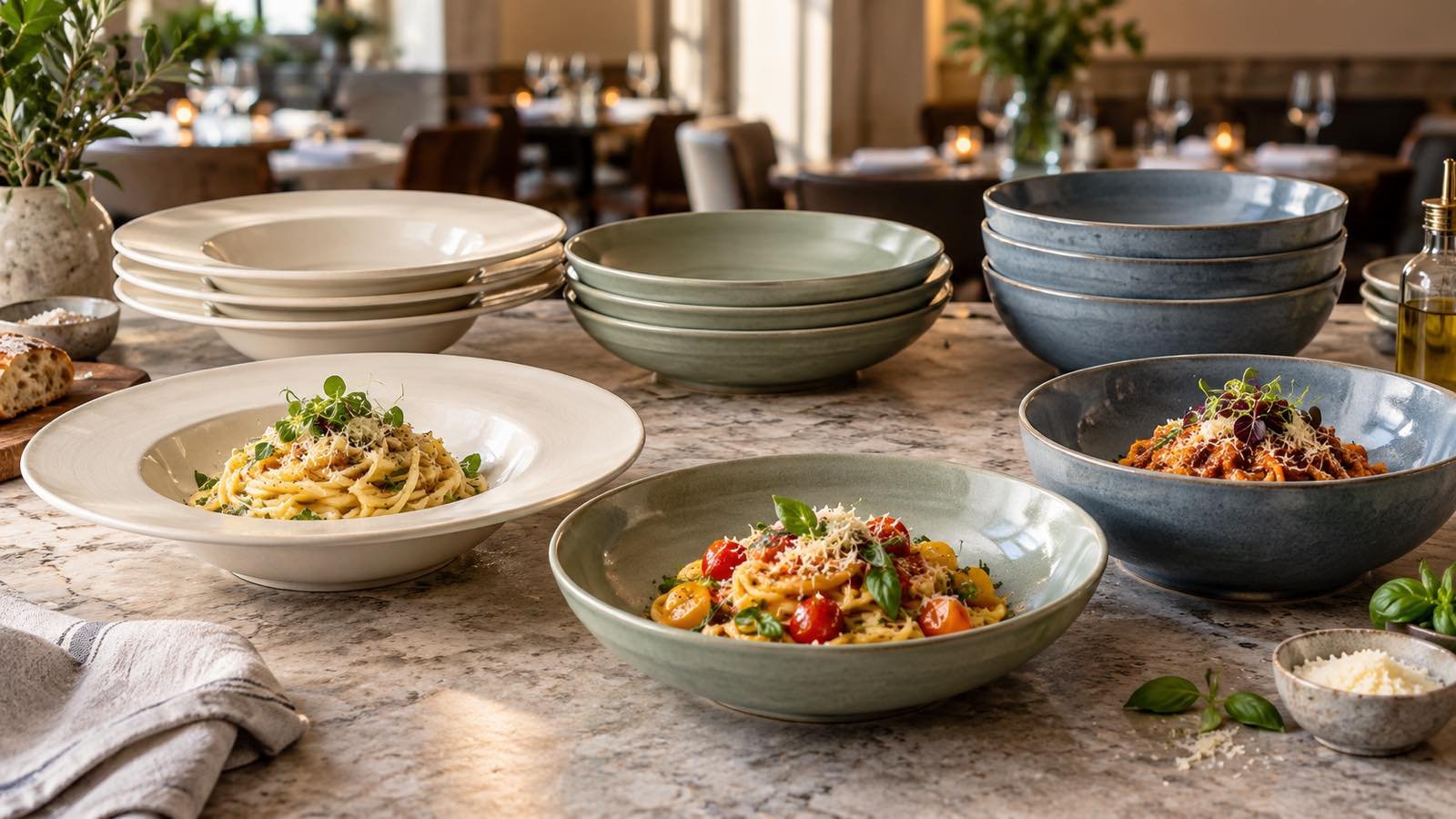
A bowl with the right diameter can still be too shallow for sauce, too wide for a shelf, or uncomfortable for service staff to carry. Buyers of wholesale ceramic pasta bowls should evaluate the complete profile rather than relying on one catalog measurement. This guide explains rim styles, well dimensions, practical capacity, menu uses, stacking, and packing so importers and hospitality suppliers can prepare a precise product request.
Identify the Main Pasta Bowl Profiles
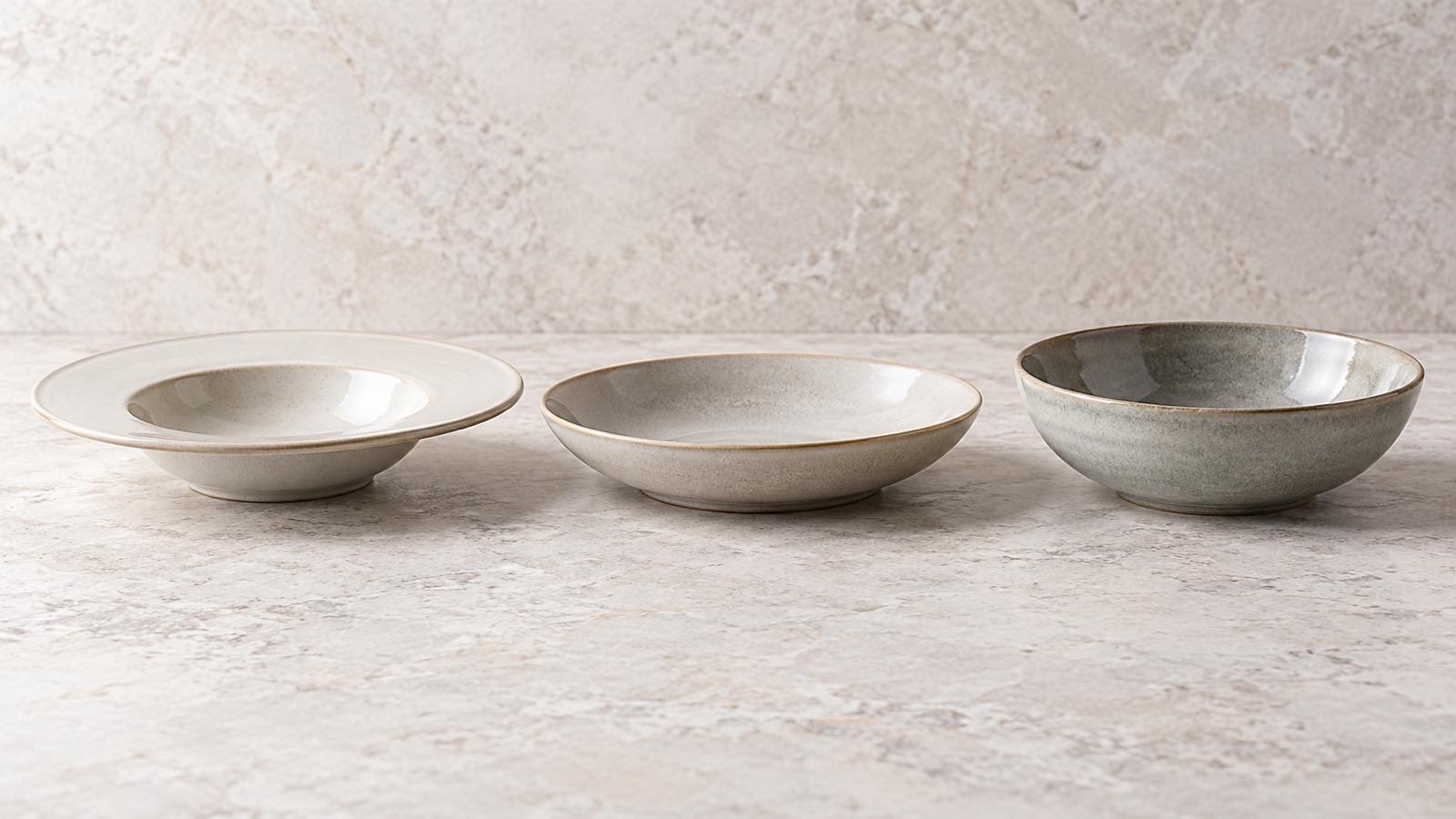
Pasta bowls occupy the space between a flat plate and a deep soup bowl. Their broad presentation area displays noodles and garnish, while the central well contains sauce. However, suppliers and buyers may use names such as pasta plate, coupe bowl, rimmed bowl, or deep plate for different profiles. A photo and full dimensions are more reliable than the product name alone.
A wide rimmed bowl has a defined central well surrounded by a flat or gently angled rim. It creates a strong frame around the food and gives serving staff an area to grip. The tradeoff is that the usable food area can be much smaller than the overall diameter, and the broad rim occupies more shelf and carton space.
A coupe pasta bowl has no separate flat rim. Its curved wall rises from the well to the edge, which can increase usable area and create a modern presentation. Coupe shapes may nest efficiently, but buyers should check how tightly they stack and whether the edge remains protected during handling.
A deep plate has a relatively flat center with an upturned edge. It can support pasta, risotto, salad, and sauced main courses. Its capacity is often less obvious from photographs, so a side-profile image and depth measurement are essential. A taller bowl profile offers more containment, but it may look less like a plated entrée and more like a serving bowl.
Specify Dimensions and Practical Serving Capacity
Overall diameter is only the starting point. Ask for rim diameter, inner well diameter, total height, usable depth, foot diameter, and product weight. For rimmed shapes, the difference between outer diameter and well diameter strongly affects portion presentation. Two 28-centimeter bowls can have very different usable centers.
Capacity also needs a defined method. Brim capacity measures liquid filled to the edge and is not a realistic serving level. Practical serving capacity leaves space for movement, garnish, and comfortable carrying. For purchasing decisions, test the target portion rather than converting a brim figure directly into a menu claim.
Run a Portion Test
Place the normal cooked pasta portion in the sample, add the expected sauce and garnish, and observe the remaining space. Check whether sauce pools in the well, whether long pasta can be turned with a fork, and whether the rim stays clean enough for presentation. Repeat the test with the largest realistic portion, not only the ideal food-styling quantity.
| Profile | Visual effect | Capacity consideration | Typical buying question |
| Wide rimmed bowl | Formal framed presentation | Well may be smaller than outer diameter suggests | What is the inner well diameter? |
| Coupe bowl | Contemporary open surface | Curved wall expands usable area | How does it stack under daily use? |
| Deep plate | Versatile plate and bowl balance | Shallow depth can limit liquid dishes | What is the practical serving depth? |
| Tall sided bowl | Strong containment | Presentation area may feel compact | Is it comfortable for pasta and utensils? |
The wholesale ceramic bowl range can be filtered into a shortlist by intended use, but the final choice should be based on samples and exact specifications. A retail listing may emphasize approximate diameter, while a food-service buyer also needs stack height, weight, and compatibility with dishwashing and storage systems.
Weight influences the experience at every stage. A substantial bowl can communicate durability and remain stable on the table, but a very heavy item increases carrying effort and shipment weight. Compare samples of similar size and record actual weight rather than assuming all ceramic pasta bowls have the same feel.
Match Bowl Shape to Menu and Sales Channel
Restaurants should begin with the menu. Long pasta with light sauce benefits from accessible walls and enough turning space. Short pasta with a substantial sauce needs containment. Risotto and composed dishes often benefit from a broad visible surface, while broth-heavy recipes require greater depth. One bowl may cover several dishes, but only portion testing will show whether the compromise is practical.
Retail buyers should consider how customers describe and use the product at home. A pasta bowl marketed as multi-use can also serve salad, grain bowls, curry, stew, or dessert when the shape supports those applications. Use accurate dimensions in online listings and show the side profile; a top-down image alone can make a shallow deep plate look like a conventional bowl.
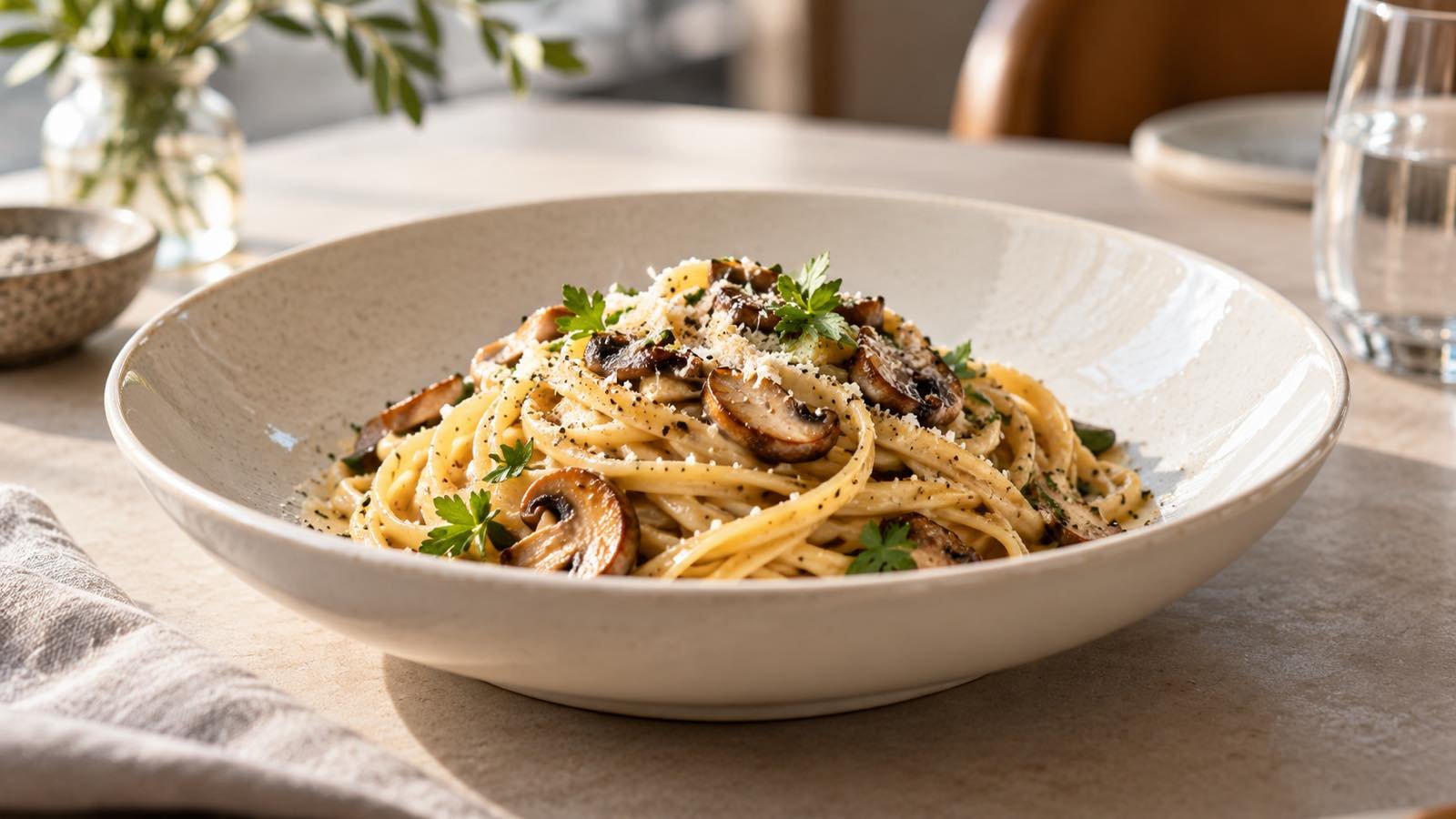
Color and finish should support the food and the range. Neutral glazes can coordinate with multiple plate designs, while reactive or visibly varied finishes create a more individual look. Ask what variation is characteristic of the selected design and review representative samples. Do not rely on a single studio image to define the acceptable appearance of every piece.
For a coordinated place setting, compare the pasta bowl with ceramic plate options. Check glaze tone, rim language, foot style, and proportional balance. Items do not need to be identical to form a coherent assortment, but deliberate coordination is more convincing than a group based only on a similar color name.
Food-service distributors can use a simple evaluation matrix:
- Menu fit: the planned portions sit below the rim and remain easy to eat.
- Table footprint: the bowl fits the table setting without crowding glasses or side plates.
- Handling: staff can grip, carry, clear, and rack the bowl comfortably.
- Storage: stacks fit the shelf height and remain stable.
- Presentation: the well and rim frame the food as intended.
- Range logic: the shape complements other items offered to the account.
Retail distributors should add shelf footprint, gift potential, ecommerce packaging, and replacement demand. A bold wide-rim design may create visual impact but consume more display space per unit. A compact coupe form may support denser shelves and flexible household use. The best choice depends on the sales plan rather than a universal style ranking.
Check Stacking Packing and Wholesale Order Details
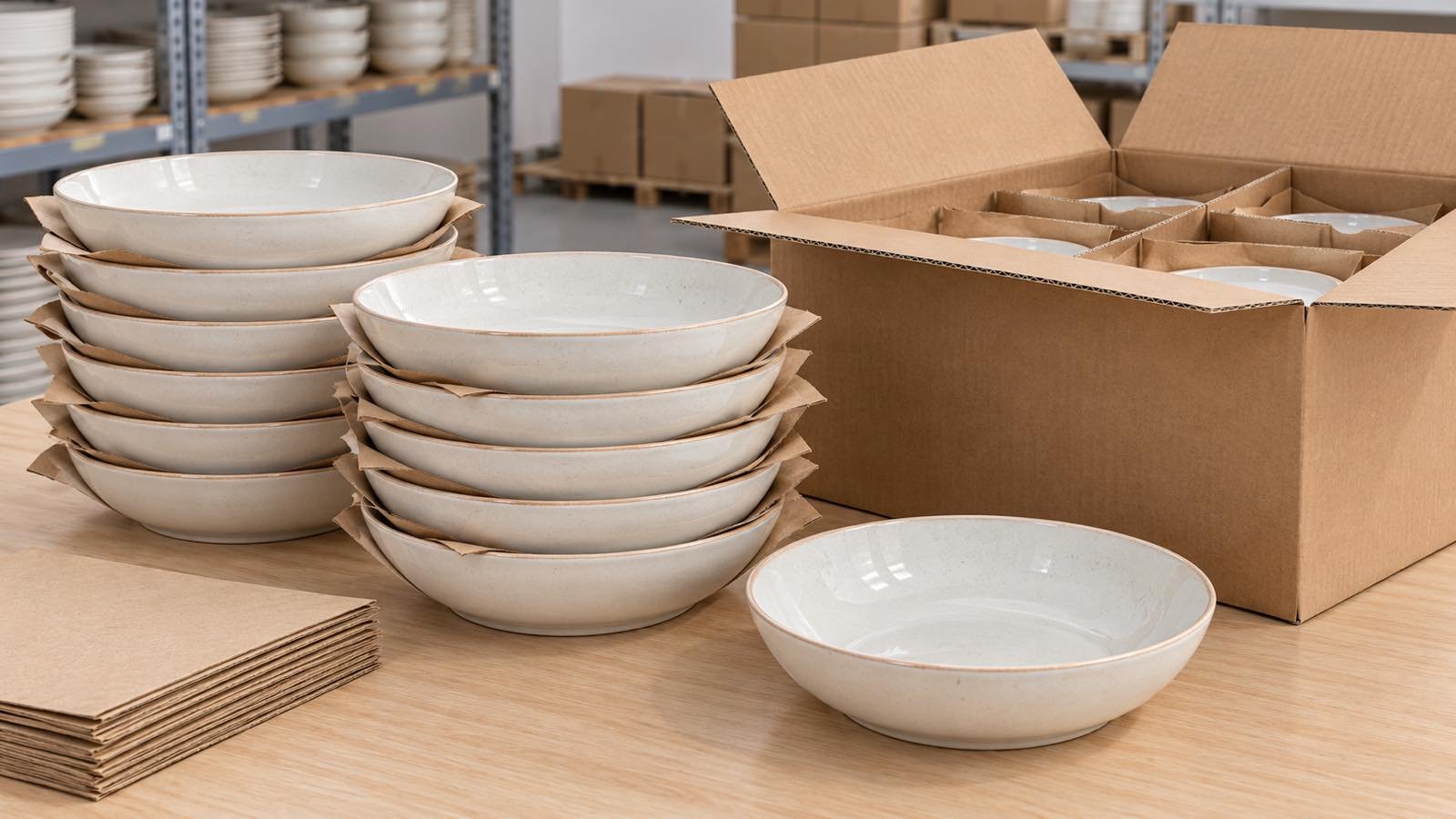
Stacking affects safety, labor, and capacity. Place several sample bowls together and observe where the pieces contact. A stack that nests too tightly can be difficult to separate, while a tall loose stack uses more shelf and carton height. Check for rocking and confirm whether protective material is used between pieces in the export packing.
Measure stack height for a realistic service quantity, not only two pieces. Hospitality buyers should compare the result with shelves, racks, and handling limits. Importers should use the confirmed packed quantity and carton dimensions for freight planning. Product dimensions alone do not reveal how protective materials affect the outer carton.
Before placing a bulk order, confirm:
- Item code and current photo reference.
- Overall diameter, well diameter, height, depth, foot, and weight.
- Capacity measurement method and intended practical portion.
- Material, glaze, decoration, and expected visual variation.
- Pieces per inner pack and outer carton.
- Carton dimensions, gross weight, and protective arrangement.
- Current saleable quantity and full-carton order total.
- Sample approval record and any agreed acceptance criteria.
Inspect samples in the intended environment when possible. A restaurant should test food presentation, pass handling, table spacing, clearing, washing, and storage. A retailer should test photography, shelf display, customer-facing measurements, and packaging. Document the approved item with its code so the purchasing team does not approve a visually similar but different profile.
On receipt, count cartons and compare labels with the packing list before opening a representative sample. Check the profile, dimensions, glaze appearance, stack behavior, and packing against the approved reference. Record findings by item and carton rather than mixing observations across several bowl designs.
Wholesale ceramic pasta bowls can be a focused product line or part of a wider tableware assortment. Keep the first selection purposeful: choose profiles that address distinct uses rather than several nearly identical shapes. Current stock, carton multiples, and customer demand should determine the final quantities.
Conclusion
Wholesale ceramic pasta bowls should be specified by profile, usable well, practical serving capacity, weight, and stack behavior—not diameter alone. Test real portions, compare the bowl with the target table setting, and include confirmed packing in the landed-cost calculation. A clear specification helps retailers and food-service buyers select bowls that work after the catalog photo. Contact Chengguo with your preferred shape, dimensions, quantity, and destination to discuss current stock ceramic bowl options.
FAQ
There is no single correct size because menu portions and presentation styles differ. Buyers should confirm rim diameter, well diameter, depth, and measured capacity rather than choosing by diameter alone. Test the intended pasta portion with sauce and garnish, leaving enough room for carrying and comfortable eating.
Often yes. A wide rim bowl can present risotto, composed salads, grain dishes, curries, and plated desserts, depending on its well and depth. Buyers should test each use because a shallow well may not suit generous liquid portions. Multi-use potential is valuable only when it matches actual menu or customer needs.
Confirm the exact profile, dimensions, measured capacity method, weight, foot, glaze, color tolerance, stack behavior, carton quantity, and current availability. Review a representative sample with the intended portion and equipment. The approved specification should identify the item code and packing so purchasing and receiving teams check the same product.