

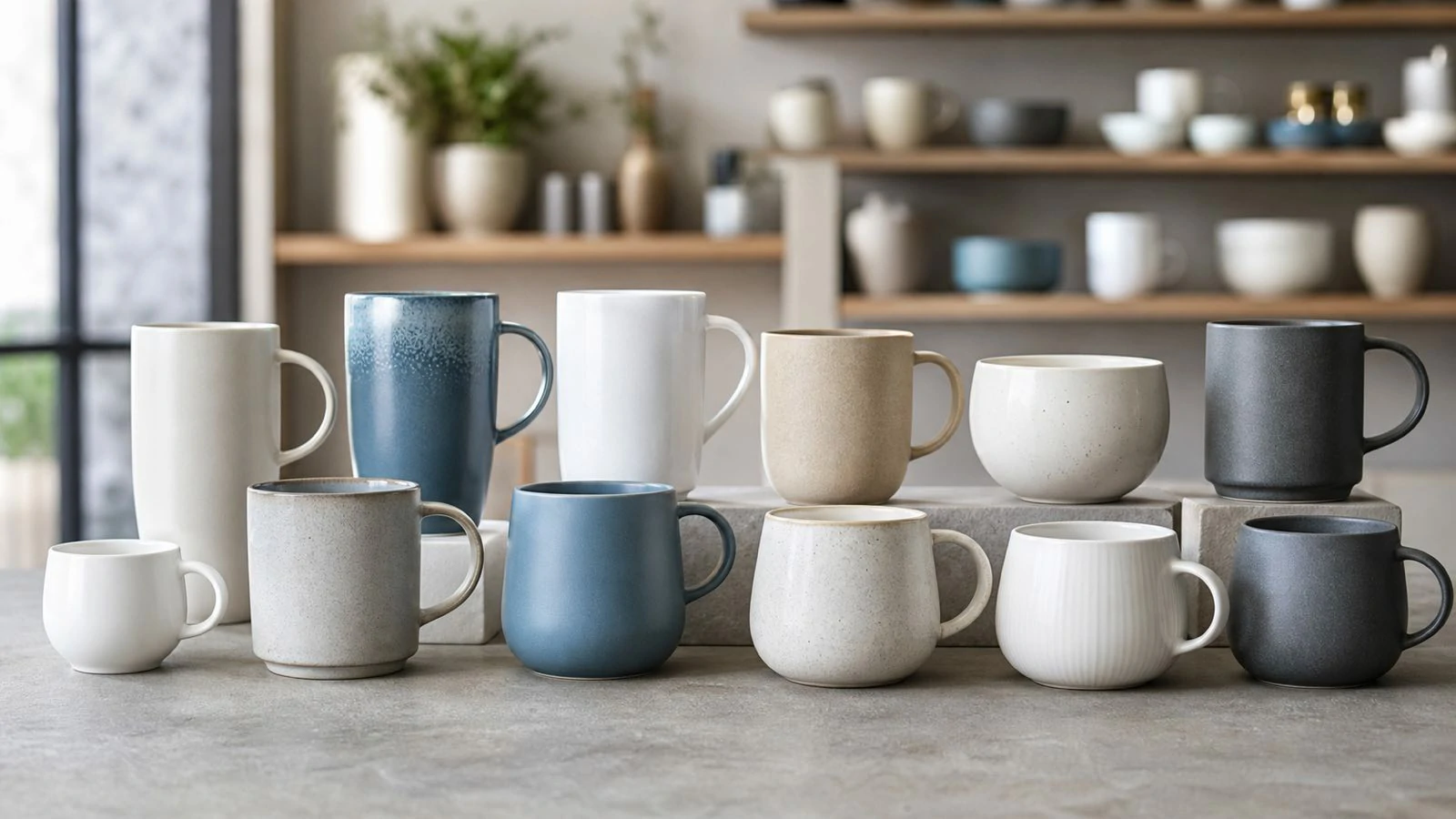
Mugs with the same stated capacity can feel very different in the hand and use very different amounts of carton space. Buyers of wholesale ceramic mugs should compare the complete product: capacity method, shape, ceramic body, glaze, handle, decoration, packing, and available quantity. This guide helps importers, wholesalers, distributors, hospitality suppliers, and trading companies turn a broad mug request into a clear bulk buying specification.
Match Mug Capacity and Shape to the Market
Start with the intended drink, serving style, customer, and sales channel. A compact café mug, a tall retail mug, and a broad promotional mug may share a capacity label but perform differently.
Understand Stated and Practical Capacity
Ask how capacity is measured. A brimful capacity fills the mug to the top and is useful as a consistent product measurement, but it is not a normal serving volume. A practical capacity leaves space below the rim. Quotations and samples should use the same method.
Record both the stated measurement method and the buyer’s desired serving range. When comparing products, measure samples using the same vessel, water temperature, and fill point. The goal is consistency, not an isolated number.
Common buying categories can be described without treating them as universal standards:
| Mug category | Typical buyer consideration | Shape implication |
| Compact cup or mug | Short drinks, sets, limited shelf space | Smaller body and handle |
| Everyday mug | General retail, office, hospitality | Balanced capacity and packing |
| Tall mug | Visual volume, specialty beverages | Higher center of gravity |
| Wide mug | Soup, cocoa, casual drinks | Larger opening and carton footprint |
Final capacity should always be confirmed for the exact item code. Shape, wall thickness, taper, and handle position can change the useful volume.
Compare Cylindrical, Tapered, Bell, and Rounded Profiles
Cylindrical mugs provide a straightforward contemporary look and often stack visually in neat rows. Tapered mugs may nest slightly or appear lighter. Bell and rounded profiles create a softer silhouette but can use more carton space.
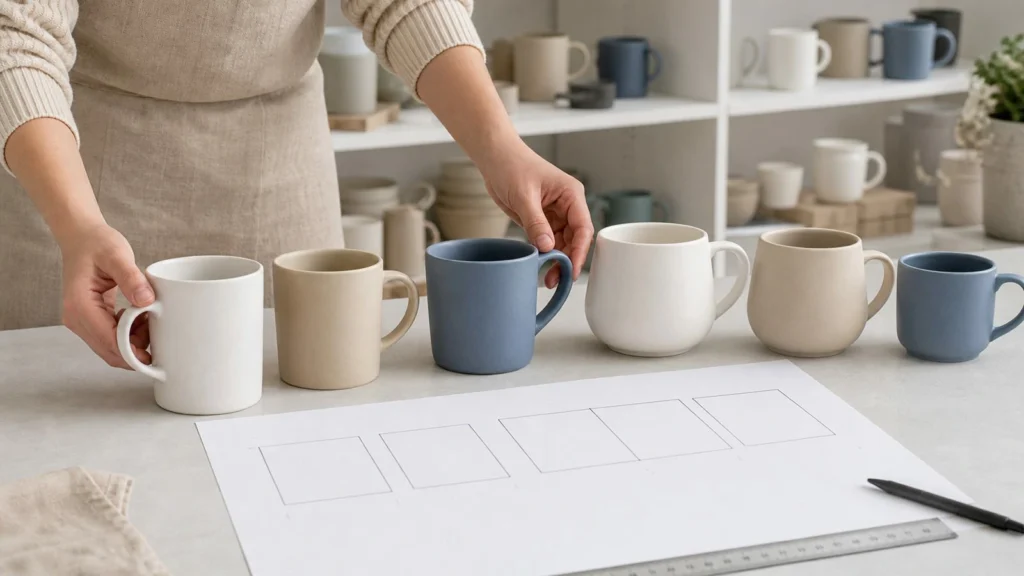
Check the base diameter, maximum body diameter, height, rim diameter, and handle projection. These dimensions affect saucer compatibility, retail shelving, dishwasher racks, carton dividers, and the number of pieces that fit into a shipping volume.
When a mug must fit a gift set or existing dinnerware range, place it next to the other items during sample review. Proportion and shade are easier to judge together than from separate product photographs.
Compare Ceramic Materials and Surface Finishes
Material selection affects appearance, weight perception, wall profile, price positioning, and the range of available finishes. Buyers should evaluate the finished mug rather than assuming a material name guarantees a specific performance or feel.
Porcelain, Stoneware, and New Bone China
Porcelain mugs often support a clean, refined look across classic and modern designs. Stoneware commonly suits substantial forms, matte surfaces, speckles, and reactive glazes. New bone china is often selected for a lighter-looking, smooth, elegant presentation.
| Buying factor | Porcelain | Stoneware | New bone china |
| Visual direction | Clean and versatile | Casual and crafted | Refined and light-looking |
| Common finishes | Gloss, matte, printed | Reactive, matte, gloss | Smooth gloss, delicate decoration |
| Weight impression | Varies by form | Often substantial | Often designed to feel lighter |
| Buyer sample check | Whiteness, rim, handle | Glaze range, weight, foot | Shade, balance, rim |
The exact ceramic body should be confirmed for each product. Ask for the item specification and assess samples for weight, balance, finish, and intended use.
Gloss, Matte, Speckled, and Reactive Glazes
Gloss surfaces provide clear reflections and a familiar commercial appearance. Matte finishes can look contemporary but should be checked for color consistency and surface feel. Speckled and reactive glazes introduce intentional variation that needs an agreed visual range.
Inspect multiple mugs under neutral light. Compare the body, rim, handle, foot, and recessed handle joins. For reactive finishes, review how tone and glaze flow vary from piece to piece. An approved sample set or controlled photographs can document the intended appearance.
Browse current stock ceramic mugs by shape and finish, then compare complementary products in the wider ready stock ceramic dinnerware selection.
Evaluate Handles, Rims, and Everyday Use
The handle is one of the most important differences between mug designs. It affects comfort, balance, packing, and customer perception, yet it is difficult to judge from a front-view image.
Check Handle Opening and Balance
Hold each sample using several natural grips. Check whether the opening suits the intended customer, whether the handle edges feel comfortable, and whether the mug remains balanced when empty and safely test-filled.
Review:
- Handle opening width and height
- Distance between handle and mug body
- Upper and lower joint areas
- Handle thickness and edge profile
- Balance at practical fill level
- Handle projection beyond the body

Handle projection affects divider design and carton volume. A visually dramatic handle may suit retail display but reduce packing efficiency. Compare the commercial benefit of the design with its shipping and storage impact.
Inspect Rim, Foot, and Drinking Experience
The rim profile influences drinking comfort and visual refinement. Run a finger carefully around the rim, then inspect it under consistent light. Check the foot ring for a stable, properly finished contact surface.
Place mugs on a level table and check stability. Compare several pieces for height, handle position, and visual alignment. If a mug is intended for a saucer, test the exact combination rather than assuming fit from nominal dimensions.
For hospitality use, consider storage height, rack fit, serving balance, and replacement planning. For retail, consider shelf impact, color assortment, gift-box fit, and barcode placement.
Review Decoration, Samples, and Quality References
Mugs can carry printed patterns, bands, logos, decals, texture, or glaze effects. Decoration changes the approval and testing scope, so it should be described precisely in the buying brief.
For stock mugs, confirm the decoration already available for the item code. Ask for clear views of all sides and the handle area. If the design has a front orientation, record how it relates to the handle.
During sample evaluation, check:
- Decoration position and orientation
- Color appearance under neutral light
- Alignment around curved surfaces
- Continuity near seams or handles
- Agreed variation between pieces
- Packaging contact with decorated areas
Testing requirements depend on the destination, intended use, ceramic body, glaze, and decoration. State the required standard or scope and ask which documents relate to the product under consideration. Do not assume that documentation for an undecorated mug covers a different decoration.
Create one approval sheet with the item code, material, measured capacity, dimensions, weight, photographs, decoration reference, and packing method. If a detail changes, update the sheet so all parties work from the same version.
Plan Quantities, Packing, and Shipping
Wholesale ceramic mugs should be planned by carton as well as by piece. Handle shape, body width, and retail packaging can create large differences in carton size between mugs of similar capacity.
Ask for:
- Pieces per inner box and export carton
- Divider and protective materials
- Carton dimensions
- Gross and net weight
- Retail box dimensions, if applicable
- Label, barcode, and shipping-mark requirements
- Current available quantity by item and color
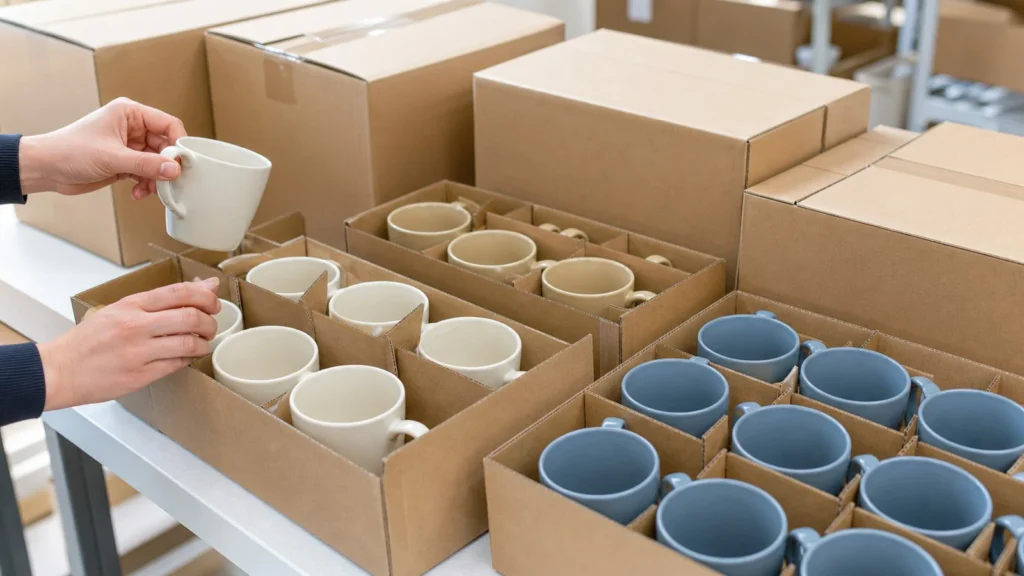
Build the assortment around expected demand. Neutral colors may serve as core items while stronger glazes provide variety, but the correct mix depends on the buyer’s own sales information. For a new range, a controlled assortment makes it easier to observe demand.
Confirm stock availability line by line. Different colors of the same mug may have different quantities. Ask what step reserves selected stock and ensure that the final quotation or pro forma invoice identifies each item, color, quantity, packing unit, and price.
Compare quotations on the same basis. Check product specification, unit, packing, trade term, named port or place, payment terms, validity, and preparation window. Separate optional retail packaging, labels, testing, or inspection charges.
Before dispatch, reconcile the invoice, packing list, approved sample record, inspection result, and shipping instructions. Product codes and quantities should match across all documents.
Build a Complete Wholesale Mug Enquiry
A concise, structured enquiry helps the supplier respond with suitable available options. Include:
- Intended market and use
- Preferred capacity and measurement method
- Shape and material preferences
- Glaze, color, and decoration
- Quantity by item or color
- Packing format
- Destination and desired shipping period
- Testing, labeling, barcode, and document requirements
State which requirements are essential and which are flexible. If capacity and deadline are fixed but color is flexible, the supplier can search available stock more effectively. Reference images are useful when accompanied by notes explaining the important features.
When reviewing the reply, create a shortlist with item code, photos, specifications, available quantity, packing, and price. Request samples for unfamiliar shapes, handles, glazes, decorations, or retail packaging before confirming a significant order.
Conclusion
Choosing wholesale ceramic mugs requires more than selecting a capacity and color. Compare the measurement method, profile, ceramic body, glaze, handle comfort, rim, decoration, carton configuration, and current availability. A physical sample and a documented approval sheet make quotations and inspections easier to manage. Browse available mug styles or request a mug quotation with your required capacity, quantity, destination, and packing format.
FAQ
State whether the required capacity is brimful or a practical serving volume. Ask the supplier to use the same method for quotations and samples. Shape, wall thickness, taper, and rim diameter can make two mugs with the same stated capacity feel different, so also confirm the body dimensions and test a physical sample when fit or serving volume is important.
Check opening width and height, distance from the body, thickness, edge comfort, upper and lower joins, and balance at a practical fill level. Also measure how far the handle projects because this affects divider design and carton volume. Hold the sample with several natural grips rather than judging comfort from a photograph.
Mixed colors may be possible when each color is available and quantities follow the supplier’s packing increments. Confirm stock, pieces per carton, carton dimensions, and price for every color. Use a line-by-line packing list and avoid assuming that all colors of one shape have equal availability. The mix should reflect expected sales and the buyer’s range strategy.