

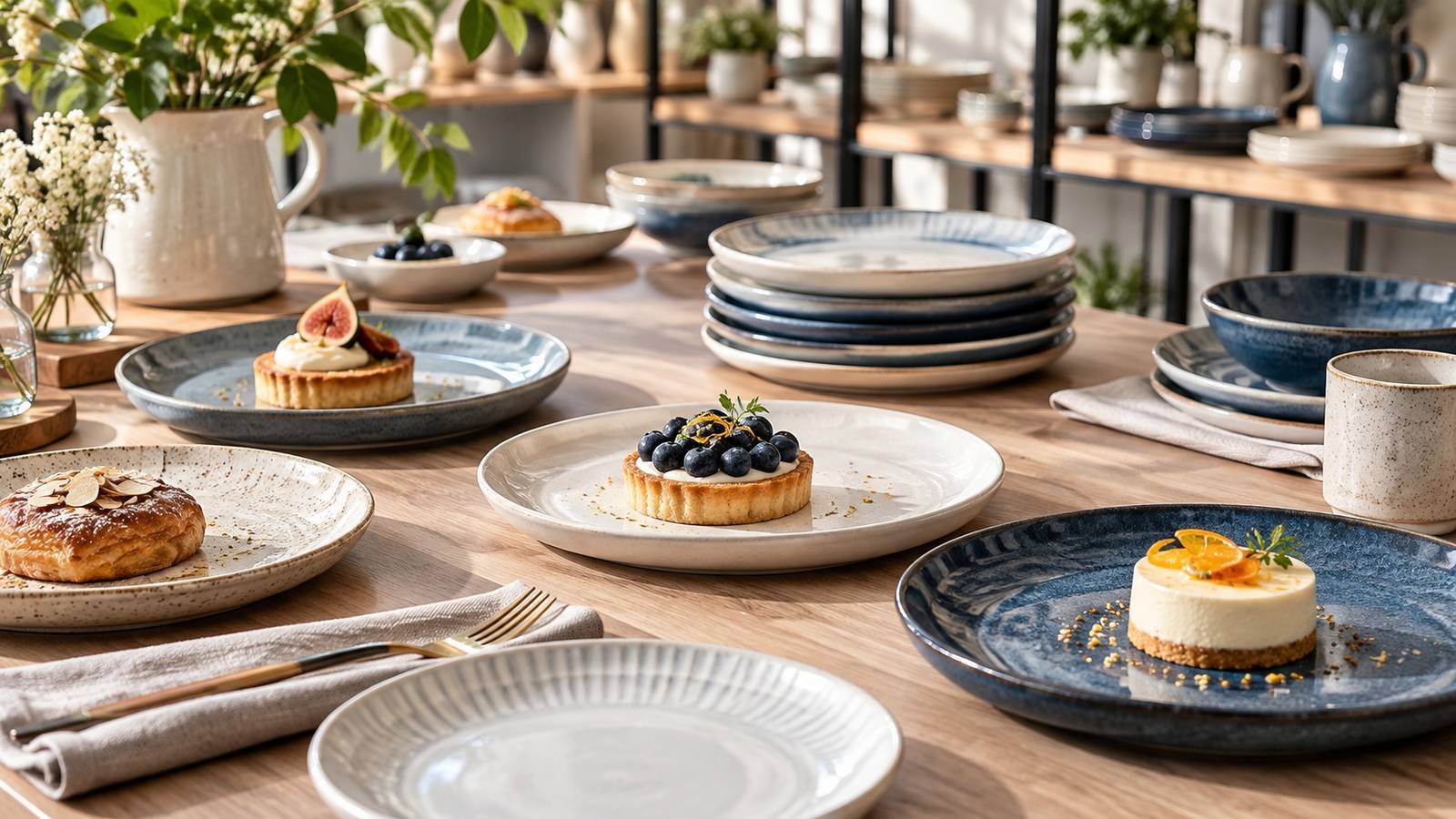
A dessert plate needs enough usable space for the portion without overwhelming the presentation. Wholesale ceramic dessert plates also need to fit serving routines, storage, and the assortment a distributor can supply consistently. This guide helps bakery and cafe suppliers compare shapes, assess samples with representative portions, plan quantities, and confirm packing and availability before making a purchasing decision based mainly on appearance or nominal diameter.
Choose Wholesale Ceramic Dessert Plates by Usable Serving Area
Start with the food your customers intend to present. A cake slice, a pastry, and a plated dessert with sauce use space differently. Ask bakery and cafe buyers for a representative portion and the accompaniments normally served beside it. This brief gives you a practical basis for comparing a small plate with a larger one.
For wholesale ceramic dessert plates, record the overall dimensions and the usable central area. A broad rim can leave less serving space than a narrower rim on a plate with the same outer diameter. Square, oval, and irregular shapes also require more information than one size figure. Request the relevant length, width, and height measurements for the actual reference.
A hypothetical customer might compare two plates with the same 20-centimeter overall diameter. If one has a wider rim, the central serving area can differ. Do not infer the size of that area from a photograph; measure the samples or request a dimensioned reference. This example describes a comparison method, not a Chengguo product specification or a universal dessert plate size.
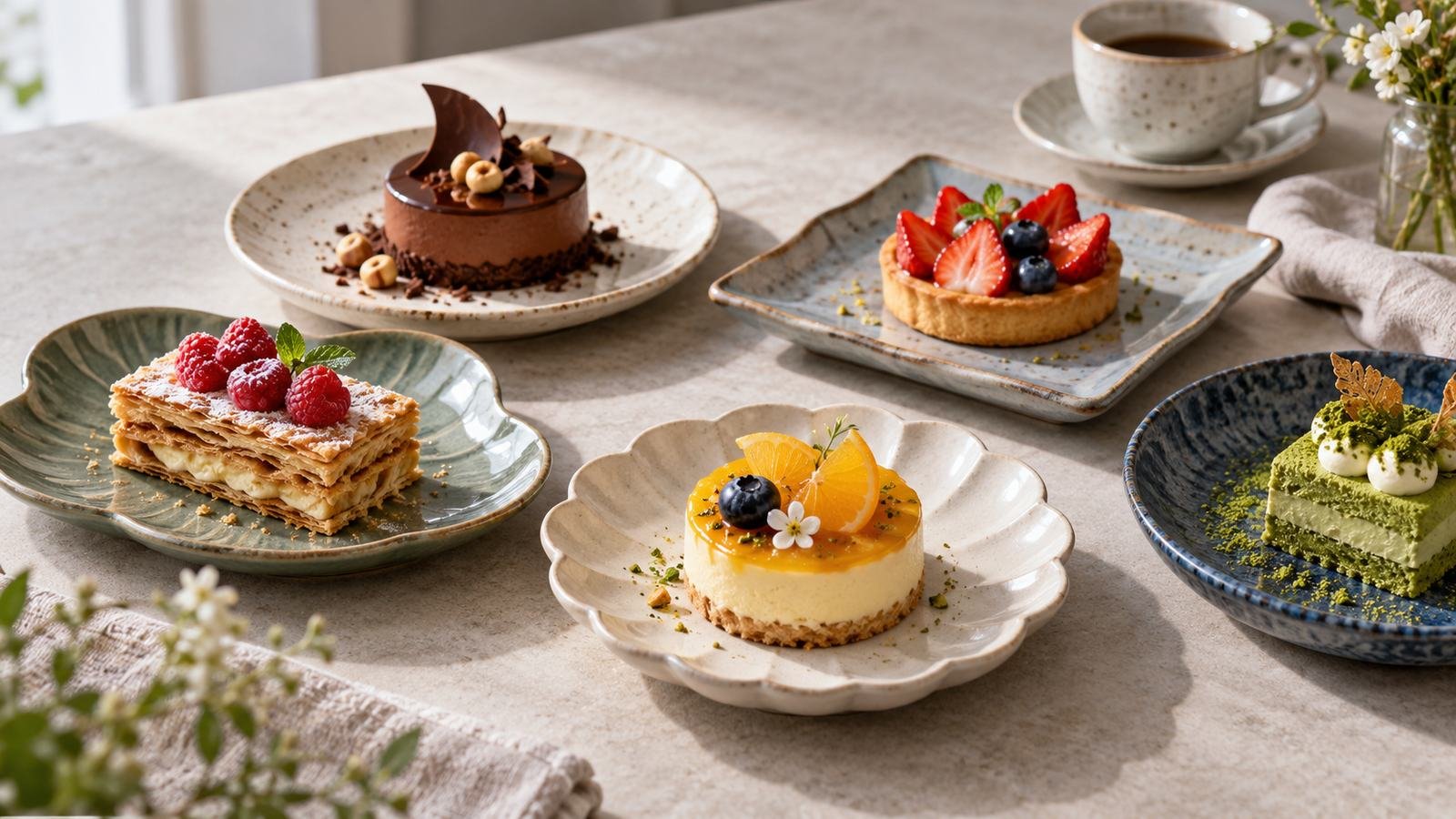
Place a representative portion on each candidate and photograph the result from the customer’s normal viewing angle. Keep food size and camera position consistent. For wholesale ceramic dessert plates, that simple comparison helps reveal whether the product suits the intended presentation without turning a styling photograph into a substitute for dimensional information.
Consider the complete table setting. If a cafe serves dessert beside a coffee cup, compare the plate with the actual cup and saucer family. Color coordination can be useful, but the plate still needs to work on its own for the food brief. Prioritize usable space and service fit before adding decorative variations to the purchasing shortlist.
Assess Rim Shape Surface and Handling with Exact Samples
A plate profile affects how the dessert sits, how staff carry the item, and how plates stack. Compare flat, gently raised, and more pronounced rims using the actual sample. A rim may help frame a pastry or contain a small amount of sauce, but suitability depends on the dish and service method. Avoid making a universal claim based solely on a shape category.
For wholesale ceramic dessert plates, ask for the material description, decoration details where relevant, and care instructions for each reference. A glaze appearance does not establish suitability for a particular appliance or cleaning method. If customers need a performance statement, obtain product-specific supporting information before including it in a sales sheet.
Review the ceramic plates and tableware selection alongside customer requirements. Keep plain colors and patterned designs on separate sample records when their references differ. A shared product family name does not necessarily establish identical dimensions, surface finish, or packing. The supplier should confirm the exact item offered for the proposed order.
Evaluate the sample in a repeatable sequence
Use the same process for every candidate:
- Record the supplier code and photograph the full plate.
- Measure the outer dimensions and usable serving area.
- Place a representative dessert portion on the plate.
- Assess handling and stability on the intended table surface.
- Compare a short stack of matching samples where available.
- Record the supplied care statement and unresolved questions.
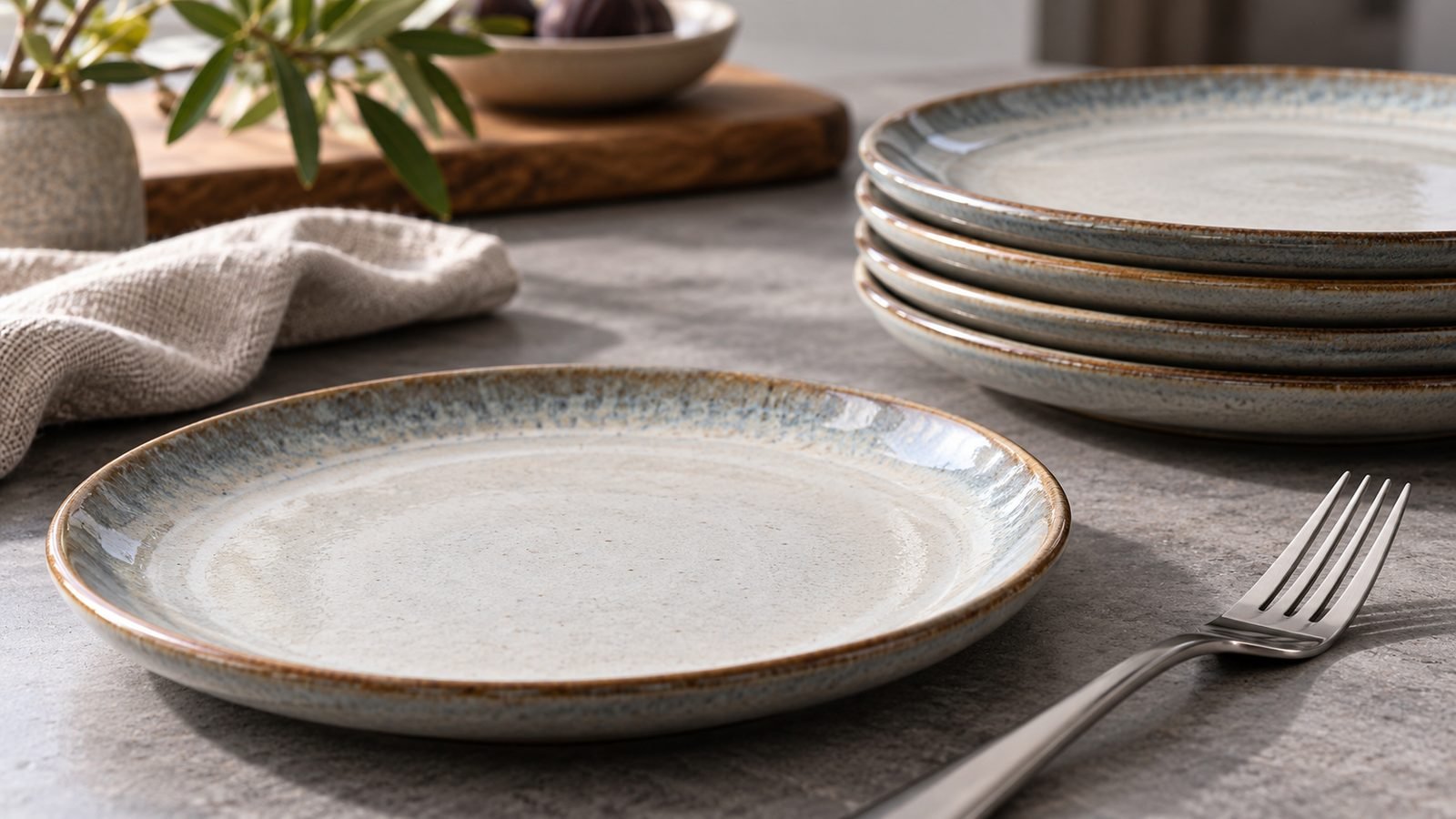
For wholesale ceramic dessert plates, inspect the rim and base under normal lighting. Look at the product from above and from the side so shape and presentation observations remain distinct. Record factual descriptions rather than vague judgments such as premium or durable, which do not explain what purchasing has actually evaluated.
Ask cafe staff to review the sample in their workflow when possible. Their feedback may identify a handle-free carrying preference, limited shelf height, or a serving tray dimension that was missing from the original brief. Document those requirements before ordering rather than assuming that a plate suitable for a showroom display will fit every customer’s operation.
Retain an approved sample reference and include its code in the order sheet. If a replacement is proposed, repeat the relevant checks rather than accepting a similar photograph. For wholesale ceramic dessert plates, sample approval should connect to a clearly described item and agreed attributes that both buyer and supplier can recognize.
Build Dessert Plate Quantities around Customer Demand
Quantity planning begins with the type of customer order. A new cafe setup, a seasonal bakery menu, and a distributor’s replenishment purchase can require different assortment depth. Ask for committed customer quantities and the reason for additional inventory. Keep customer allocation separate from pieces intended for samples, display, or general distribution.
For wholesale ceramic dessert plates, confirm whether the item is sold individually, as part of a set, or in fixed packs. Record the carton quantity before finalizing the order. If a hypothetical packing specification contains 24 plates per carton, an order of 144 plates equals six cartons. A request for 150 plates would need discussion about the permitted quantity and packing arrangement. These numbers are illustrative and must be replaced with confirmed supplier information.
Build a concise assortment table rather than relying on a total piece count:
| Customer need | Assortment decision | Information to confirm |
| Consistent cake service | One main plate reference | Usable area and current quantity |
| Several dessert formats | Two differentiated shapes | Demand split and separate packing |
| Matching cafe service | Coordinated plate and cup | Exact colors and product references |
| Distributor sampling | Small demonstration allocation | Sample availability and charges |
Wholesale ceramic dessert plates can be easier to distribute when differences between references are meaningful. Two sizes that serve different portions may have a clear sales purpose. Several nearly identical designs may make allocation and replenishment harder unless customers specifically request them. Ask the sales team to explain the role of each proposed item before adding it to the purchasing plan.
Use the ready stock ceramic plate options to build a shortlist with defined alternatives. State which attributes can vary and which cannot: overall dimensions, usable area, profile, color family, or coordination with an existing cup. Any suggested alternative still needs buyer approval for its exact code and specification.
Check how a quantity adjustment changes inventory and cash use. Adding one carton can satisfy a packing requirement, but the additional pieces should have an identified purpose. For wholesale ceramic dessert plates, compare the revised goods amount and storage demand with the expected value of the added quantity. Avoid purchasing extra variations solely because a larger total order appears more attractive.
Confirm Packing Availability and Future Matching
Before approval, obtain a dated availability confirmation for each plate code and color. Ask whether the quantities are available for your inquiry or reserved under an agreed arrangement. A product may appear in the catalog while only part of your required quantity can be supplied. Identify any gap before promising the assortment to a bakery or cafe customer.
For wholesale ceramic dessert plates, packing is part of the product proposal. Ask how pieces are separated, protected, and identified inside the carton. Request available carton dimensions, gross weight, and piece count so your logistics provider can work with the actual packing plan. Do not assume that retail presentation boxes and bulk shipping protection are the same service.
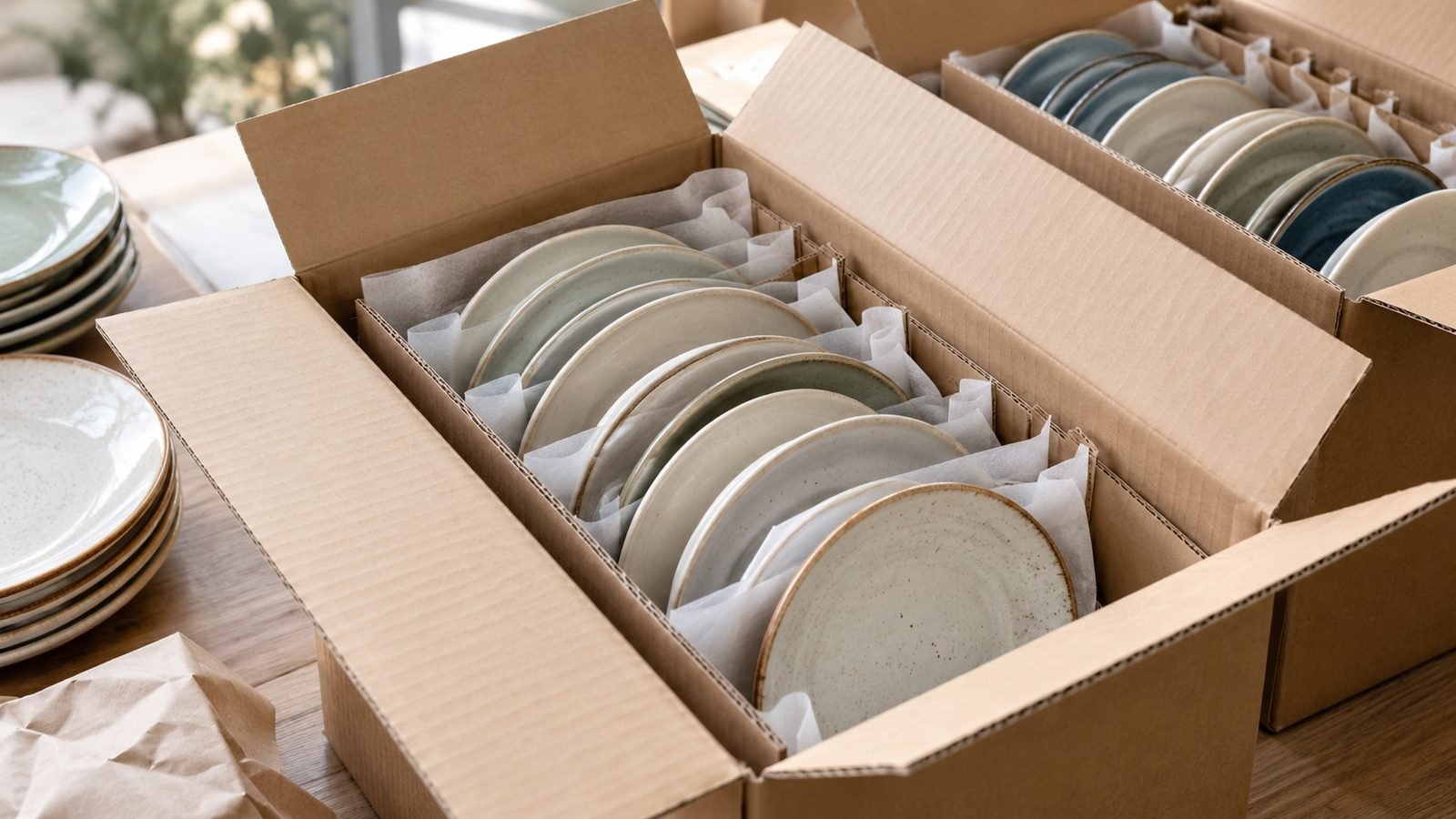
If the customer requests an individual box, clarify whether it is available for the exact plate and how it changes cost and packing. A box that improves presentation still needs to fit the plate securely within the agreed shipment arrangement. Have the supplier describe the complete packing sequence rather than confirming only the existence of a box.
Plan the receiving check in advance. Match item codes, quantities, carton labels, and the approved reference photographs. Wholesale ceramic dessert plates should be identifiable without asking receiving staff to infer a design from a general collection name. Clear labels and a packing list also help you allocate the goods to cafe customers promptly after arrival.
Discuss future matching separately from the initial order. Ask whether the supplier can currently offer the same item for another purchase and how future availability will be checked. Do not promise indefinite continuity from one ready stock confirmation. Maintain dimensions, photographs, and approved color references so a later offer can be evaluated accurately.
For wholesale ceramic dessert plates, conclude with one final order version containing the item codes, accepted quantities, packing, price, reservation conditions, and preparation milestone. Confirm any substitution in the same document. This record links sample approval to the actual purchasing commitment and gives your customer service team a reliable basis for describing the goods.
Conclusion
Wholesale ceramic dessert plates should match the dessert portion, usable serving area, and cafe workflow. Evaluate exact samples, give every reference a clear role in the assortment, and reconcile piece quantities with confirmed packing. Check current availability and future matching as separate questions. Contact Chengguo with your preferred shapes, dimensions, and quantity plan to discuss current ready stock options and a wholesale quotation.
FAQ
Use the customer’s representative dessert portion and accompanying items as the starting point. Compare both overall dimensions and the usable central area, because two plates with the same outer size can have different rim widths. Test samples with consistent portions and record the result. Wholesale ceramic dessert plates should be chosen for the intended presentation and service routine rather than a size label that may be interpreted differently.
Compare the exact shapes against the food brief, storage space, and handling routine. A round plate may coordinate with an existing service family, while a square or oval plate may suit another presentation. Neither category guarantees a better result. For wholesale ceramic dessert plates, record length, width, usable area, and sample observations so the decision reflects the customer’s menu and practical requirements rather than shape alone.
Ask the supplier about current quantities and the availability of the exact reference for a later inquiry. Keep product codes, dimensions, photographs, and color information in your records to support comparison. A present stock confirmation does not establish unlimited future continuity. For wholesale ceramic dessert plates, communicate replenishment expectations carefully and approve any alternative as a specific product rather than assuming a similar design is interchangeable.