

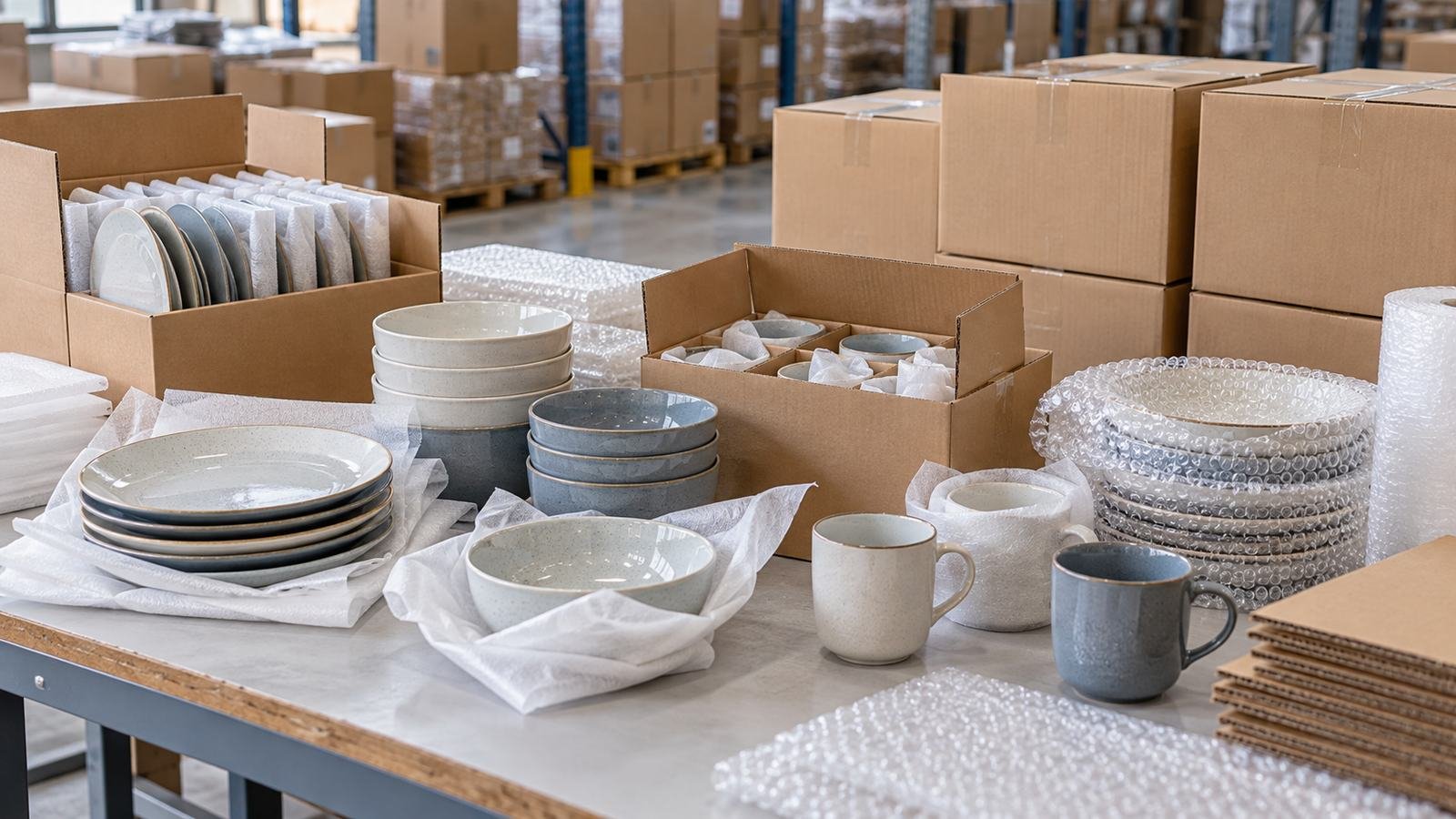
A shipment can be difficult to receive even when the product selection is correct. Ceramic tableware export packaging connects physical protection with quantity records, carton identification, and handling information. This guide helps importers and distributors define a packing brief, review the proposed arrangement, and prepare receiving checks. It focuses on questions buyers can verify with their supplier and logistics provider rather than assuming that one box specification suits every order.
Define the Ceramic Tableware Export Packaging Brief
Begin with the exact products and the route they will follow after arrival. A distributor transferring full cartons to customers has different identification needs from an importer opening cartons and allocating individual pieces. Record item codes, quantities, product dimensions, intended receiving location, and any confirmed customer presentation requirements before asking for a packing proposal.
Ceramic tableware export packaging should distinguish the outer shipping carton from any individual presentation box. A retail box may support display or customer allocation, but its presence does not explain the whole protective arrangement. Ask the supplier to describe what surrounds each item, how items are separated, and how smaller boxes sit inside the outer carton.
Review the ready stock ceramic tableware assortment with packing in mind. Plates, bowls, cups, and multi-component sets require an item-specific discussion. Do not assume that a packing photograph for one plate also describes the offered bowl or cup. Attach the relevant item code to every photograph or written packing reference.
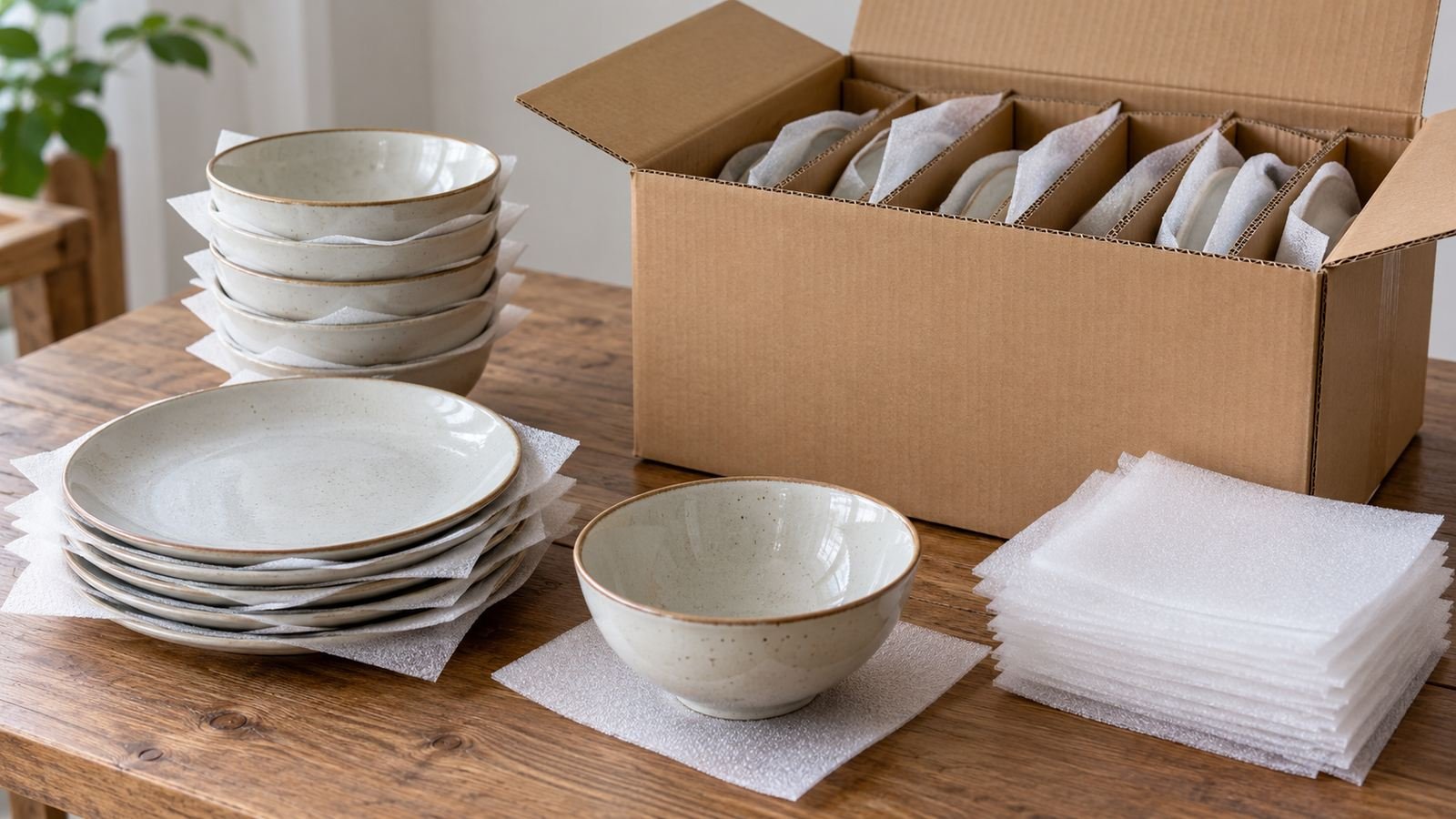
For ceramic tableware export packaging, identify which requirements are firm and which can be discussed. A buyer may need identifiable cartons but accept the supplier’s standard internal arrangement after review. Another order may need individually boxed sets. Keeping these requirements separate helps the supplier explain the practical choices and quote the requested scope accurately.
State who approves the final packing reference. The purchasing team should coordinate with receiving and logistics staff so a late labeling request does not arrive after packing has started. A complete brief makes packaging part of the purchasing decision rather than a detail left to interpretation after payment.
Review Separation Support and the Offered Carton Arrangement
Ask for photographs or a sample packing demonstration using the selected references. Review the sequence from the individual item to the closed shipping carton. Ceramic tableware export packaging should make it possible to understand where items contact their supports and how the arrangement limits movement during the planned handling process.
For plates, ask how faces, rims, and bases are separated within the offered stack or compartment arrangement. For bowls, review whether the proposed nesting includes appropriate separation for the exact profile. For cups, inspect the space around handles and clarify whether matching saucers occupy their own positions. These are review questions, not a universal instruction to pack every ceramic item in the same orientation.
The ceramic plate assortment can help identify the shapes included in your inquiry. A wide serving plate and a smaller dinner plate may need different internal positions and carton dimensions. For ceramic tableware export packaging, use the confirmed product measurements rather than a broad category label when discussing the proposal.
Request an identifiable packing reference
A useful packing reference records the item code, quantity per inner unit where used, quantity per outer carton, separation materials, outer dimensions, and gross weight when available. Include a photograph showing the arrangement before closure. If the supplier uses several packing variations, identify which one applies to your order.
| Packing element | Question to ask | Record to retain |
| Item separation | How are ceramic surfaces kept apart? | Photo and material description |
| Component support | How are handles and rims positioned? | Reference for the exact item |
| Inner grouping | Are inner boxes or compartments used? | Units per inner group |
| Outer carton | Which arrangement is being offered? | Dimensions and pieces per carton |
| Final approval | Which version governs the order? | Approved packing reference |
For ceramic tableware export packaging, a photograph is a reference rather than proof of performance under every transport condition. If the order requires a specific packaging test, agree on the applicable procedure, sample, responsibilities, and evidence with the relevant provider. Do not label a packing system tested merely because a carton looks substantial.
Ask the logistics provider whether the proposed arrangement fits the expected shipment and handling method. Any change to consolidation or handling may require a new review. A package prepared for one agreed route should not be described as suitable for all possible routes without supporting information.
Document the accepted arrangement before it is used for the whole order. Ceramic tableware export packaging is easier to control when the supplier can point to a specific approved reference instead of interpreting a general request for strong boxes. Keep unresolved questions visible until the person responsible has supplied the required answer.
Reconcile Carton Quantities Labels and Packing Costs
Packaging quantities must agree with the purchase order. Start by confirming whether each quoted unit is a piece, a set, an inner box, or an outer carton. For ceramic tableware export packaging, these units should be easy to reconcile across the quotation, packing plan, and packing list so receiving staff do not have to reconstruct the arithmetic.
Consider a hypothetical order of 288 plates packed at 24 pieces per carton. That produces 12 cartons. If a later proposal changes the pack count to 18 pieces, the same order requires 16 cartons. The numbers illustrate quantity reconciliation only; they are not Chengguo packing specifications. Ask the supplier to update all affected dimensions, weights, and cost information when the arrangement changes.
Agree on the carton information your receiving team needs. This may include the buyer’s order reference, supplier item code, unit quantity, and carton numbering. Ask how mixed contents will be identified if they are accepted in the proposed arrangement. Avoid using an assortment name alone when it cannot distinguish the individual designs inside.
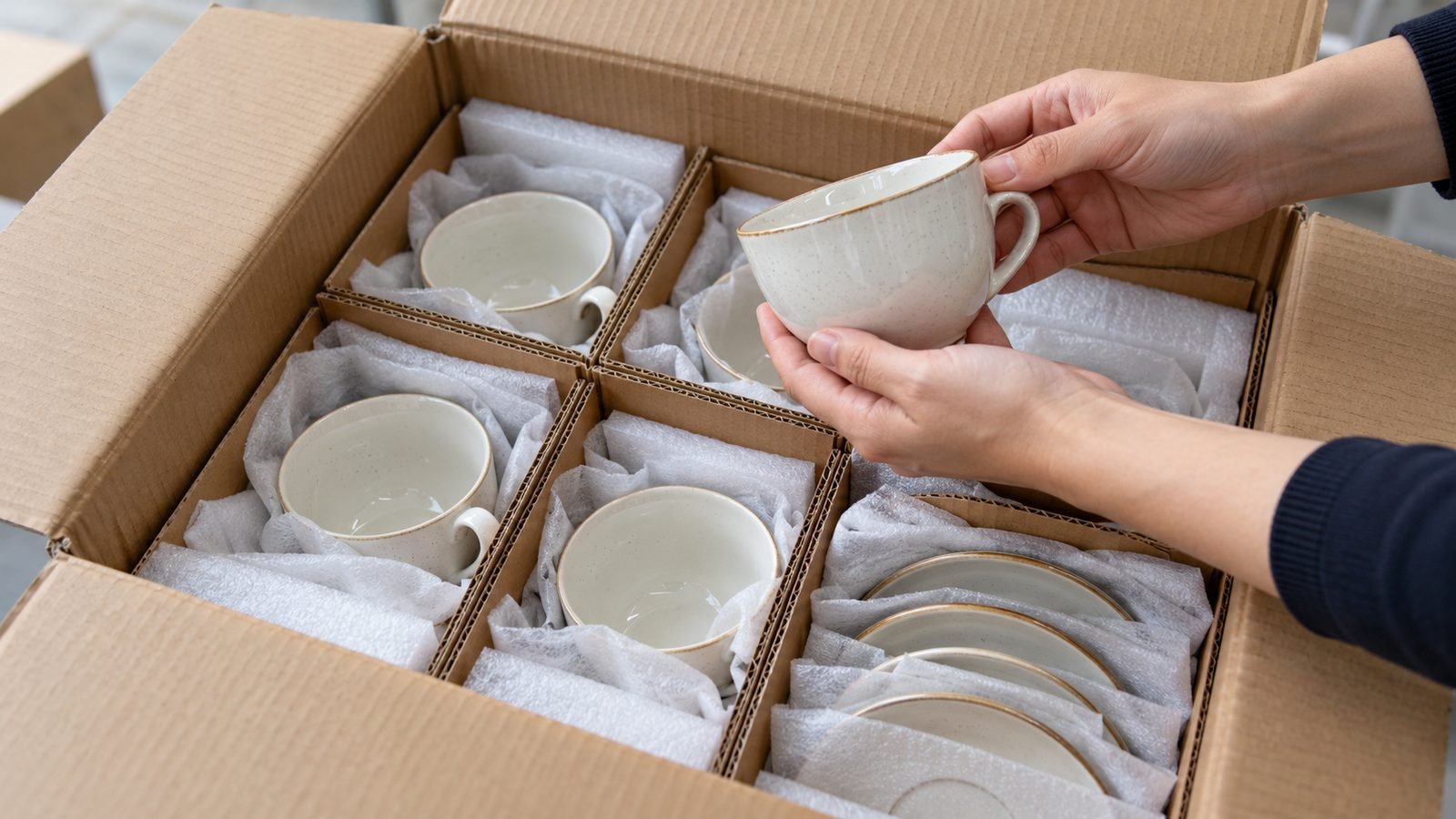
For ceramic tableware export packaging, separate the confirmed standard packing from optional services. Individual boxes, special labels, or a changed internal arrangement may alter the quote. Request a revised total that shows what is included rather than treating a casual message about extra packaging as a complete commercial agreement.
Carton dimensions and gross weights also support logistics planning. Have the supplier provide information for the actual packing version and ask your provider which additional measurements are needed. Mark preliminary figures as estimates and replace them with confirmed packing data before relying on them for shipment coordination.
Check the proposed carton count against item quantities before approving a revision. If an order includes both plates and bowls, maintain separate item rows even when the packing list also gives a total carton count. Ceramic tableware export packaging should support item-level receiving, not just a shipment total that hides differences between references.
Keep the approved packing specification connected to the order version. A quantity amendment can affect the number of cartons and the handling plan even when the product itself is unchanged. Ask for a complete revision so purchasing, warehouse, and logistics teams are working from the same information.
Plan Receiving Checks before the Goods Arrive
Define the receiving process while the packing reference is still being agreed. Your team needs the final item list, carton count, approved photographs, and a clear contact for questions. Ceramic tableware export packaging records are useful after dispatch because they explain what staff should expect to see when identifying and opening the shipment.
Ask the receiving team to document the shipment condition and carton identification before unpacking. Compare the delivered carton count with the packing list, then connect sampled contents to the relevant item rows. Record observations objectively and retain photographs when a difference needs supplier review. Follow the agreed reporting process rather than relying on a verbal description alone.
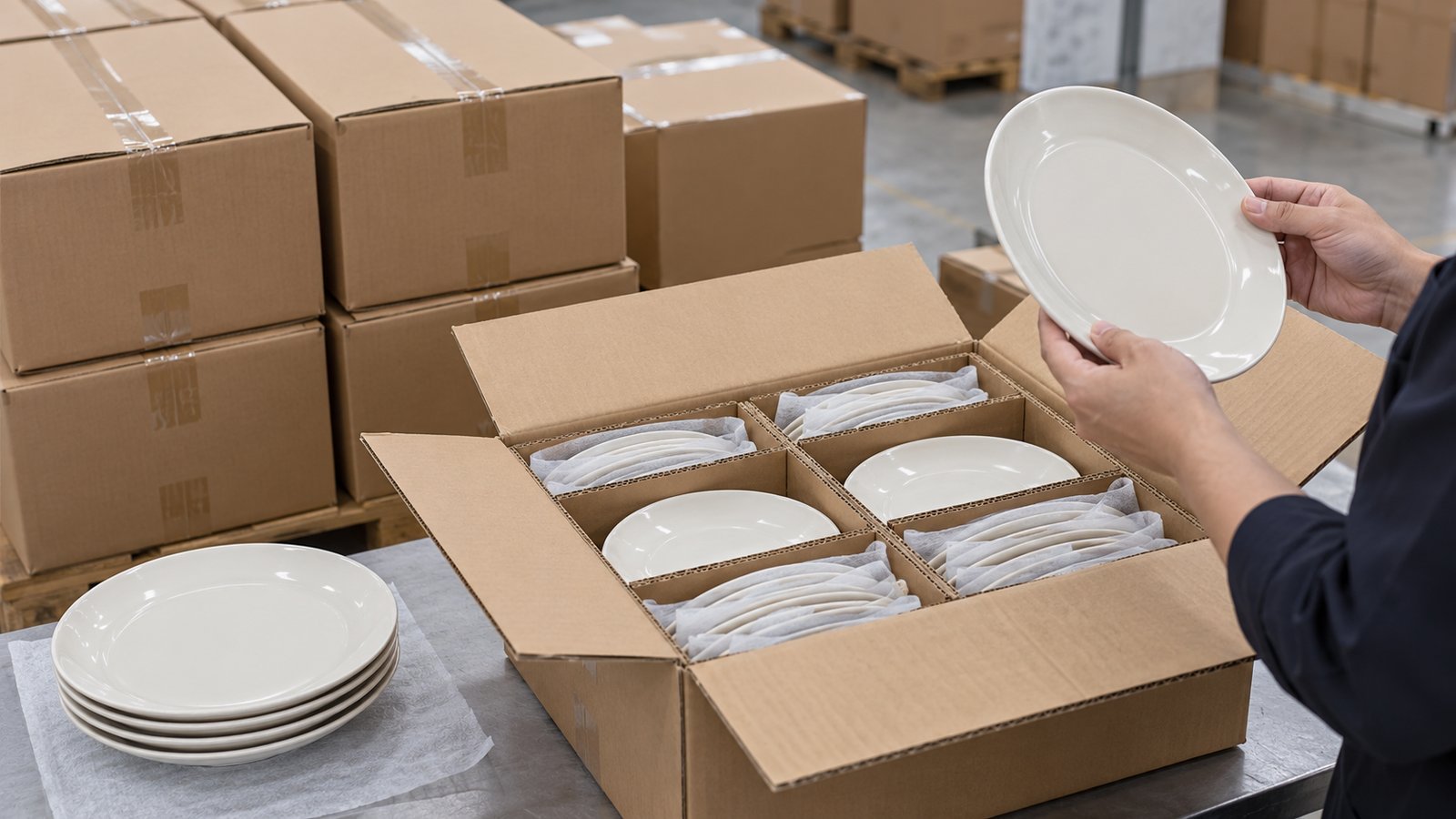
For ceramic tableware export packaging, agree how discrepancies will be reported and which documents should accompany the report. Confirm the contact, reference numbers, and any applicable reporting timing in your commercial arrangement. Do not assume that a general purchasing conversation establishes a universal claims procedure.
Use receiving feedback to improve the next inquiry. Note whether labels were readable, whether component counts were easy to verify, and whether staff could reproduce the approved packing reference. These practical observations can support a clearer future brief without turning one delivery into a broad performance claim.
Retain the packing version with the product records after receipt. When ordering another shape or quantity, check what has changed instead of automatically copying the earlier arrangement. Ceramic tableware export packaging should remain tied to the actual item and shipment proposal, particularly when your assortment develops over time.
Conclusion
Ceramic tableware export packaging needs a defined product brief, an identifiable protective arrangement, and consistent quantity records. Confirm the exact packing version, separate optional costs, and prepare your receiving process before dispatch. Keep photographs and commercial confirmations connected to the final order. Contact Chengguo with your item list and packing requirements to discuss current ready stock options and the available packing proposal.
FAQ
Confirm the exact item references, internal separation, pieces or sets per carton, outer dimensions, and available weight information. Ask for photographs tied to the offered arrangement and identify any optional services separately. Ceramic tableware export packaging should also include the information your receiving team needs to match cartons with the order. Retain one approved version so later quantity or packing changes can be reviewed consistently.
An individual box describes only one part of the packing arrangement. Ask how the item is supported inside it and how the boxes are positioned within the outer carton. Review the proposed system for the actual products and handling plan. For ceramic tableware export packaging, presentation and transport requirements should be discussed together, and any claimed testing should have a defined procedure and supporting evidence.
Recalculate carton counts from the confirmed item quantity and revised pieces per carton. Request updated packing dimensions, weight information, and any changed service costs before approval. Keep the revision connected to the order version and share it with logistics and receiving staff. Ceramic tableware export packaging records should make the change traceable rather than leaving the earlier count in a message that may still be used.