

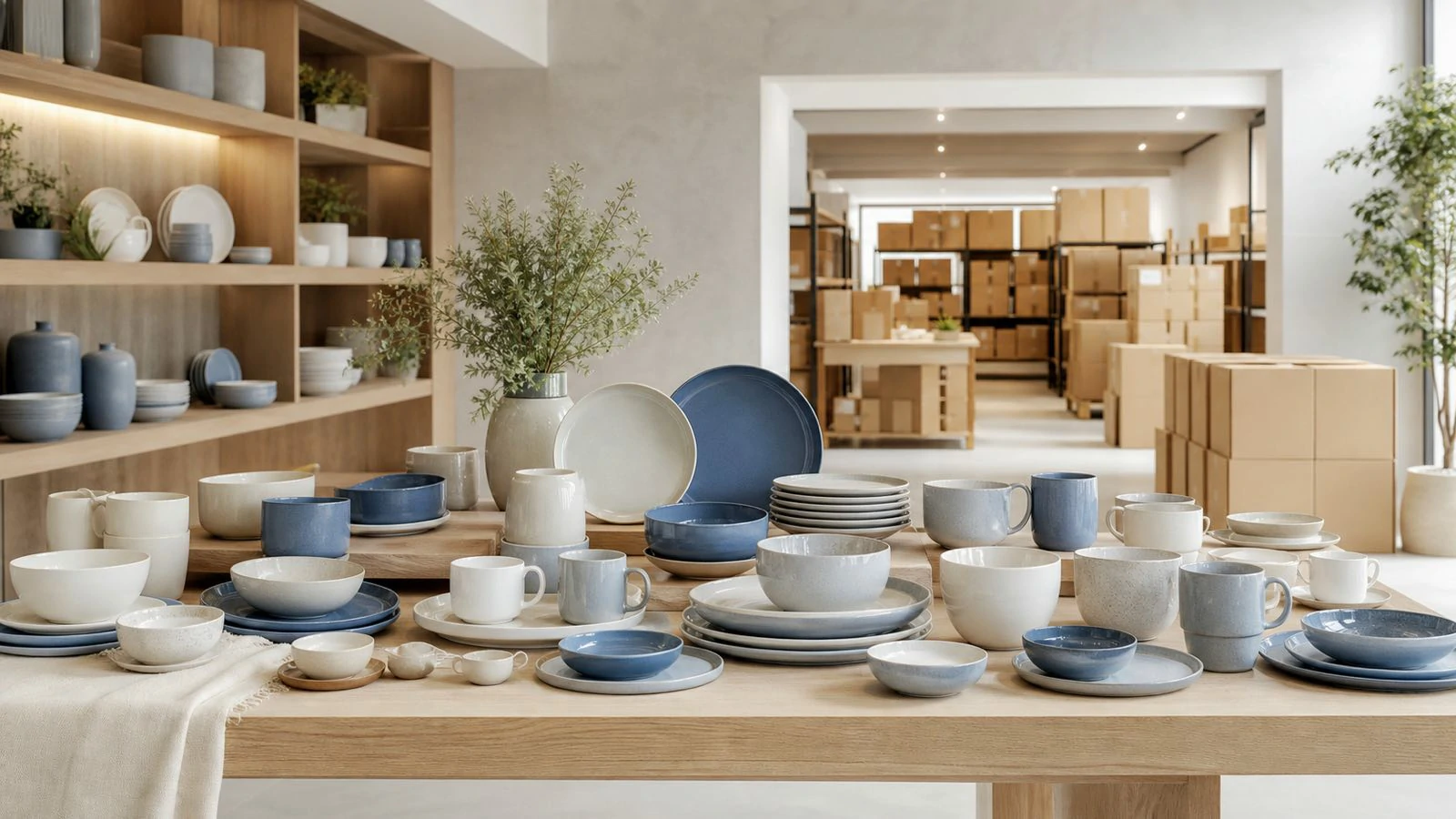
Sourcing ceramics across borders can become complicated when product details, packing units, and shipping expectations are not aligned. Stock ceramic tableware sourcing from China is more manageable when buyers follow a defined sequence from enquiry to dispatch. This seven-step guide shows importers, wholesalers, distributors, and trading companies how to organize requirements, compare available products, verify quality, and confirm a commercially workable order.
Prepare Your Stock Ceramic Tableware Search
Step 1: Build a Clear Ceramic Tableware Buying Brief
A supplier can only recommend suitable stock when the enquiry explains what the buyer needs. Begin with the customer segment: retail, hospitality, food service, promotional distribution, or general wholesale. Each channel has different priorities for weight, style, packing, replacement availability, and price position.
List the required product types and quantities. For plates and bowls, provide diameter, height, and shape preferences. For mugs and cups, state capacity and how it should be measured. Include material, glaze, decoration, color, and finish preferences, but distinguish fixed specifications from flexible ones.
Your brief should cover:
- Product categories and approximate dimensions
- Material and finish preferences
- Quantity by item, design, and color
- Bulk, set, or retail-ready packing
- Destination port or delivery location
- Desired shipping period
- Label, barcode, document, and testing requirements
- Target price level, when a realistic buying budget is available
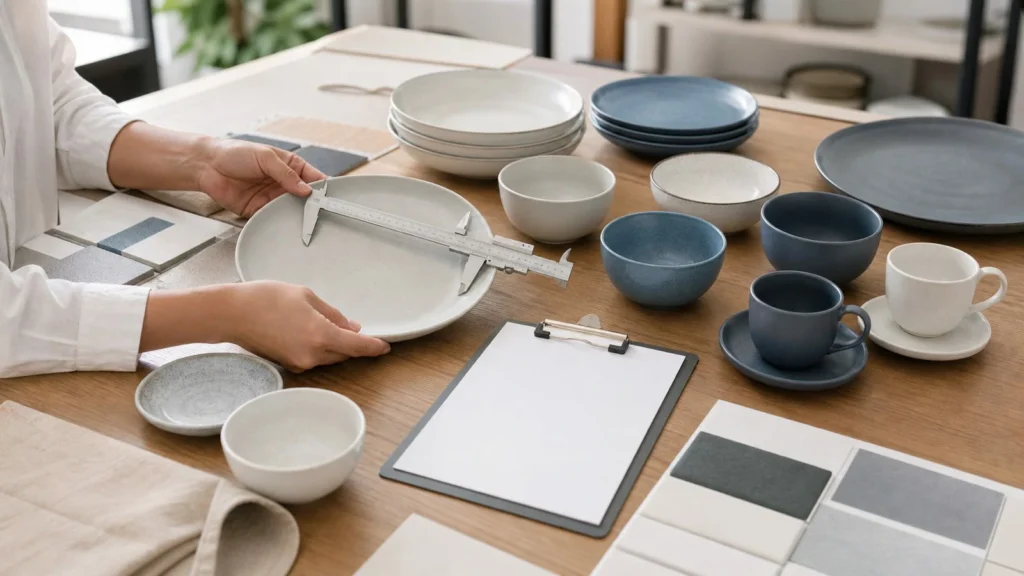
Use consistent units and terminology. Specify whether quantity means pieces, sets, cartons, or pallets. State whether mug capacity is a brimful measurement or a practical serving volume. If reference photos are included, explain which features matter instead of asking for an exact visual match that may not exist in current stock.
A prioritized brief helps the supplier propose alternatives. A fixed plate diameter and shipping deadline might be essential, while color or rim profile may remain open. That flexibility is particularly useful in stock ceramic tableware sourcing from China, where selection is based on products currently available.
Step 2: Identify a Supplier That Fits the Stock Model
Not every ceramic business operates the same way. A made-to-order factory focuses on production capability, while a stock ceramic tableware supplier focuses on current selection, available quantities, mixed purchasing, packing, and export coordination. Buyers should evaluate the supplier against the sourcing model they intend to use.
Ask for a current product selection rather than a general catalog that may contain unavailable items. For each shortlisted product, request the item code, material, dimensions, photos, quantity available, packing increment, and price basis. Current information is more valuable than a large catalog without availability details.
Useful supplier checks include:
- Experience with tableware export documentation
- Ability to answer specification questions clearly
- Availability records by item and color
- Process for reserving selected quantities
- Sample preparation and approval procedure
- Packing options for mixed ceramic orders
- Inspection coordination
- Communication about substitutions or quantity changes
Look for precise, consistent answers. If one document describes a plate as porcelain and another describes it differently, ask the supplier to reconcile the information. Product codes should remain consistent across quotations, sample records, invoices, and packing lists.
Buyers should also confirm who will manage the order. A named contact who understands the assortment can reduce fragmented communication. Keep decisions in a single email thread or confirmation sheet rather than relying on scattered messages.
Step 3: Review Available Stock and Create a Shortlist
Stock selection should be approached as range planning, not simply product browsing. Start with the essential items, then identify complementary shapes, colors, and sizes. A coherent assortment is easier for wholesalers to present and easier for end customers to understand.
Browse ready stock ceramic dinnerware by material, shape, glaze, and intended use. When mugs are part of the range, compare handles, capacities, profiles, and packing in the stock ceramic mugs category.
Build a shortlist table:
| Field | Information to record |
| Supplier item code | Unique reference used in every document |
| Product type | Plate, bowl, mug, cup, saucer, or serving item |
| Material and finish | Confirmed body and visible surface |
| Dimensions | Diameter, height, capacity, and weight if relevant |
| Available quantity | Current quantity by design and color |
| Packing increment | Pieces per inner box and carton |
| Commercial status | Quoted, sampled, reserved, or unavailable |
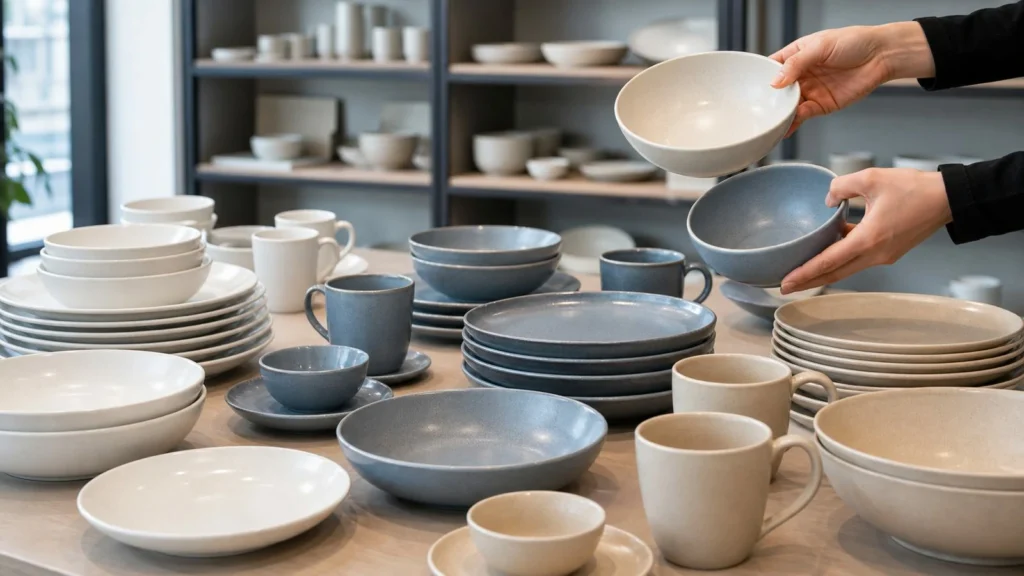
Check availability line by line. A supplier may have enough dinner plates but fewer matching bowls, so a set-based order must be balanced before confirmation. Do not assume that every item shown together in a photograph has the same available quantity.
Have a second-choice option for critical items. The alternative should meet the essential dimensions, use case, and price position. This avoids restarting the entire selection process if another buyer confirms part of the stock first.
Verify Products and Build the Commercial Order
Step 4: Request Samples and Confirm Product Details
Samples help buyers assess features that photographs cannot show accurately, including weight, balance, rim feel, stackability, glaze texture, and color under real lighting. Request samples for new shapes, unfamiliar finishes, or products that will carry a large share of the order value.
Create a sample evaluation sheet and record:
- Item code and date received
- Measured diameter, height, and capacity
- Piece weight and handling impression
- Stability on a flat surface
- Rim and foot finish
- Glaze coverage and appearance
- Decoration alignment
- Stack height and contact points
- Proposed packing method
Review several pieces when the design includes intentional glaze variation. Reactive and handcrafted-looking finishes should be assessed against an agreed appearance range, not against the uniformity expected from plain white dinnerware.
Testing requirements vary by market, product, decoration, and buyer policy. State the required scope rather than requesting a generic certificate. Ask whether available documents relate to the specific product construction under review, and agree on any further testing before order confirmation.
Document approval with clear photos and measurements. The approved sample or written reference should be identifiable by item code. If a later change is accepted, update the record so there is only one current specification.
Step 5: Compare Quotations and Calculate the Order Mix
Compare quotations on the same commercial basis. A price is meaningful only when the product, packing, quantity, trade term, named place, and included services are clear. Separate optional retail packaging, labeling, testing, and inspection costs so they can be evaluated properly.
A complete quotation should identify:
- Item code and description
- Unit and unit price
- Quantity available and quantity quoted
- Pieces per carton
- Carton dimensions and estimated weight
- Price term and named port or place
- Payment terms
- Quotation validity
- Sample terms
- Estimated preparation window
Plan the order by cartons as well as pieces. Ceramic products are packed in defined increments, so requested quantities may need to be adjusted to complete cartons. Carton-level planning also helps estimate shipping volume and shows whether the assortment is balanced.
Do not order identical quantities of every item by default. Base the mix on expected sales. Dinner plates may move differently from serving bowls or mugs. For new markets, use a controlled assortment and track demand before expanding the number of designs.
Confirm how and when stock is reserved. Availability may change until the agreed commercial step is completed. The final quotation or pro forma invoice should state every confirmed item and quantity rather than relying on a total order value alone.
Control Packing, Shipping, and Dispatch
Step 6: Confirm Quality, Packing, and Shipping Controls
Before the order is packed, agree on what will be checked and how the result will be recorded. Inspection scope should reflect the product, order complexity, and buyer risk. A first mixed order with multiple glazes may require more detailed checks than an unchanged repeat order.
Common verification points include:
- Item codes, colors, and quantities
- Dimensions and piece weights
- Surface appearance and decoration
- Stability and stacking
- Rim, foot, and handle finish
- Inner packing and carton configuration
- Carton marks, labels, and barcodes
- Supporting documents
Packing should match the shape, decoration, route, and handling environment. Ask for inner-box and carton details, protective dividers, carton dimensions, gross weight, and net weight. Retail boxes introduce additional artwork, print, and barcode approvals.
When inspection is required, define the timing, responsible party, sampling approach, and report format. Agree in advance on how discrepancies will be reviewed. Clear acceptance criteria are more useful than a general instruction to “check quality.”
Shipping terms should identify responsibilities. Confirm the named port or place, booking party, required documents, and handover point. Ready stock avoids a production cycle, but sampling, packing, inspection, export preparation, and transport booking still need realistic time.
Step 7: Reconcile Documents Before Dispatch
The last step in stock ceramic tableware sourcing from China is a document reconciliation. Compare the approved product list, final invoice, packing list, inspection record, labels, and shipping instructions. Item codes and quantities should match across documents.

Verify:
- Product descriptions, materials, colors, and sizes
- Quantity per item and total quantity
- Unit prices and total value
- Carton count and packing configuration
- Shipping marks and labels
- Trade term and destination
- Required commercial and transport documents
- Booking details and planned handover date
Keep the final records together. They support customs preparation, receiving checks, inventory entry, and any later discussion about the order. When goods arrive, compare carton counts and visible condition with the shipping documents before internal distribution.
After receiving the products, record sell-through, customer comments, breakage observations, and demand by item. This information improves the next buying brief and helps determine which designs should be reordered or replaced.
Conclusion
Stock ceramic tableware sourcing from China works best as a controlled sequence rather than an informal product search. Define the buying brief, select a stock-focused supplier, document available items, inspect samples, compare complete quotations, confirm packing controls, and reconcile documents before dispatch. These steps give buyers a clearer view of quality, cost, timing, and responsibility. Explore current selections or contact our sourcing team with your item list, quantities, destination, and schedule for a tailored quotation.
FAQ
Include product types, dimensions or capacities, material and finish preferences, quantities by item, packing format, destination, and desired shipping period. State any testing, labeling, barcode, or document requirements. Reference photos can help, but explain which features are essential. A structured enquiry allows the supplier to recommend available products and quote on a clear, comparable basis.
Ask for the current quantity by item code, design, and color, then confirm the process for reserving it. Availability can change while products are being discussed with multiple buyers. The final quotation or pro forma invoice should list each selected item and confirmed quantity. Keep a second-choice product for critical parts of the assortment in case availability changes before confirmation.
Samples are strongly useful for new products, suppliers, glazes, shapes, or packing methods. They allow you to measure dimensions, feel the weight and balance, inspect the rim and foot, assess stacking, and review color under real lighting. Record the approved sample with its item code, photos, and measurements so it can serve as a reference during inspection and order reconciliation.