

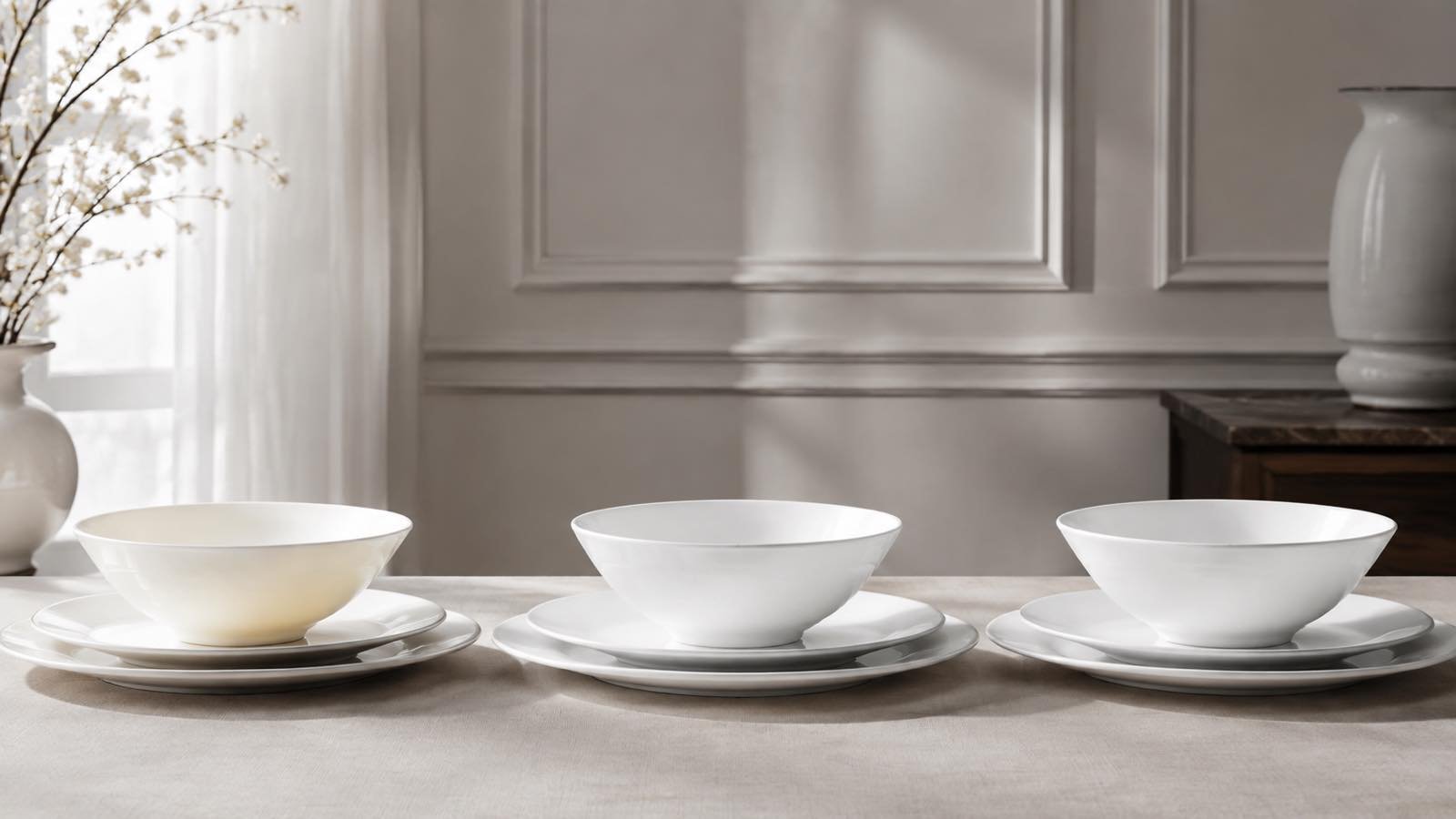
Fine china, bone china, and porcelain are often grouped together in catalogs, yet the terms do not always describe identical products or purchasing expectations. Buyers need more than a name: they need verified composition, dimensions, weight, appearance, performance, care guidance, packing, and market fit. This comparison explains how to evaluate the three categories without turning material labels into unsupported quality rankings.
Understand What the Material Names Communicate
Porcelain generally refers to a vitrified white ceramic body made from selected clay materials and fired to develop low porosity, strength, and a refined surface. Exact recipes and firing schedules vary by producer and product. For wholesale purchasing, the practical evidence is a supplier specification and representative sample rather than an assumption based only on the word porcelain.
Bone china is a refined ceramic body traditionally associated with bone ash, valued for whiteness, translucency, a light feel, and strength relative to its delicate profile. Composition requirements and accepted labeling can differ among markets, so importers should request a written material declaration and confirm any destination-specific rules before using the term on packaging or product pages.
Fine china is less precise as a technical description. In commercial use, it may identify refined tableware intended for formal or premium presentation, sometimes without bone ash. One supplier may use it for high-quality porcelain, while another may distinguish it as a separate body. Buyers should ask what the label means in the quoted product and avoid inferring composition from the name.
These categories can overlap in appearance, and quality varies within each one. A well-controlled porcelain product may be more suitable for a demanding hospitality program than an inadequately specified product carrying a more prestigious name. Selection should connect verified properties to the sales channel and use case.
Ask for Evidence Behind the Label
Request the product material description, relevant composition statement, intended use, care instructions, and available test documentation appropriate to the buyer’s market. Ensure reports identify the tested item or material and remain relevant to the current product. Do not copy claims from a different collection. If the buyer needs a specific regulatory or retailer requirement, state it before sampling so the supplier can confirm feasibility.
Maintain the same terminology across quotation, approval sheet, purchase order, carton marks, retail packaging, and online listing. Inconsistent naming can create customs, consumer-information, and customer-service problems even when the physical product is acceptable.
Compare Appearance Weight and Table Presence
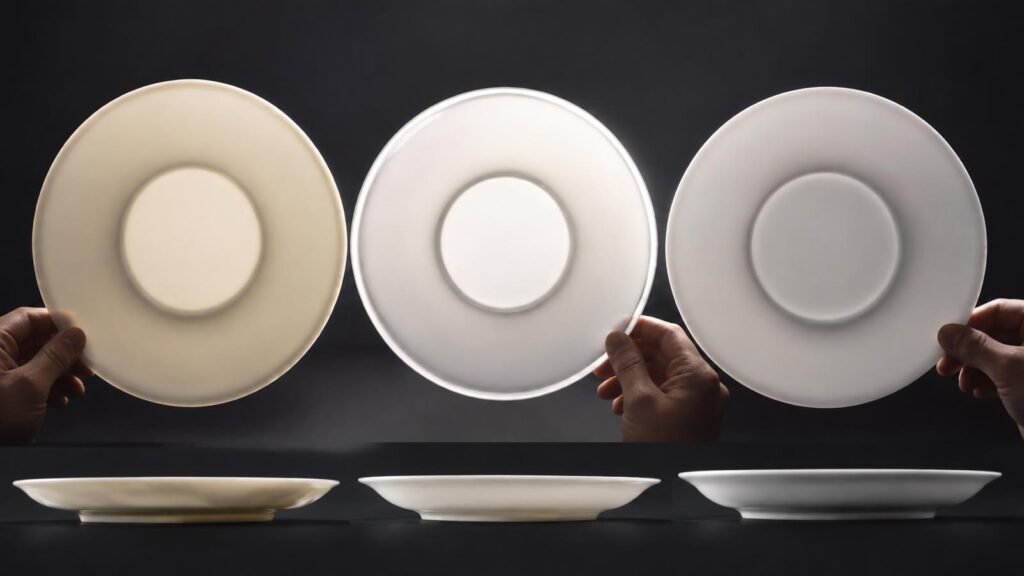
Body tone can range from cool bright white to warm ivory. Bone china is often selected for a warm white, translucent character, while porcelain can deliver clean whiteness and crisp shapes. Fine china varies according to its actual body. Compare samples together under controlled neutral light and under the destination’s display or dining light. Photographs and screen settings are unreliable for final color approval.
Translucency should be examined on comparable thicknesses. Hold the piece against a soft light and inspect the rim, foot, and central body. A thin section naturally transmits more light than a thick one, so the observation must be interpreted with the profile. Translucency may support a premium story, but it does not replace checks for stability, glaze condition, or functional fit.
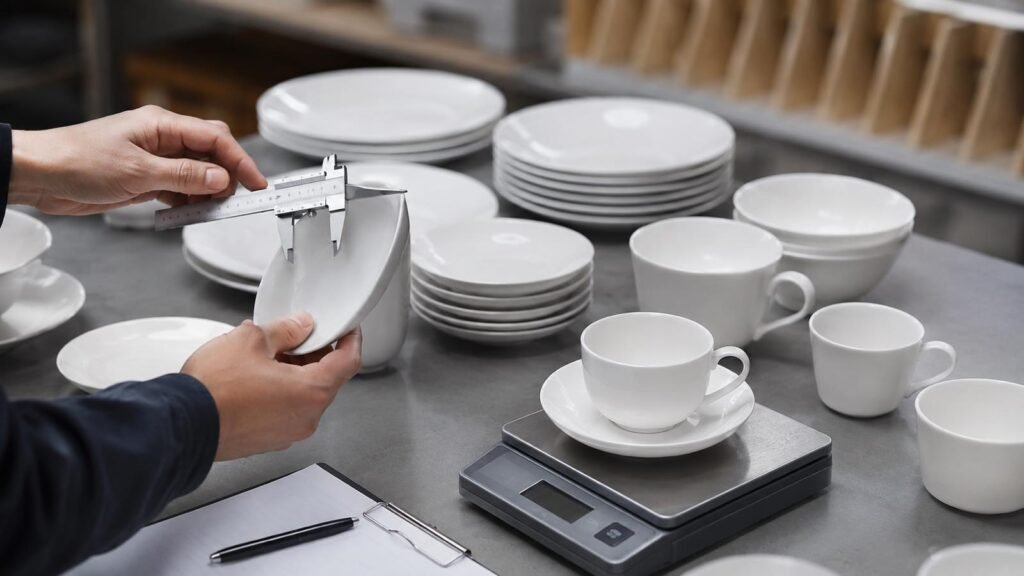
Weight affects both perceived value and daily handling. A lighter cup can feel refined, yet its balance, handle comfort, and thermal behavior still matter. A heavier plate may communicate substance but increase carton weight and staff fatigue. Record the weight of several samples, not just one, and assess loaded stacks or complete place settings where relevant.
Review Shape Detail and Decoration
Refined bodies can support thin rims and detailed shapes, but geometry must suit the application. Check rim consistency, flatness, foot finish, handle alignment, saucer fit, lid fit, and stack behavior. Deep wells and broad rims influence food presentation and usable surface area. Buyers should measure the actual sample rather than relying on nominal plate sizes.
Decoration can change both appearance and care requirements. In-glaze or underglaze effects, on-glaze prints, hand-applied details, colored rims, and metallic accents should be assessed according to the intended use. Confirm claims about dishwasher or microwave suitability for the specific decorated item. Metallic accents generally require special attention around microwave use. Approve placement, color, registration, and an acceptable variation range.
| Buying factor | Fine china | Bone china | Porcelain |
| Term precision | Often commercial rather than compositional | Commonly linked to a bone-ash body | Broad technical ceramic category |
| Typical visual aim | Refined or formal presentation | Light translucent refined appearance | Clean versatile appearance across many styles |
| Verification priority | Ask what body the term identifies | Confirm composition and market labeling | Confirm specification and intended performance |
| Commercial fit | Premium retail and formal service depending on product | Premium retail gifting and selected hospitality | Broad retail hospitality and wholesale uses |
Test Performance for the Intended Channel
No material should be approved from a comparison table alone. Test representative samples in conditions that reflect actual use. Hospitality buyers may prioritize repeated washing, stacking, tray fit, plate-cover compatibility, handling, and replacement. Retailers may focus on shelf appearance, set completeness, consumer care expectations, packaging, and return risk. Gift programs add presentation and box durability.
Inspect several pieces for rocking, glaze coverage, pinholes, specks, scratches, distortion, decoration consistency, and foot finish. Stack plates and bowls to the expected height and check stability and separation. Fit cups to saucers and lids to matching bodies. Run agreed wash or use trials, documenting the method and result. A test is useful only when both parties understand what passed and what constitutes an unacceptable finding.
Separate Chip Resistance from General Durability
“Durable” can conceal several different concerns: rim chipping, handle damage, impact during transport, glaze marking, thermal change, or decoration wear. Identify the relevant failure mode and choose an appropriate test or operational trial. Product shape, edge profile, body thickness, firing control, packing, dish racks, and staff handling all influence results.
A thin profile is not automatically weak, and a thick profile is not automatically durable. Ask for available performance information, but ensure the evidence applies to the sampled item. Where a buyer has a critical internal standard, include it in the enquiry and inspection plan rather than assuming a material name guarantees compliance.
Compare Commercial Cost and Assortment Roles
Material choice affects more than unit price. Normalize quotations by currency, trade term, named place, price unit, set contents, decoration, packing, payment terms, validity, available quantity, and preparation schedule. Add samples, inspection, freight, insurance, duties, taxes, destination handling, warehousing, financing, and expected loss. Divide the total by expected saleable units or complete sets.
Premium positioning requires a coherent story supported by the product. Bone china may justify a higher price where customers value lightness, translucency, and traditional material identity. Porcelain can cover broad price and style bands, making it useful for core ranges. Fine china should be positioned according to its verified body, finish, decoration, and presentation rather than the label alone.
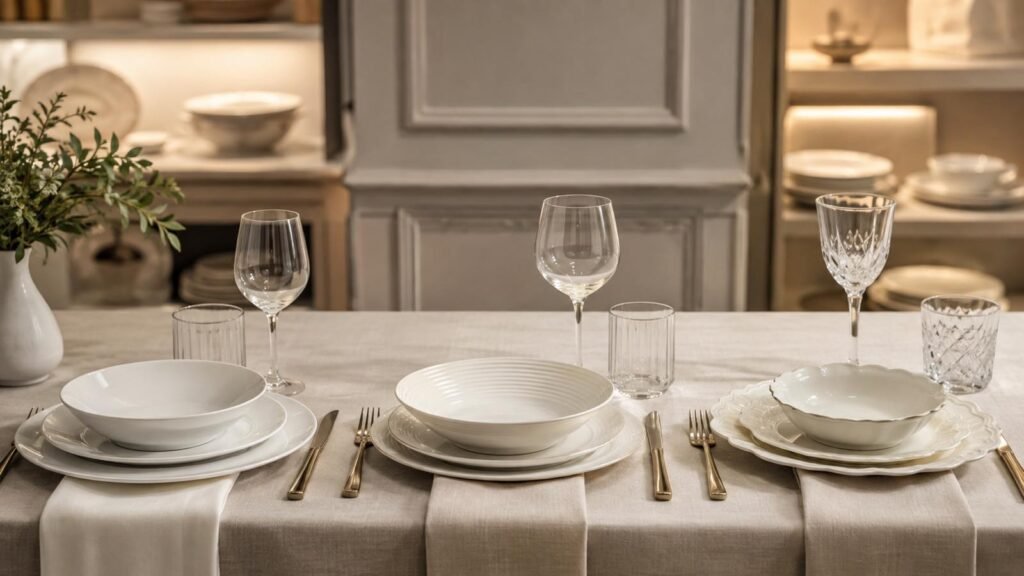
Use each material intentionally within the assortment. A retailer might carry porcelain as an accessible core, then add a refined bone china or fine china line for gifting and formal dining. A hospitality distributor may separate high-volume operational ware from selected premium outlets. Avoid near-duplicate collections that compete without serving a distinct customer, occasion, or price position.
Consider Packing Replacement and Supply Continuity
Thin rims, handles, stems, knobs, and broad decorative edges need product-specific protection. Confirm inner packs, separators, sleeves, retail boxes, master-carton quantity, carton dimensions, gross weight, and pallet requirements. Review packing with the approved product. An elegant gift box that allows internal movement is not adequate protection.
Ask about current availability and the likely continuity model, but do not represent future supply as guaranteed without confirmation. Ready stock products can support faster purchasing and mixed selection, while custom or repeat programs may offer longer planning horizons. For important shapes, define acceptable alternatives by material, body tone, function, dimensions, weight, style, and price position.
Create a Material Approval Record
The approval file should include the product name, item code, supplier’s material description, relevant declaration, dimensions, capacity, weight, body tone, translucency observation, glaze, decoration, foot finish, stack or fit checks, care guidance, packing, approved sample date, and photographs. Link test documents to exact item codes and revisions. Retain a reference sample where practical.
For customer-facing content, use accurate and consistent wording. Do not promise a composition, origin, performance level, or appliance suitability that has not been verified. Explain useful attributes—such as light feel, warm body tone, clean white appearance, or refined rim—without turning them into absolute superiority claims. Good product information helps customers choose and reduces returns.
Review ceramic tableware collections by shape, use, and confirmed specification. When requesting options, tell the supplier the market, channel, required terminology, target price band, style, quantities, packaging, and delivery window. This makes material comparison commercially meaningful.
Conclusion
The most useful fine china, bone china, and porcelain comparison begins with verified product facts and ends with the intended customer. Compare body tone, translucency, weight, shape, surface, decoration, care, packing, and landed cost on actual samples. Treat fine china as a term that needs clarification and confirm bone china composition for the destination market. Explore our ceramic material buying resources or contact our wholesale team to discuss a current requirement.
FAQ
Not necessarily. Fine china is often used as a commercial description for refined tableware, while bone china usually refers to a body associated with bone ash. Usage can vary by supplier and market. Ask for a written material description or composition statement for the specific product, then keep the verified term consistent across purchasing documents, packaging, customs information, and customer listings.
Material formulation can influence performance, but strength cannot be judged reliably from the category name alone. Shape, thickness, firing, glaze, decoration, handling, and packing also matter. Compare representative samples and test the failure modes relevant to your channel, such as rim chipping, handle impact, stacking, repeated washing, or transport. Approve measurable requirements rather than a general claim of strength.
Choose according to the target customer, price position, visual direction, service intensity, care expectations, packing, and replacement plan. Porcelain suits many broad retail and hospitality uses. Bone china may support a light, translucent premium offer. Fine china can fit refined ranges when its actual body and claims are clear. Final approval should use samples, verified specifications, and comparable landed costs.