

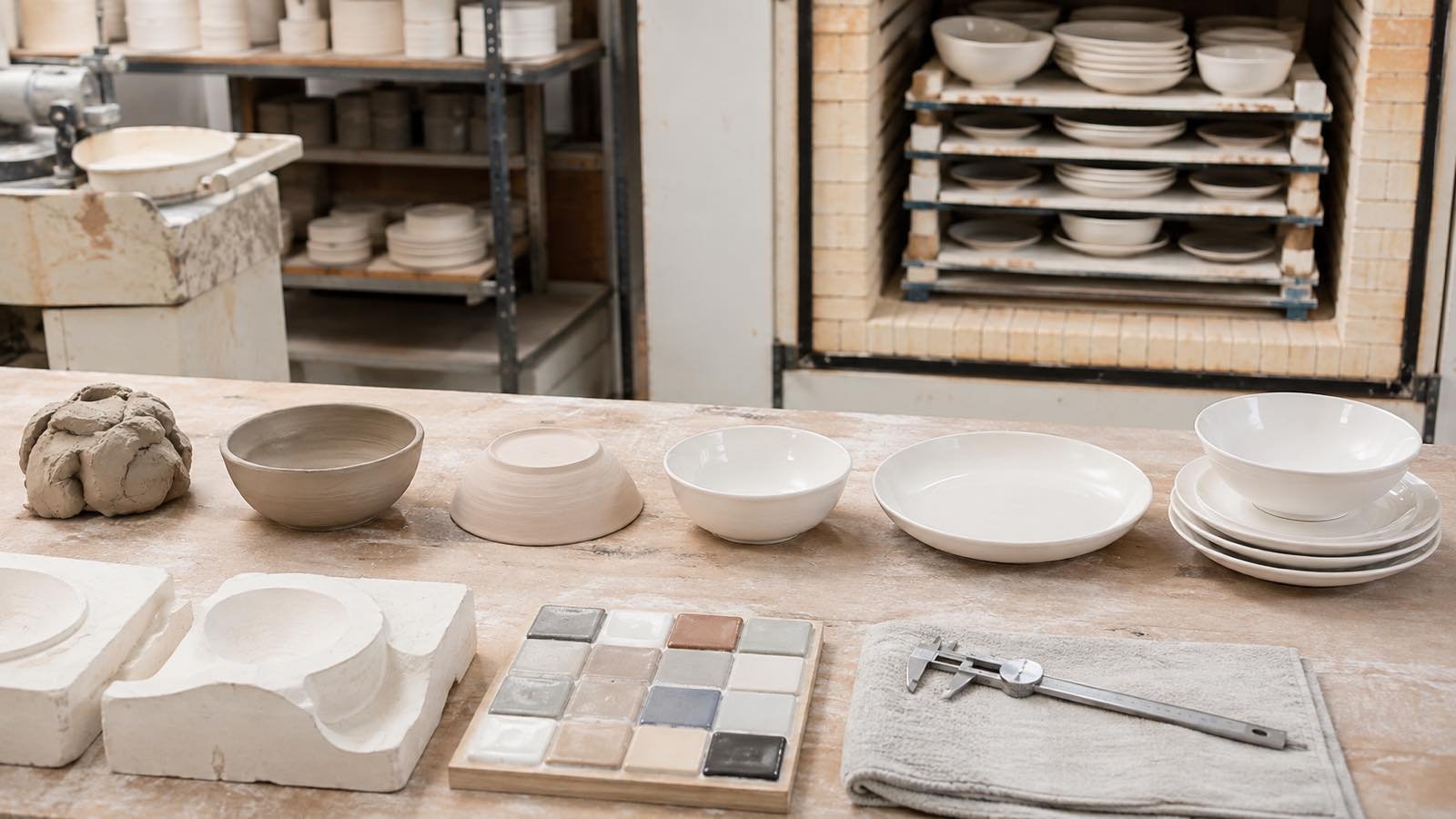
Two ceramic plates can look similar in a catalog yet behave differently in sampling, packing, stacking, and daily use. Ceramic tableware production methods influence feasible shapes, dimensional consistency, surface character, decoration, cost, and the quality risks a buyer should inspect. This guide helps wholesale buyers understand the production route well enough to write clearer specifications and evaluate finished products without claiming control of a supplier’s factory process.
Connect Forming Methods to Product Geometry
Forming turns a prepared ceramic body into a controlled shape. Common routes include pressing, jiggering or jolleying, slip casting, and related pressure-assisted casting methods. The appropriate route depends on geometry, body, volume, tooling, surface requirements, and the producer’s equipment. Buyers do not need to become process engineers, but they should understand why a flat plate, handled mug, sculptural pitcher, and irregular serving bowl may not share the same dimensional behavior.
Pressing is commonly associated with relatively regular shapes where material is formed in a mold under pressure. It can support repeatability at suitable volumes, but tool condition, body preparation, pressure, drying, and firing still influence the finished piece. Jiggering and jolleying are associated with rotationally symmetrical ware: a profile tool shapes material against a rotating mold. These routes suit many plates, bowls, and cups, while the final consistency still depends on process control.
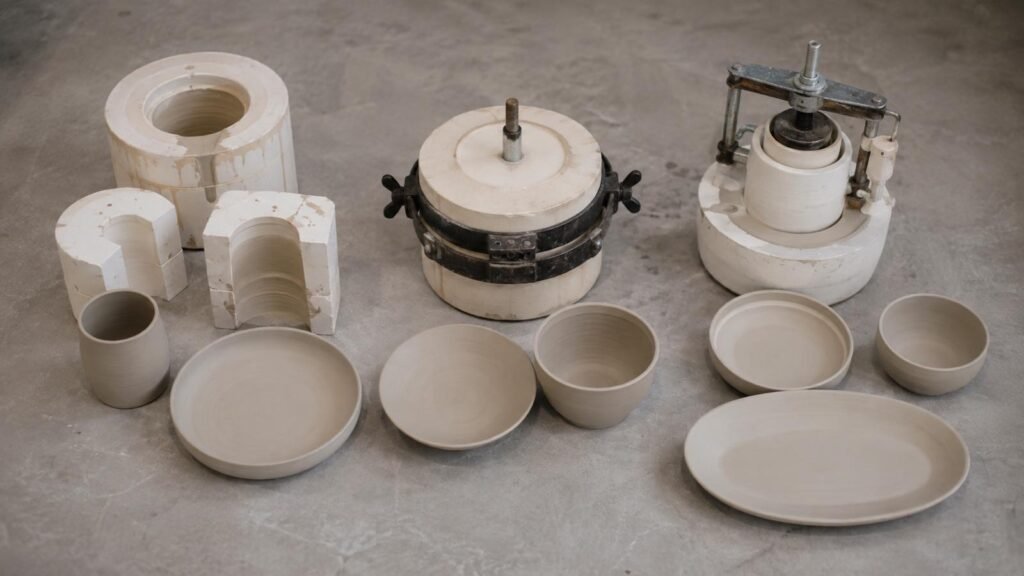
Slip casting uses a fluid ceramic suspension introduced into a porous mold. It is useful for complex, hollow, or less symmetrical forms that are difficult to produce by simpler forming routes. Casting introduces specific control points, including slip condition, casting time, wall development, joining, mold condition, drying, and seam finishing. A decorative pitcher may gain its feasible geometry through casting but require extra checks around the handle, spout, seams, and wall thickness.
Forming Method Does Not Equal Quality Grade
No method is automatically premium or inferior. The process must suit the design and be controlled consistently. A pressed plate can show distortion if forming, drying, or firing is unstable. A cast piece can perform well when wall thickness and joins are controlled. Buyers should judge the approved item against measurable requirements rather than using production vocabulary as a quality label.
Ask the supplier to identify the proposed material, forming route where relevant, dimensions, expected variation, and critical features. If the shape creates known sensitivities—such as a broad flat center, long handle, tall narrow body, or fitted lid—include those points in sampling and inspection.
Understand Drying Firing and Dimensional Change
Newly formed ware contains moisture and remains vulnerable to deformation. Controlled drying removes water before firing. Uneven wall thickness, poor support, rapid moisture loss, or inconsistent conditions can contribute to warping or cracking. The product then passes through firing stages appropriate to its body and glaze system. During firing, the ceramic body undergoes substantial physical and chemical change and typically shrinks.
For buyers, the key lesson is that tooling dimensions are not finished dimensions. Specifications should describe the fired product and include realistic tolerances agreed from samples and capability. Measure several pieces across more than one position or sample group when dimensions are critical. A single perfect sample cannot demonstrate the full expected range.
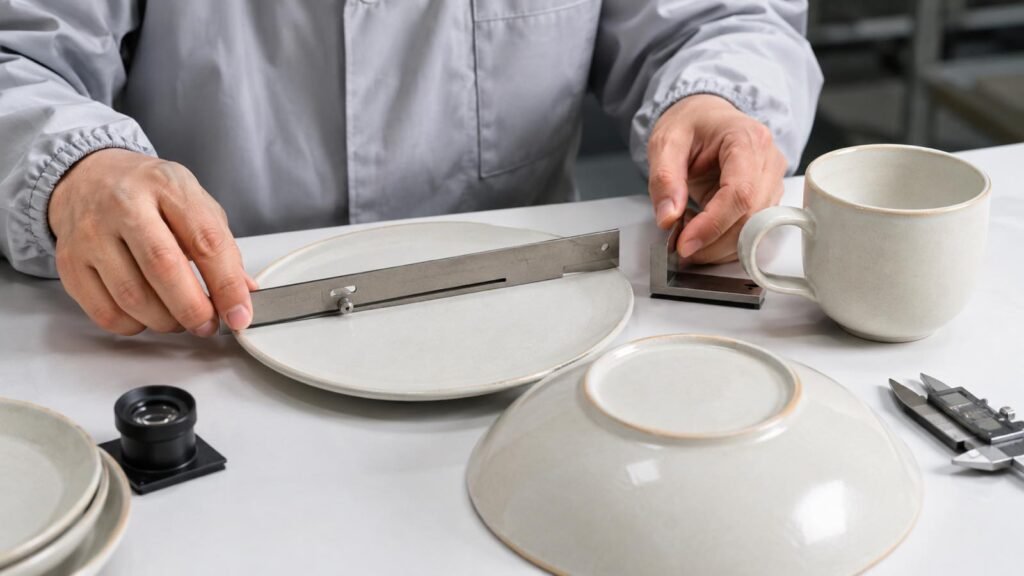
Flatness, roundness, height, capacity, foot size, lid fit, and stack height may all be affected by forming, drying, and firing. The impact matters differently by application. Minor variation in a decorative serving bowl may be acceptable; the same variation may disrupt a plate cover, automated rack, retail set, or stack-limited shelf. State the functional reason behind tight dimensions so supplier and inspector focus on the correct feature.
Review Body and Firing Claims Carefully
Terms such as porcelain, stoneware, bone china, and new bone china describe product categories, but recipes and results vary. Request the supplier’s product specification and relevant test documents for the actual item. Avoid assigning performance solely from a firing temperature or marketing label. Water absorption, strength, thermal behavior, color, translucency, and chip performance depend on the complete body and process as well as product geometry.
Where destination regulations or retailer standards apply, communicate them before order confirmation. Test documents should be current enough for the buyer’s policy and clearly linked to the product or material. Independent verification may be appropriate for regulated or high-risk requirements.
| Production stage | Possible visible or functional effect | Buyer check |
| Forming | Shape consistency seams wall distribution | Dimensions profile handles and joins |
| Drying | Warping cracking deformation | Flatness roundness and visual inspection |
| Firing | Shrinkage body maturity color distortion | Finished dimensions stability and specification |
| Glazing | Coverage pinholes crawling color variation | Surface review under controlled light |
| Decoration | Position color registration wear behavior | Approved artwork sample and care test |
Evaluate Glaze and Decoration as Separate Systems
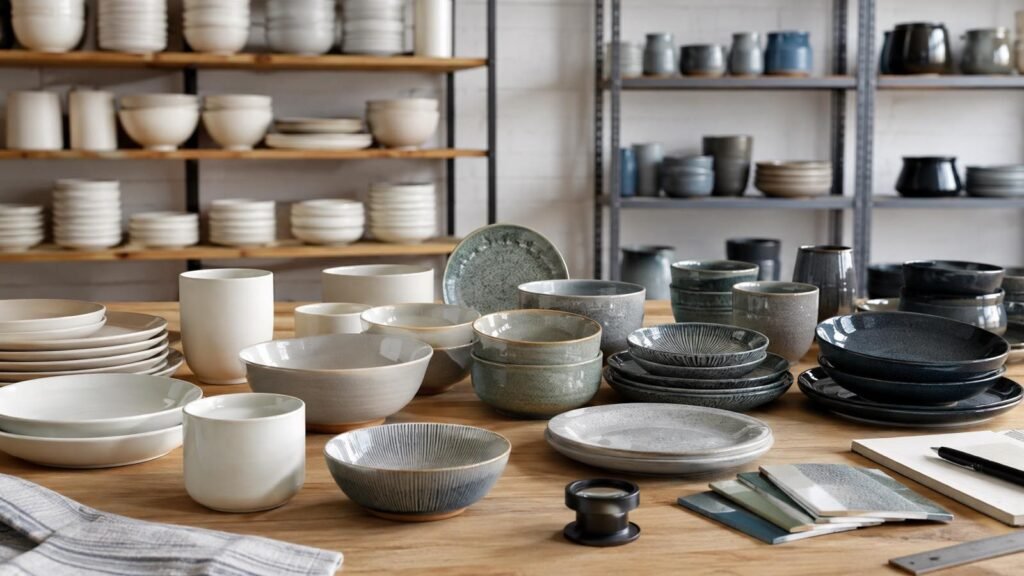
Glaze creates the visible and functional surface, but its result depends on application, compatibility with the body, firing, shape, and handling. Inspect coverage, color, gloss, texture, pinholes, specks, crawling, scratches, pooling, and rim appearance. On reactive or deliberately varied finishes, approve a representative range and explain natural variation to customers. Variation should be intentional and bounded, not an excuse for unrelated appearance.
Decoration may be applied under, within, or over the glaze depending on the system. Each route can create different visual effects and care considerations. Buyers should approve artwork scale, position, color, registration, edge treatment, and the appearance of joins where patterns wrap. Test the finished decorated sample for the intended service conditions. Metallic accents require particular attention if microwave use may occur.
Match Surface Expectations to the Sales Channel
Hospitality buyers may prioritize marking, repeated washing, stacking contact, and replacement consistency. Retailers may emphasize shelf impact, color matching across set components, care labeling, and return risk. Food photography customers may care about glare, color rendering, and usable plate area. Write these priorities into the brief instead of requesting an undefined “high-quality glaze.”
Review several pieces under neutral light, then under the expected destination lighting. Gloss and color can shift noticeably between daylight, warm restaurant lighting, and retail LEDs. Use an approved physical sample or controlled color reference when matching matters; phone photographs are useful records but not complete color standards.
Inspect Finished Product Rather Than Relying on Process Names
A practical quality plan begins with the approved sample and a written specification. Record item code, material, dimensions, weight, capacity, shape profile, body tone, glaze, decoration, foot finish, handle or spout details, lid fit, stack behavior, and packing. Identify critical, major, and minor concerns according to the product and market. Agree on sampling and acceptance arrangements before shipment.
Place flat pieces on a verified surface and check rocking. Measure diameter, height, usable well, foot ring, capacity, and stack height where relevant. Inspect rims, handles, knobs, joins, and feet by sight and touch. Compare color and decoration across several pieces. Confirm that products fit intended racks, covers, trays, packaging, or retail inserts.
Functional tests should simulate realistic use and follow an agreed method. A buyer might review stacking and separation, pour performance, lid stability, ordinary washing, utensil marking, or packaging protection. Do not invent pass claims from an informal trial. Record sample count, conditions, observations, and decision so later orders can use the same reference.
Use Root Cause Language Carefully
A visible issue may have more than one cause. Warping can relate to forming, drying, support, firing, or design geometry. A surface mark may arise during glazing, firing, handling, packing, or transport. Buyers should document what is observed—location, frequency, severity, and affected item—before assigning a cause. Clear evidence helps the supplier investigate and propose corrective action.
When a problem appears, separate containment from long-term correction. Containment identifies and protects acceptable goods for the current order. Correction addresses the process or specification before future supply. The buyer should approve any rework that might affect appearance, food-contact surfaces, performance, or labeling.
Factor Tooling Volume and Lead Time into Sourcing
Production routes influence commercial requirements such as tooling, setup, practical order quantities, preparation time, and repeat consistency. A complex new shape may need dedicated development, while ready stock ceramic tableware can avoid much of that development stage. The two sourcing modes solve different problems. Ready stock supports speed and selection; made-to-order work can support controlled repeat programs and customization when time and volume justify it.
Normalize quotations by material, dimensions, decoration, packing, quantity, price unit, trade term, named place, payment, validity, and schedule. Add samples, tooling where applicable, inspection, freight, insurance, duties, taxes, destination handling, warehousing, financing, and expected loss. Compare cost per usable piece or complete set, not just the quoted unit.
For current stock, confirm quantities near approval and define acceptable alternatives. For production orders, identify approval gates for shape, glaze, decoration, packing, and pre-shipment inspection. Both routes benefit from disciplined product data and version control.
Conclusion
Ceramic tableware production methods explain what shapes are practical and where variation can emerge, but finished-product evidence should control buying decisions. Connect forming, drying, firing, glazing, and decoration to measurable features on representative samples. Use a written specification, relevant functional tests, and clear inspection language. Browse our ceramic product knowledge guides or contact our wholesale team with your item requirements.
FAQ
Regular round plates and bowls are often compatible with pressing, jiggering, jolleying, or related production routes, depending on the body, profile, volume, and producer’s equipment. Complex or hollow shapes may use casting. The method alone does not establish quality. Buyers should approve fired dimensions, flatness, profile, surface, stack behavior, and packing on representative finished samples.
Ceramic bodies lose moisture during drying and undergo further physical change and shrinkage during firing. Body preparation, forming, wall distribution, support, drying, kiln conditions, and geometry can influence the finished result. Specifications should therefore refer to fired dimensions with agreed tolerances. Measure several pieces and focus on the dimensions that affect racks, covers, lids, packaging, or stacking.
Use a controlled specification tied to an approved sample. Record material, dimensions, weight, capacity, body tone, glaze, decoration, fit, foot finish, stack behavior, packing, and applicable test requirements. Agree on the inspection scope and acceptance method before shipment. Evaluate observed defects objectively and keep the same item codes and revision across quotation, purchase order, inspection, and receiving records.