

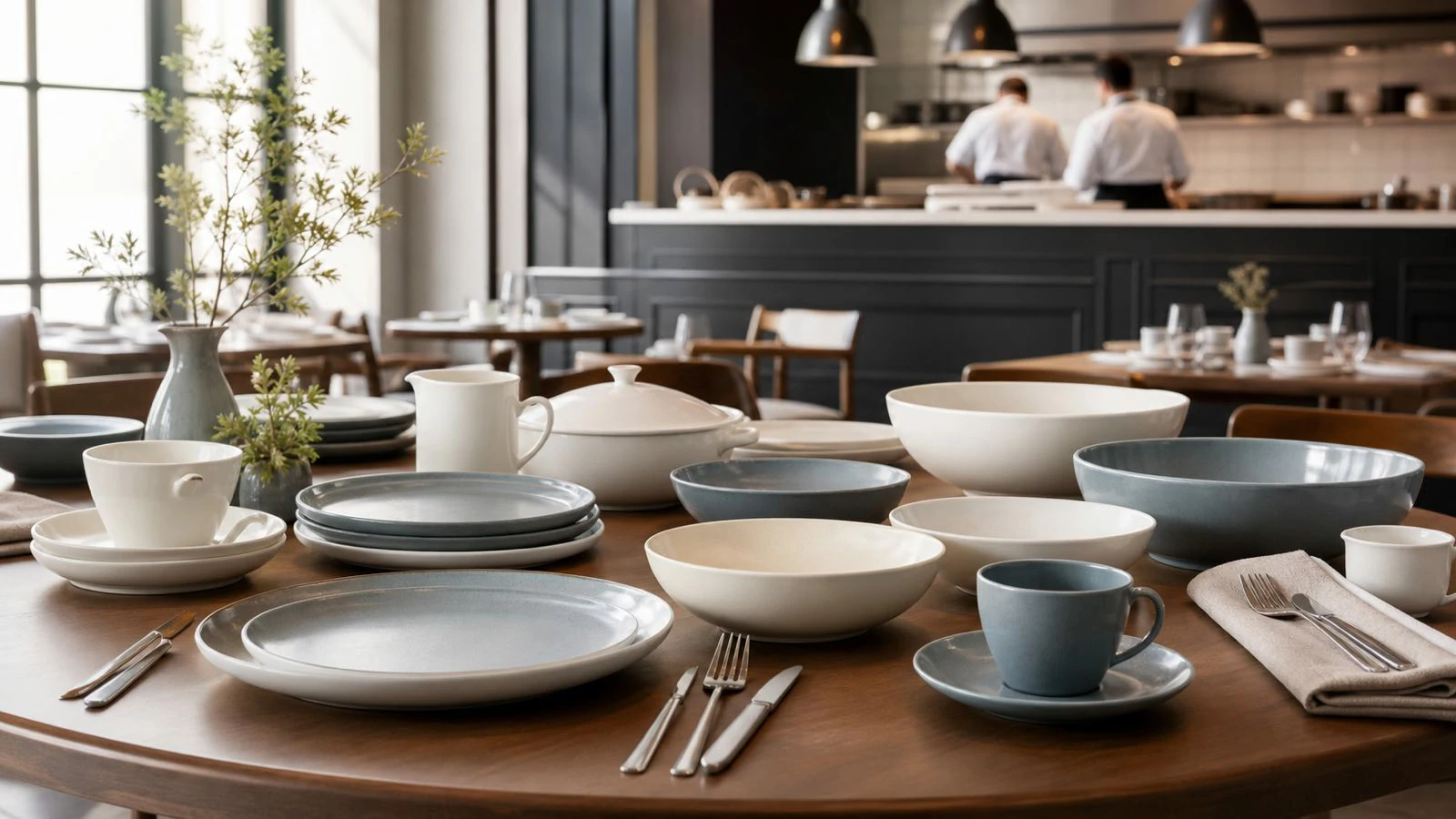
Restaurant plates do more than hold food: they affect presentation, portion control, storage, service speed, and replacement costs. Choosing ceramic tableware for restaurants therefore requires a practical review of the menu, operating style, and daily handling conditions. This guide gives restaurant owners, hospitality buyers, importers, and distributors a clear framework for comparing materials, shapes, sizes, finishes, and ordering options before committing to a range.
Start With the Restaurant Concept and Service Workflow
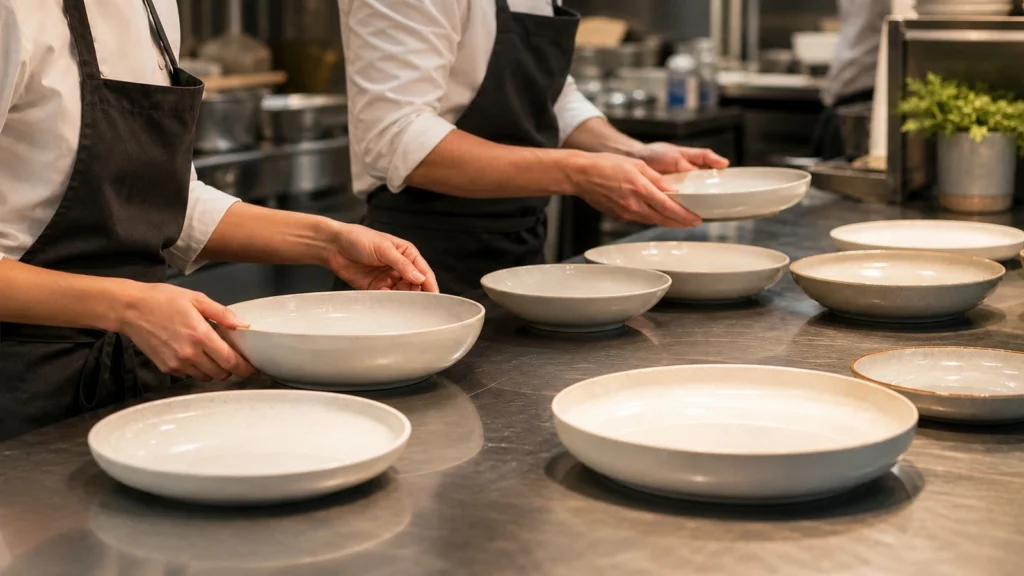
The right collection begins with how the restaurant actually works. A fine-dining venue may value a refined rim, a large presentation area, and coordinated specialty pieces. A high-volume café may place greater weight on easy stacking, familiar sizes, and quick replacement. A buffet operation needs pieces that staff can replenish and carry efficiently, while a sharing-menu restaurant may need more platters and serving bowls than individual dinner plates.
Map the route of each item from storage to plating, dining room, clearing station, dishwasher, and back to storage. Narrow shelves, crowded pass counters, and tightly packed dishwasher racks can rule out an otherwise attractive shape. Measure these spaces instead of relying on catalogue dimensions alone.
Before requesting quotations, record five operating facts:
- The number of seats and average daily covers
- The main menu categories and typical portion sizes
- The service format, such as plated, buffet, sharing, or café
- The available shelf, trolley, and dishwasher-rack dimensions
- The visual direction, including colors, textures, and table setting style
This short brief gives a supplier useful context and helps prevent the common mistake of selecting restaurant dinnerware from appearance alone.
Compare Ceramic Materials for Restaurant Dinnerware
“Ceramic” includes several bodies with different visual and handling characteristics. Material names are helpful starting points, but buyers should also evaluate the finished sample because body formulation, firing, glaze, shape, and thickness work together.
Porcelain
Porcelain usually provides a smooth, refined appearance and is widely used across casual and formal dining. White porcelain gives chefs a neutral background for colorful food, while decorated or colored versions can support a stronger brand identity. Its broad availability makes it practical for coordinated plates, bowls, cups, and serving pieces.
Stoneware
Stoneware is often chosen for its substantial feel and expressive surfaces. Reactive-looking glazes, earthy tones, and hand-finished visual effects suit casual dining, contemporary cafés, and farm-to-table concepts. Variations in glaze appearance may be part of the intended aesthetic, so the acceptable range should be agreed using several samples rather than one piece.
New Bone China and Other Refined Bodies
New bone china can offer a lighter, more delicate visual impression for premium service. Whether it fits a restaurant depends on the design, handling routine, and replacement strategy. Buyers should not assume that a lighter-looking piece is automatically unsuitable; instead, compare real samples through the same handling and wash tests used for other candidates.
| Material option | Typical visual character | Useful restaurant applications | Buyer check |
| Porcelain | Clean, smooth, versatile | All-day dining, hotels, formal and casual service | Rim profile, stacking, glaze consistency |
| Stoneware | Substantial, artisanal, textured | Cafés, bistros, sharing menus | Glaze variation, weight, stacking contact |
| New bone china | Refined, light-looking | Premium dining, tea and dessert service | Handling comfort, replacement availability |
Ask for the supplier’s stated material, care guidance, and available product documentation for the exact item. Requirements can differ by destination market and use case, so communicate the intended market before ordering.
Choose Plate and Bowl Sizes Around the Menu
One standard set rarely serves every restaurant well. Begin with actual dishes and portion targets, then select the smallest useful range that covers them. Too many shapes increase stockkeeping complexity; too few can force the kitchen to use an unsuitable piece during peak service.
A practical core range may include a main plate, smaller plate, shallow bowl, deeper bowl, cup or mug, and one or two serving pieces. Exact dimensions should follow the menu rather than a universal rule. A wide-rim plate reduces the usable food area, so its outside diameter cannot be compared directly with a coupe plate of the same diameter.
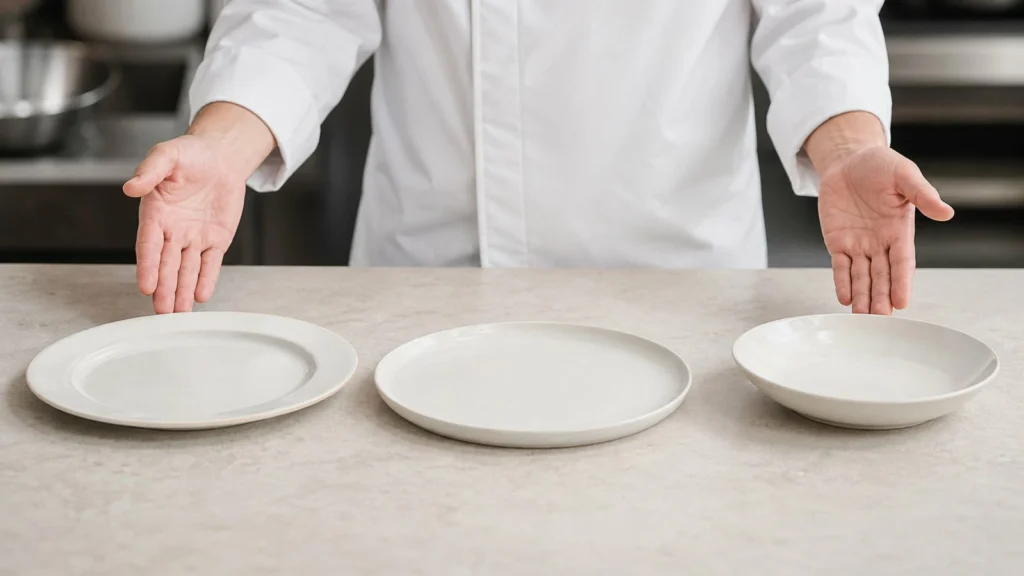
Create a plating test with representative menu items. Check sauce containment, utensil access, garnish space, and how the food looks from the guest’s seated angle. For bowls, record both overall dimensions and usable capacity. For cups, consider the beverage recipe, headspace, saucer fit, and available space under the coffee machine.
You can compare available stock ceramic dinner plates and stock ceramic bowls while building a menu-based shortlist.
Use this specification table for each shortlisted item:
| Field | What to record | Why it matters |
| Outside dimensions | Diameter or length, width, and height | Shelf, pass, and rack fit |
| Usable area or capacity | Flat plating area or practical fill level | Portion and presentation control |
| Piece weight | Sample weight using one method | Staff handling and trolley loads |
| Foot and rim profile | Contact points and exposed edges | Stacking and handling behavior |
| Stack height | Height of a set number of pieces | Storage planning |
| Finish | Gloss, matte, textured, or decorated | Brand fit and cleaning review |
Evaluate Durability, Glaze, and Daily Handling
Durability should be assessed as a system rather than by material label alone. Rim geometry, wall thickness, foot finishing, glaze coverage, stacking contact, temperature changes, and staff handling all influence service life. The most useful evaluation combines inspection with a realistic operational trial.
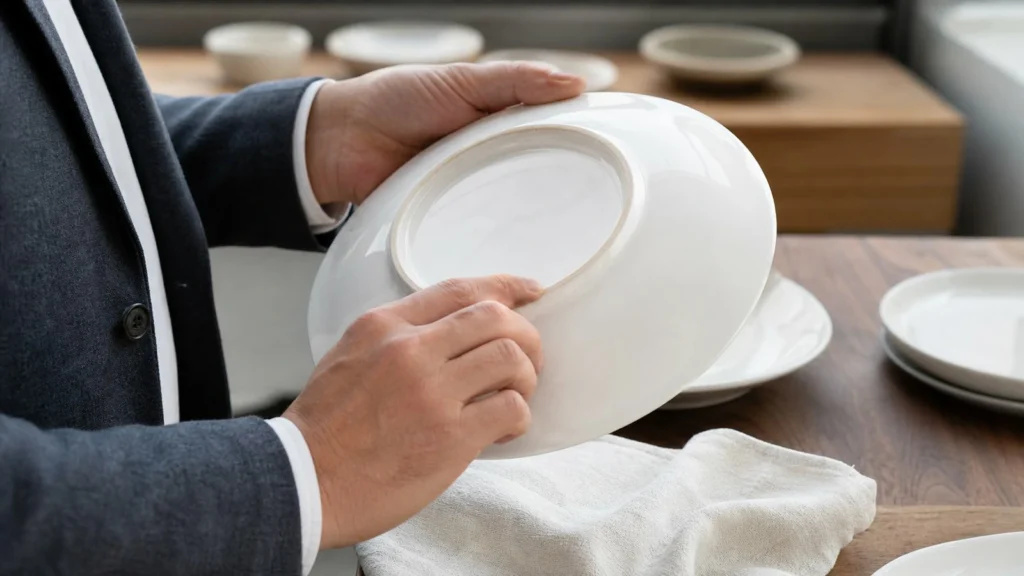
Start with visual and tactile checks under consistent lighting. Compare the shape, color, surface, foot, and decoration across multiple units. Confirm that pieces sit steadily and stack without excessive rocking. Run a clean cloth around the foot to check finishing, and examine areas where stacked pieces touch.
Then trial samples through normal kitchen and dining-room routines. Use the restaurant’s usual dishwasher program and detergent, load the pieces in existing racks, carry them on standard trays, and plate representative hot and cold foods. Record results after repeated cycles rather than drawing conclusions from a single wash.
An effective sample evaluation sheet can score:
- Visual consistency across the sample group
- Stability on a flat table and in a stack
- Comfort for servers to lift, carry, and clear
- Fit in racks, shelves, hot holding areas, and service stations
- Ease of cleaning after representative foods and beverages
- Compatibility with the restaurant’s documented appliance procedures
- Continued availability or the suitability of an agreed substitute
Do not infer appliance suitability from appearance. Request written guidance for dishwasher, microwave, or oven use when those functions are required, and follow the supplier’s instructions for the specific product.
Balance Design, Color, and Food Presentation
Tableware should support the restaurant’s identity without competing with the food. Neutral white is adaptable and makes replacements easier to integrate. Colored, matte, embossed, or reactive-looking surfaces can create a memorable setting, but they should be tested with the actual menu and dining-room light.
Photography is another consideration. Strong reflections, deep bowl shadows, or very busy patterns can affect how dishes appear in menus and social content. Test the shortlist at lunch and dinner, using the cameras normally used by the restaurant team.
For a controlled but distinctive range, choose one consistent base family and add a limited number of accent pieces. For example, the restaurant might use neutral main plates throughout service and introduce a colored shallow bowl for signature dishes. This makes purchasing and replacement simpler than building the entire setting from unrelated designs.
Finishes also change perception. A matte surface may complement a contemporary concept, while a gloss finish can appear brighter and may behave differently during cleaning. Texture can add character but should not interfere with cutlery use or the intended plating area. The sample trial—not a screen image—should settle these choices.
Plan Quantities, Replacements, and Wholesale Orders
Opening quantity is not simply the seat count multiplied by one. Each item has a different service cycle. Main plates may turn several times, while specialty platters might be used only for selected dishes. Washing capacity, peak covers, banquet demand, delivery schedule, and reserve stock all influence the required quantity.
Build a par-level calculation for every item:
Required quantity = peak simultaneous use + pieces in washing or transit + operating reserve
Use the restaurant’s own service data to set each component. A new venue can model a busy service and revise the numbers after trial operations. Established restaurants should review point-of-sale counts and kitchen usage rather than applying one percentage to the whole collection.
Ready stock dinnerware can be useful when a buyer values selection and a shorter procurement path, but availability may change. Confirm the quantity during quotation and document the rules for substitutions. If continuity is critical, ask whether the exact design is expected to remain available and identify an acceptable backup before the first shipment.
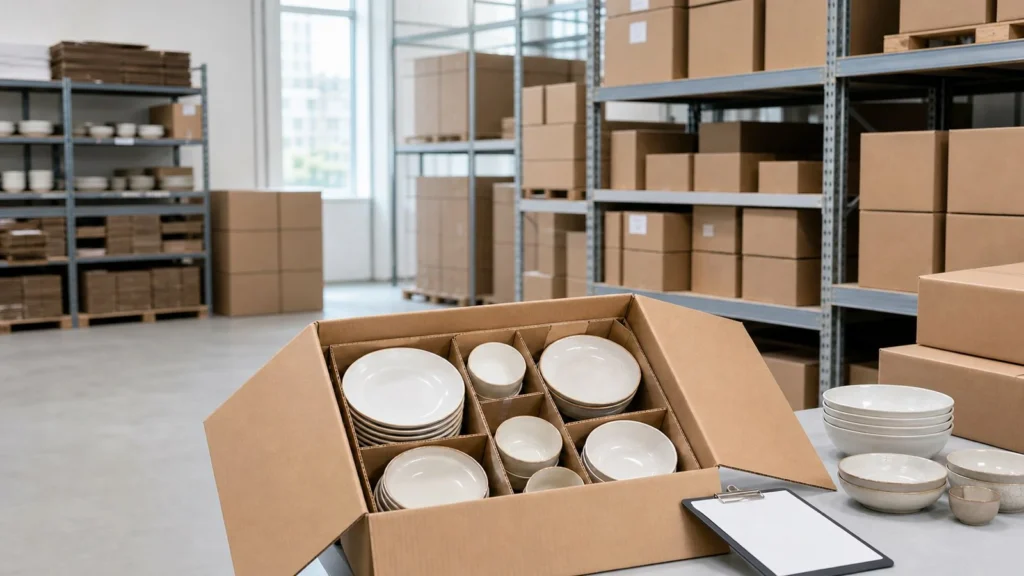
For a clear wholesale enquiry, send:
- Item references, dimensions, colors, and requested quantities
- Destination country and delivery location
- Preferred trade term and required shipping window
- Packing, labeling, barcode, and carton-mark requirements
- Sample and pre-shipment inspection expectations
- Any market-specific documentation requested by your importer or adviser
Ask the supplier to confirm which designs can be combined in an order, carton quantities, packing dimensions, and gross weights. These details allow the buyer or freight partner to estimate logistics more accurately. For a selection matched to your concept, contact CHENGGUO with the completed brief.
Restaurant Ceramic Tableware Buying Checklist
Use a staged approval process so aesthetic, operational, and commercial decisions are not mixed together.
| Stage | Decision | Evidence to keep |
| Concept fit | Does the range suit the menu and brand? | Mood board and plated-food photos |
| Operational fit | Does it work in storage, service, and washing? | Measurements and trial notes |
| Sample approval | Are appearance and handling acceptable? | Signed reference sample and photos |
| Commercial review | Are quantity, packing, terms, and timing clear? | Itemized quotation |
| Order confirmation | Are item codes and specifications complete? | Purchase order and approved specification |
| Shipment review | Does the shipment match agreed checks? | Inspection and packing records |
Keep approved samples, item codes, color references, and written tolerances together. Product photos alone are not enough to define a finish, especially where deliberate glaze variation is part of the design. Make sure purchasing, operations, and culinary teams approve the same reference.
Finally, check the complete landed-cost structure rather than comparing unit prices in isolation. Packing, inland transport, freight, duties, inspection, warehousing, and replacement planning can affect the commercial outcome. Obtain professional advice for destination-specific import and compliance obligations.
Conclusion
Choosing ceramic tableware for restaurants is an operational decision as much as a design choice. Start with the menu and service workflow, compare finished samples, test them in real equipment, and document every approved specification. A focused core range with planned accent pieces can simplify storage and replacement while preserving a distinctive presentation. Explore Chengguo’s ready stock selection or contact the team with your item list, quantities, destination, and preferred style to request a wholesale quotation.
FAQ
There is no single material for every restaurant. Porcelain offers a versatile, refined appearance, stoneware suits substantial and expressive settings, and new bone china can support a lighter premium presentation. Compare finished samples because shape, thickness, glaze, and foot design influence daily performance alongside the body material. Test candidates in your actual storage, service, and washing workflow before approving an order.
Calculate each item separately using peak simultaneous use, pieces likely to be in washing or movement, and an operating reserve. Main plates, side plates, bowls, cups, and specialty serving pieces will have different usage rates. New restaurants can model their busiest planned service; established venues should use sales and kitchen records. Also consider replenishment timing and whether the same design is expected to remain available.
Compare several pieces for dimensions, color, glaze, stability, rim and foot finishing, stack behavior, and handling comfort. Plate representative menu items, test the pieces in current racks and shelves, and run repeated cleaning cycles using documented procedures. Confirm any required appliance guidance in writing. Keep an approved reference sample, item code, photos, and agreed tolerances so the purchase order and later inspections use the same standard.