

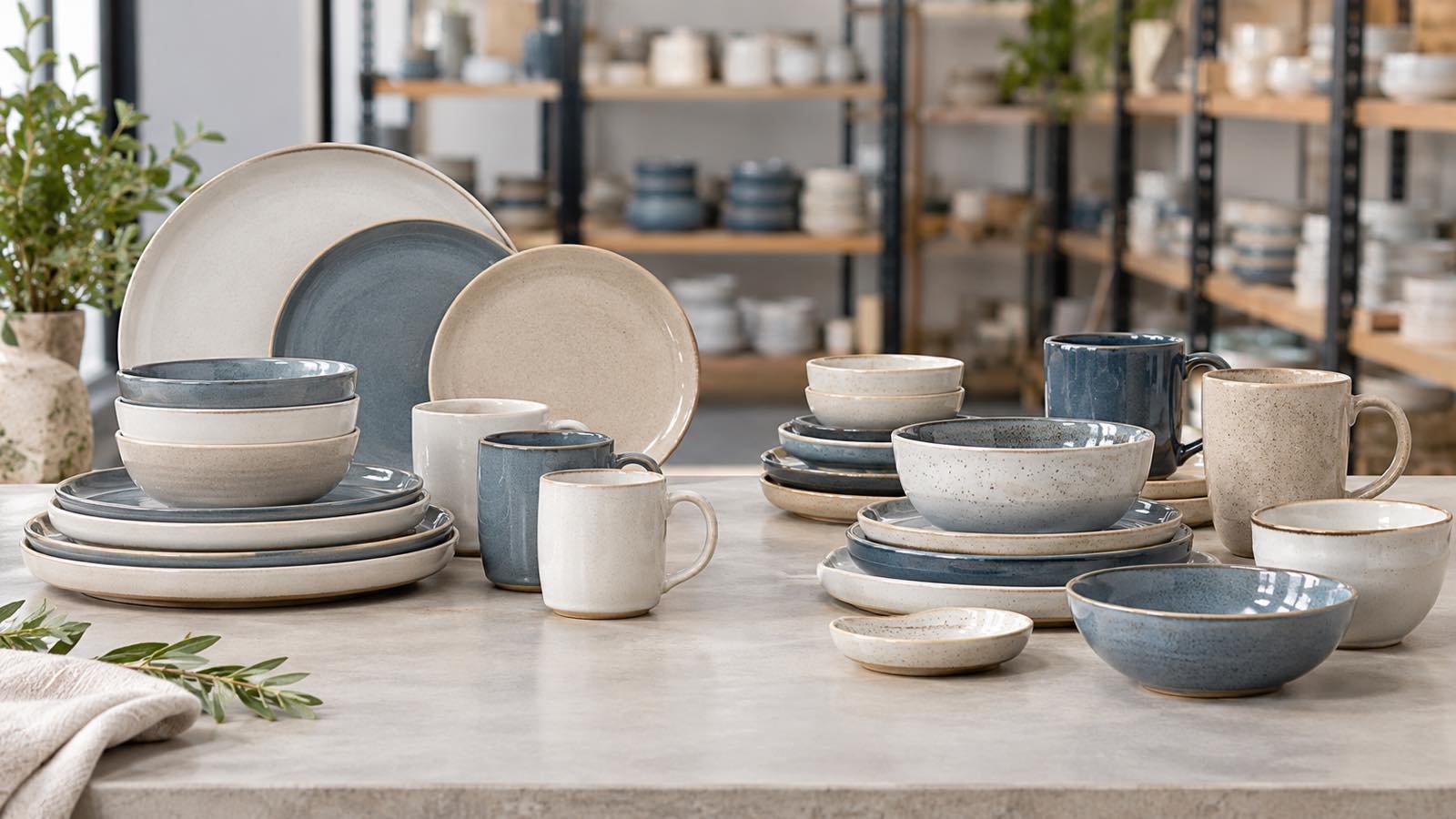
Should a buyer order complete place settings or build an assortment one item at a time? Wholesale ceramic dinnerware sets simplify the retail proposition, while open stock pieces give buyers more control over shapes, quantities, and replacement lines. This guide compares the two formats across merchandising, packing, inventory, and replenishment so importers and distributors can choose a structure that fits their customers rather than relying on the lowest quoted unit price.
Understand the Two Wholesale Buying Formats
A dinnerware set is a defined group of coordinated pieces sold as one commercial unit. It may contain one place setting, several place settings, or a serving combination. The product description must state exactly what the set includes. A “16-piece set,” for example, is meaningful only when the quantity and type of each plate, bowl, and mug are listed.
Open stock means that plates, bowls, cups, and related pieces are selected and ordered as individual lines. The items may coordinate, but each line has its own code, confirmed quantity, packing arrangement, and price basis. This format is useful when a retailer sells replacements, when a restaurant needs more plates than cups, or when a distributor wants to create a market-specific assortment.
The distinction is commercial rather than purely visual. Identical-looking products can be offered in different packing formats, and coordinated pieces do not automatically form a confirmed set. Ask whether the quoted unit is a piece, a dozen, a carton, or a complete set. Then record the contents and outer-carton quantity before comparing offers.
Buyers should also separate “matching design” from “guaranteed future continuity.” Stock ceramic tableware reflects current availability. A coordinated group can be attractive for a present order without implying that every component will remain available indefinitely. The buying format should therefore support both the current sale and a realistic replacement plan.
Compare Merchandising and Customer Value
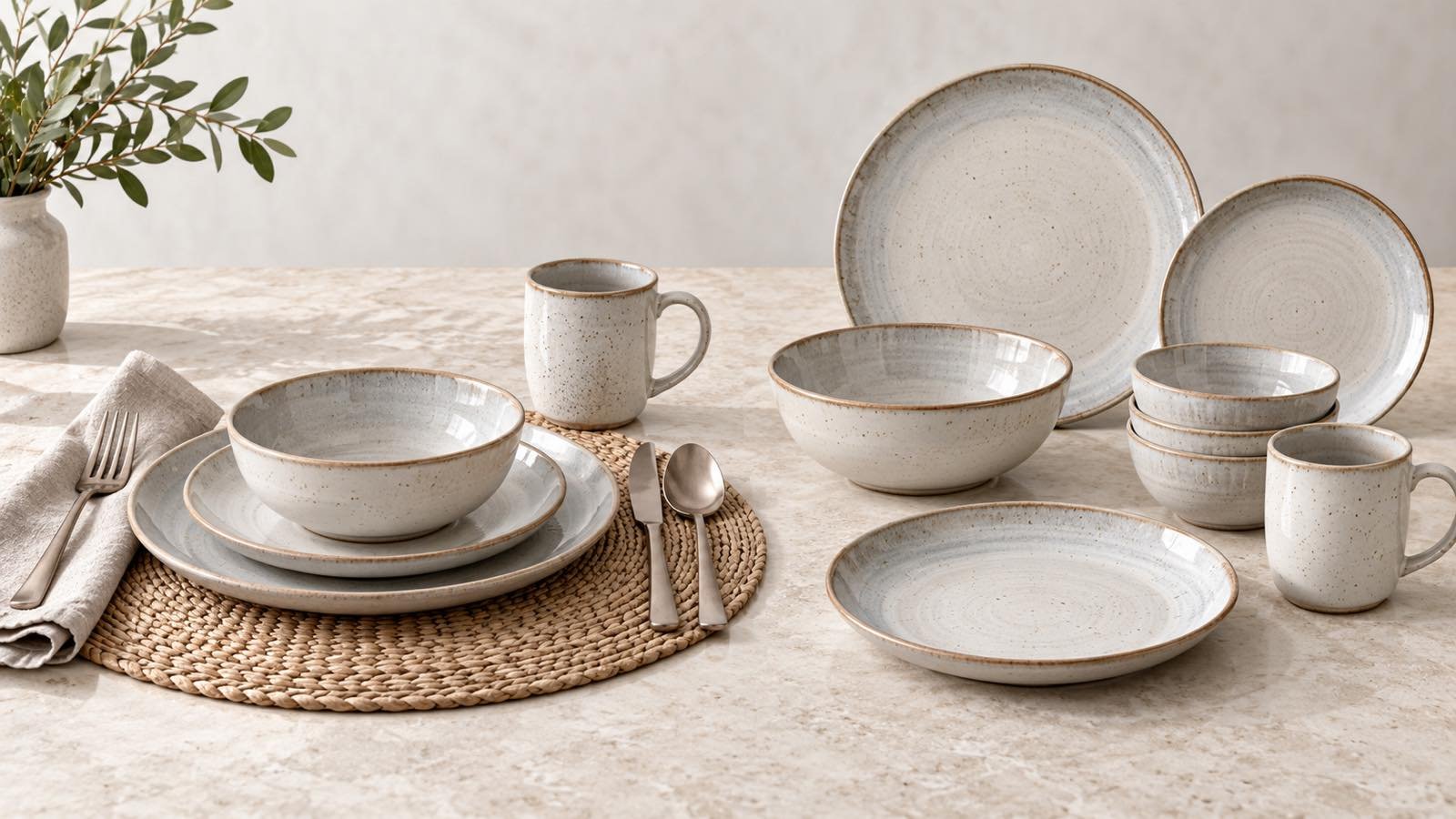
Wholesale ceramic dinnerware sets give the end customer an immediate answer: one package supplies a defined number of settings. This is effective for gift retail, household starter ranges, promotional offers, and stores where shelf staff need a simple proposition. A cohesive presentation can also make price comparison easier because shoppers see a complete solution rather than several separate tickets.
Open stock pieces support a different buying behavior. Customers can add two bowls without buying more cups, replace a broken dinner plate, or build a place setting around their own habits. For hospitality and food-service accounts, this flexibility is especially useful because consumption and breakage differ by item. Retailers can also give more shelf space to proven shapes instead of carrying equal quantities of every component.
Evaluate the Saleable Unit
Define how the product will be sold before requesting the quotation. If the customer buys one boxed set, calculate margin and freight per set. If the customer buys individual pieces, allocate inbound cost and shelf space by item. A low piece price inside a set does not help if one included shape has weak demand, while a higher individual price may be commercially sound when the item turns faster.
| Decision factor | Preconfigured dinnerware set | Open stock pieces |
| Customer proposition | Complete coordinated solution | Select only needed items |
| Merchandising | One boxed offer or display | Flexible shelf and online assortment |
| Inventory tracking | Track complete sets | Track every item code |
| Replacement sales | Depends on separate component supply | Naturally supports piece replacement |
| Range adjustment | Set composition is fixed | Quantities can reflect demand by item |
| Packing review | Verify all set contents | Verify each line and carton multiple |
For a set-focused range, inspect the wholesale ceramic plate selection and check whether the plate dimensions suit the target market. Dinner plates often define the visual character and shelf footprint of the range. For open stock, examine each piece on its own and as part of the proposed family.
Pricing should be normalized before a decision. Compare the cost per complete saleable unit, not a mixture of per-piece and per-set figures. Include retail packaging, labels, inner packs, outer cartons, and any local assembly work. These elements can change the practical difference between the two formats even when the ceramic pieces are similar.
Plan Quantities Packing and Complete Set Yield
The critical calculation for wholesale ceramic dinnerware sets is complete set yield. Suppose a retailer plans a four-piece setting containing one dinner plate, one side plate, one bowl, and one mug. If 600 dinner plates, 600 side plates, 540 bowls, and 624 mugs are confirmed, the range supports only 540 complete settings. The remaining pieces need a separate sales purpose.
That example is arithmetic, not a statement of Chengguo packing or availability. Real quantities must be confirmed for the exact products. Build a component table with requested pieces, confirmed pieces, pieces per carton, and the resulting number of complete sets. Update it whenever the supplier revises a quantity.
Open stock orders require similar discipline. Each item may have a different carton multiple. Ordering 20 cartons of plates and 20 cartons of bowls does not mean the piece quantities match. Use the actual pieces per carton and decide whether the imbalance reflects forecast demand or is simply an unnoticed packing difference.
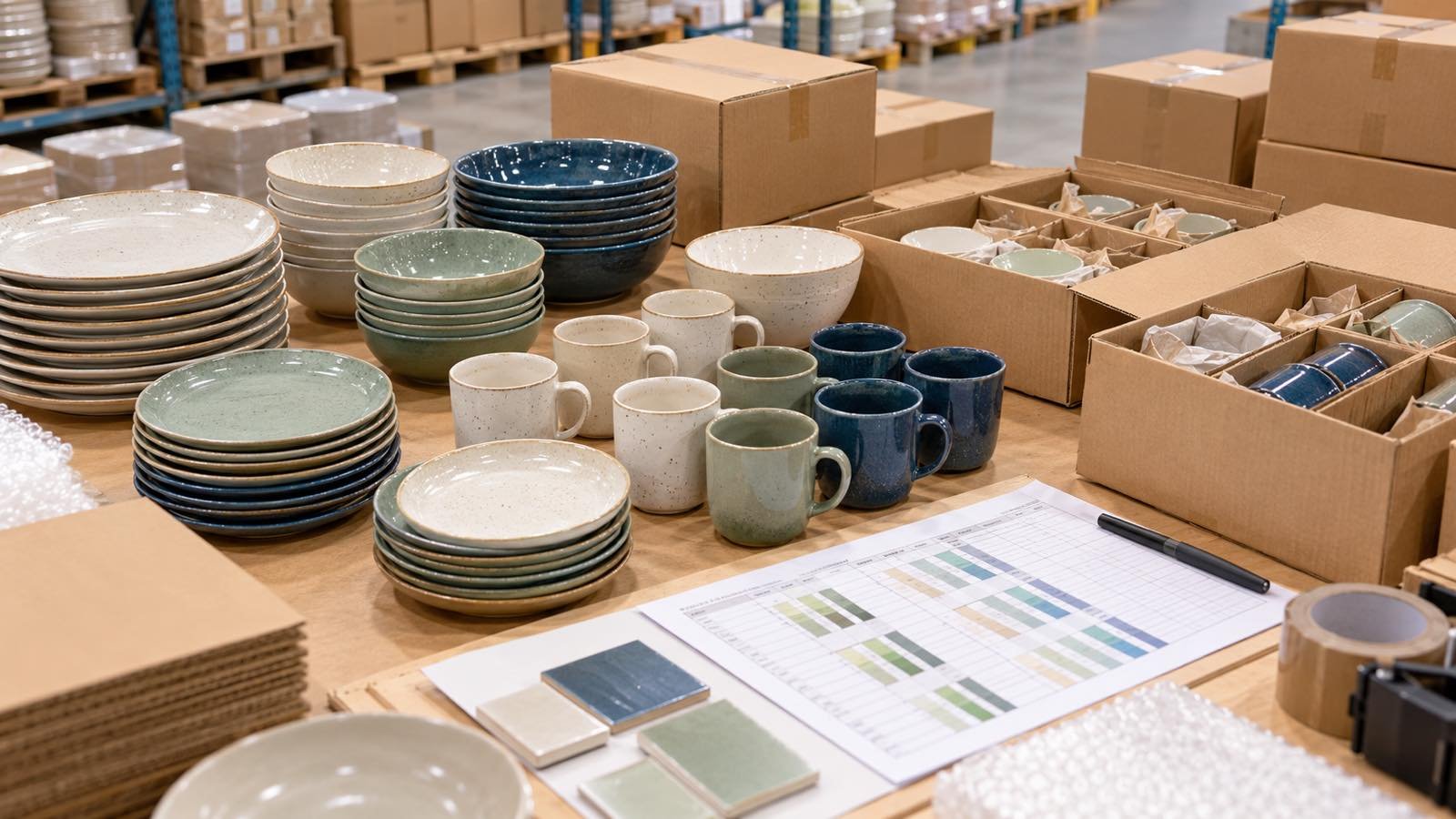
Use this checklist before approving either format:
- Confirm the item code, color, finish, and dimensions for every component.
- State whether the quotation unit is a piece, set, inner box, or outer carton.
- Record the exact composition of each dinnerware set.
- Calculate full-carton quantities and the number of complete sets produced.
- Confirm whether retail boxes are included and review their labeling requirements.
- Check total carton count, gross weight, and volume for freight planning.
- Decide how unmatched pieces will be sold, stored, or used as replacements.
Protective packing also affects presentation. A shipping carton designed for bulk pieces may not serve as retail packaging. Conversely, a colorful retail box may add volume or require additional protection for export handling. Request packing photos or a clear packing specification and make sure the cost comparison includes the format you actually intend to sell.
When open stock components will be assembled locally, plan labor and quality checks. The team needs an assembly list, a clean work area, retail packaging, labels, and a method to prevent component mix-ups. Local assembly can support market-specific combinations, but it is not free and should be included in the landed margin calculation.
Choose a Format for Replenishment and Range Risk
Replenishment is not only a question of whether an item can be ordered again. It is also about what happens when the exact design is no longer available. With a fixed set, the absence of one component can prevent further complete sets from being assembled. With open stock, the buyer can sometimes continue selling the remaining pieces individually or introduce a compatible alternative.
For that reason, label set offers carefully. Avoid making a permanent-range promise unless continuity has been specifically established. Give sales teams current information and set a review date for online listings. When quantities are limited, accurate availability prevents customer commitments from exceeding the confirmed balance.
Open stock is not automatically lower risk. A broad assortment can create many slow-moving item codes, fragmented carton quantities, and more warehouse work. Concentrate on pieces with a clear role. The stock ceramic bowls included in an assortment should correspond to identifiable uses such as cereal, soup, rice, dessert, or shared serving.
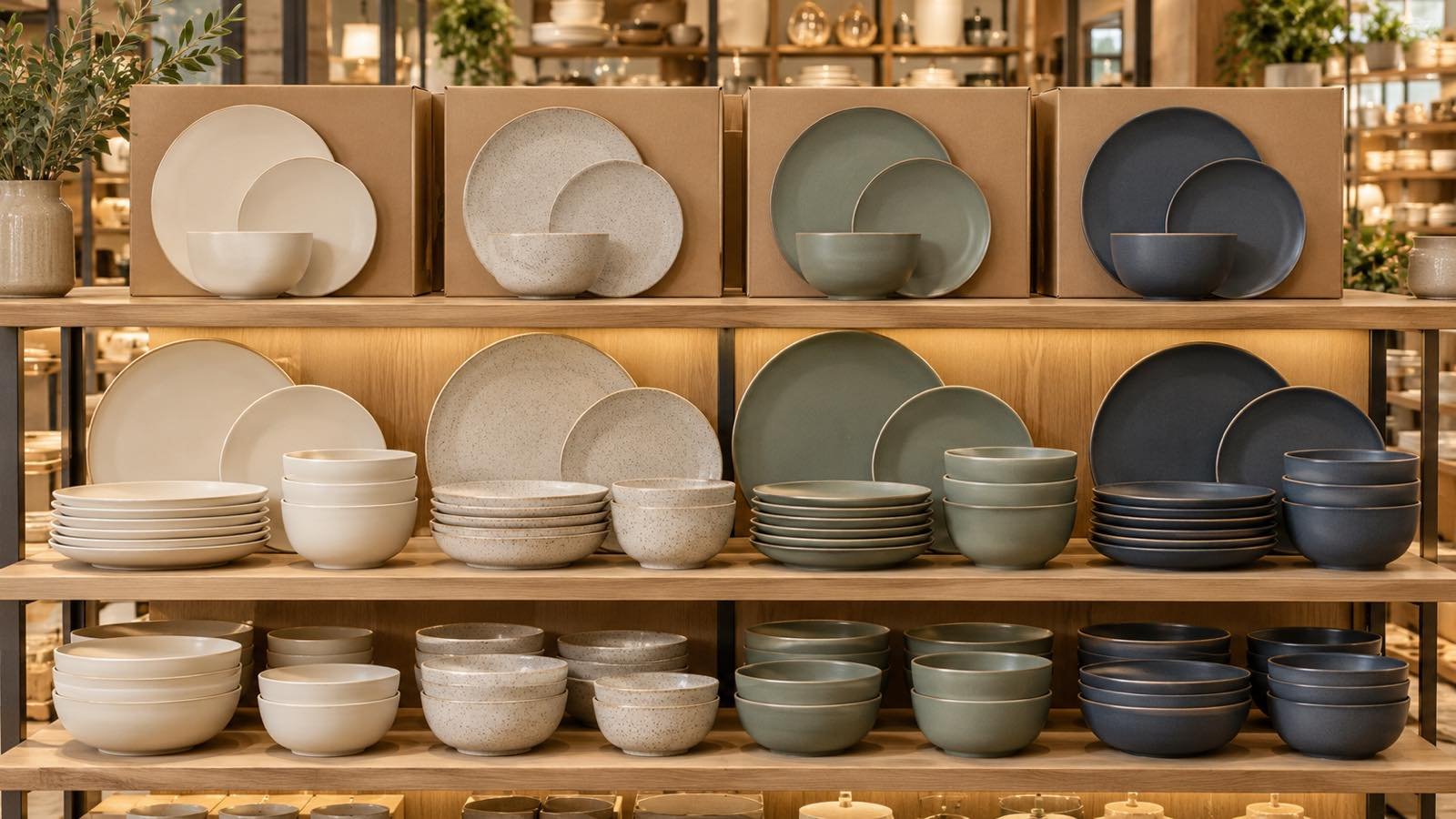
A hybrid plan can use both formats. A retailer might feature a complete set as the main offer and carry additional bowls or plates for replacement and add-on sales. A distributor might use open stock for hospitality customers while offering boxed sets to consumer-facing stores. Keep the stock records separate even when the designs coordinate.
Score the options against the realities of the channel:
- Sales clarity: Can the customer understand the offer immediately?
- Demand balance: Will all included components sell at a similar rate?
- Operational load: Can the warehouse track, assemble, and replenish the format?
- Packing suitability: Does the confirmed packing match transport and resale needs?
- Fallback value: Can remaining pieces still be sold if one component runs out?
The strongest choice may differ between customer groups. Document the reason for each format instead of applying one rule to every account. This gives the purchasing team a clear basis for revising quantities when current stock, packing, or customer demand changes.
Conclusion
Wholesale ceramic dinnerware sets are effective when buyers need a simple coordinated offer, while open stock pieces provide control over quantities, replacements, and assortment design. Compare complete saleable units, calculate component yield, and include packing and local handling in the commercial decision. A hybrid range can serve different channels when inventory is tracked carefully. Contact Chengguo with your target market, preferred pieces, and order structure to discuss currently available ceramic tableware options.
FAQ
Not necessarily. Compare the price of the saleable unit, packing, freight allocation, and expected sell-through rather than the headline carton price. A set can offer convenient merchandising, while open stock can reduce unwanted components. Request itemized quantities and packing details so both formats can be compared on the same commercial basis.
Yes, when compatible pieces are available in suitable quantities and the retailer has a clear assembly and packaging plan. Confirm dimensions, colors, quantities, carton packing, and replacement strategy before presenting them as a set. The number of complete sets is limited by the component with the smallest confirmed usable quantity.
The better format depends on the sales channel and the purpose of the order. Preconfigured sets simplify the customer proposition, while open stock supports focused testing and flexible assortment building. A first order can include a controlled mix, provided each line meets confirmed order and carton requirements and the buyer can track the components accurately.