

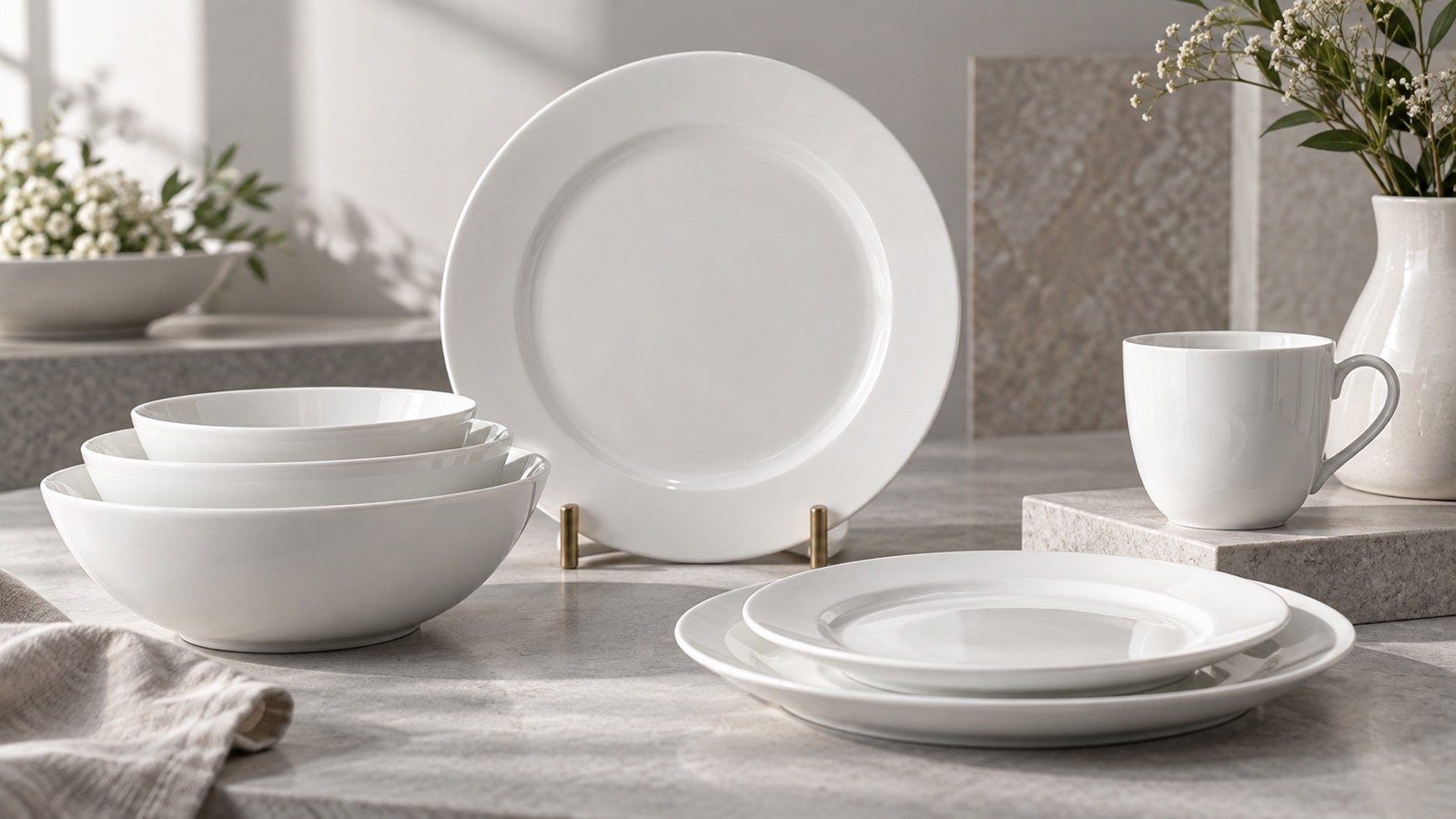
Two white plates can look alike online and form a visibly uneven setting when placed together. Wholesale white ceramic dinnerware selection therefore starts with a range specification, not simply a color name. This guide helps distributors define the customer use, compare samples as a group, select practical shapes, and plan quantities that support a coherent offer without assuming every future purchase will match automatically.
Define What White Dinnerware Must Do for Your Customers
Write a short brief for the channel you serve. Restaurant supply may prioritize repeatable presentation, handling, and practical replacement pieces. Retail customers may place more emphasis on a coordinated setting and shelf appeal. Those priorities can overlap, but the same product mix will not suit every account. Decide which buying requirements are essential before comparing the available range.
Define white in operational terms. A warm appearance, a cooler appearance, or a softly translucent look can produce different results beside other tableware. Avoid promising an exact shade based on a description alone. Select a physical reference and agree how proposed additions will be compared with it. For distributors, that reference is more useful than several inconsistent photographs labeled with the same color name.
Wholesale white ceramic dinnerware also needs a clear policy on coordination. You might sell one closely matched family, several separate families, or individual open stock pieces. Each is a workable model if your catalog makes it clear. Problems arise when unrelated items are presented as interchangeable parts of one setting without being evaluated together.
Review white porcelain dinner plates as candidates for the core plate role. Confirm the current item’s measurements, packing, and supporting information during the inquiry. Choose the rest of the offer around the customer brief rather than assuming a product name settles every requirement.
Compare Shade Shape and Finish Across the Whole Setting
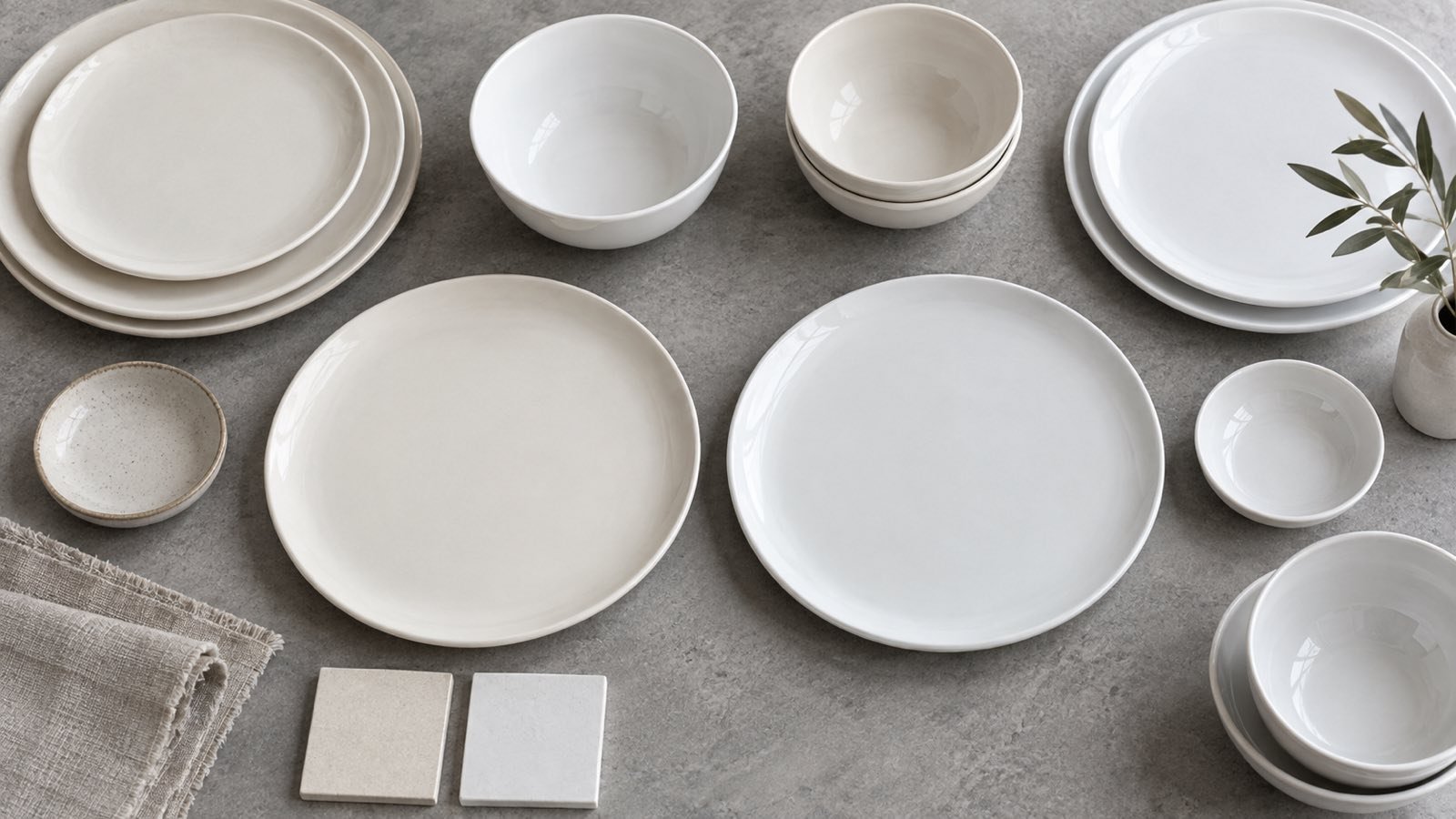
Arrange the proposed plate, side plate, bowl, and beverage pieces on the same neutral surface. View them together under the lighting relevant to your customers where practical. Keep a record of the setup so later samples can be assessed consistently. A single well-organized comparison is more useful than judging separate products from images taken with different backgrounds and camera settings.
Use Samples to Define Acceptable Coordination
Look first at the relationship between pieces. Does the bowl look substantially warmer than the plate? Does one rim appear visually heavy beside the others? Does a glossy cup sit comfortably with the chosen plate finish? These are range decisions rather than universal judgments of quality. Describe the intended result so the supplier understands what a successful alternative would look like.
Keep the approved sample identifiers and reference images. If the buying team changes or a later inquiry is handled by another colleague, the selection should remain understandable. Record whether the reference applies to a single item or an entire coordinated family. A sample approved for a separate open stock line should not automatically become the reference for every white product in the catalog.
Match Shape to the Intended Serving Role
Outer diameter does not fully describe a plate’s usable presentation area. Compare the central area, rim width, depth, and profile. A broad rim can frame a smaller serving, while a different profile may provide more usable area within a similar external diameter. Evaluate the actual sample with the type of presentation your customers need instead of ranking options by diameter alone.
For bowls, clarify the stated capacity and consider the practical serving level. A bowl’s footprint and height also affect how it sits beside a plate and how customers handle it. Ask for measurements consistently across the shortlisted options. If one quote gives a brimful capacity and another provides a serving estimate, label the difference before attempting a comparison.
| Selection factor | What to compare | Decision it supports |
| White appearance | Samples side by side | Coordinated family or separate line |
| Plate profile | Rim, center, and depth | Intended presentation and serving role |
| Bowl proportions | Width, height, and capacity basis | Customer use and range balance |
| Surface finish | Appearance under the same light | Consistent visual positioning |
| Stacking behavior | Actual samples in a small stack | Storage and handling suitability |
Explore ceramic bowls for distributor ranges only after establishing the plate and serving requirements. Keeping the product role explicit helps narrow the choice. A wider selection is valuable when it gives customers useful options, but less useful when several near-identical items require separate records without serving a distinct purpose.
Evaluate Handling Packing and Product Information
Ask the supplier for the product information relevant to the intended sales channel. Material descriptions, dimensions, weights, and documented use conditions should belong to the exact item being discussed. Do not extend a statement about one product to every piece in a white dinnerware range. Similar appearance is not enough to establish identical performance or care instructions.
Handle samples as your customers would. Assess whether a plate is comfortable to carry, whether a bowl is easy to grip, and whether the selected pieces sit well on a stable surface. Compare a small stack using the actual products. These observations support selection, but they do not replace any formal evidence required for a specific performance claim or destination market.
For an illustrative storage check, suppose one five-plate stack measures 8 centimeters high and another measures 10 centimeters. The observation helps compare those sample stacks in that setup. It does not establish a universal safe stacking height or predict every carton configuration. Keep the measured result with the sample record and discuss larger storage arrangements with the responsible warehouse team.

Packing deserves the same attention as appearance. Confirm pieces per outer carton, inner packing, outer dimensions, and gross weight. Ask whether coordinated pieces arrive in separate cartons or an agreed combined pack. A distributor selling individual pieces may prefer a different packing arrangement from a retailer selling boxed settings. The arrangement must be confirmed rather than inferred from the product photography.
Build a product record that your sales and warehouse teams can both use:
- Supplier and internal item codes linked to the approved sample.
- Material, dimensions, finish, and relevant capacity information.
- Confirmed carton quantity and the unit used for pricing.
- Approved customer-facing descriptions and care information.
- Photos showing the individual piece and any coordinated group.
- A clear statement of whether the product belongs to a matched family.
When comparing quotations, use the same specification and commercial basis. A lower piece price may accompany different packing, dimensions, or order quantities. Review the complete offer before choosing. Wholesale white ceramic dinnerware is easier to sell consistently when the buying decision and the product record describe the same item in the same way.
Build Quantities Around Complete Offers and Replacement Sales
Define how the assortment will be sold before setting the order ratio. A restaurant distributor may sell dinner plates individually and bowls in different volumes. A retailer may advertise a setting containing one of each selected piece. In the latter case, the smallest confirmed component quantity limits the number of complete settings. Counting all pieces together can hide that constraint.
Consider an illustrative order of 600 dinner plates, 480 side plates, and 360 bowls. It can provide 360 three-piece combinations containing one of each. The remaining 240 dinner plates and 120 side plates require a separate sales role. The example does not prescribe a buying ratio; it shows why a distributor should connect quantities to the planned customer offer.
Keep replenishment assumptions visible. With ready stock, future availability of an identical design should be checked rather than promised automatically. Ask about current quantities and discuss how subsequent inquiries will be handled. If exact continuity matters to a contract customer, assess that requirement before accepting the order and keep customer promises aligned with the supply information you actually have.
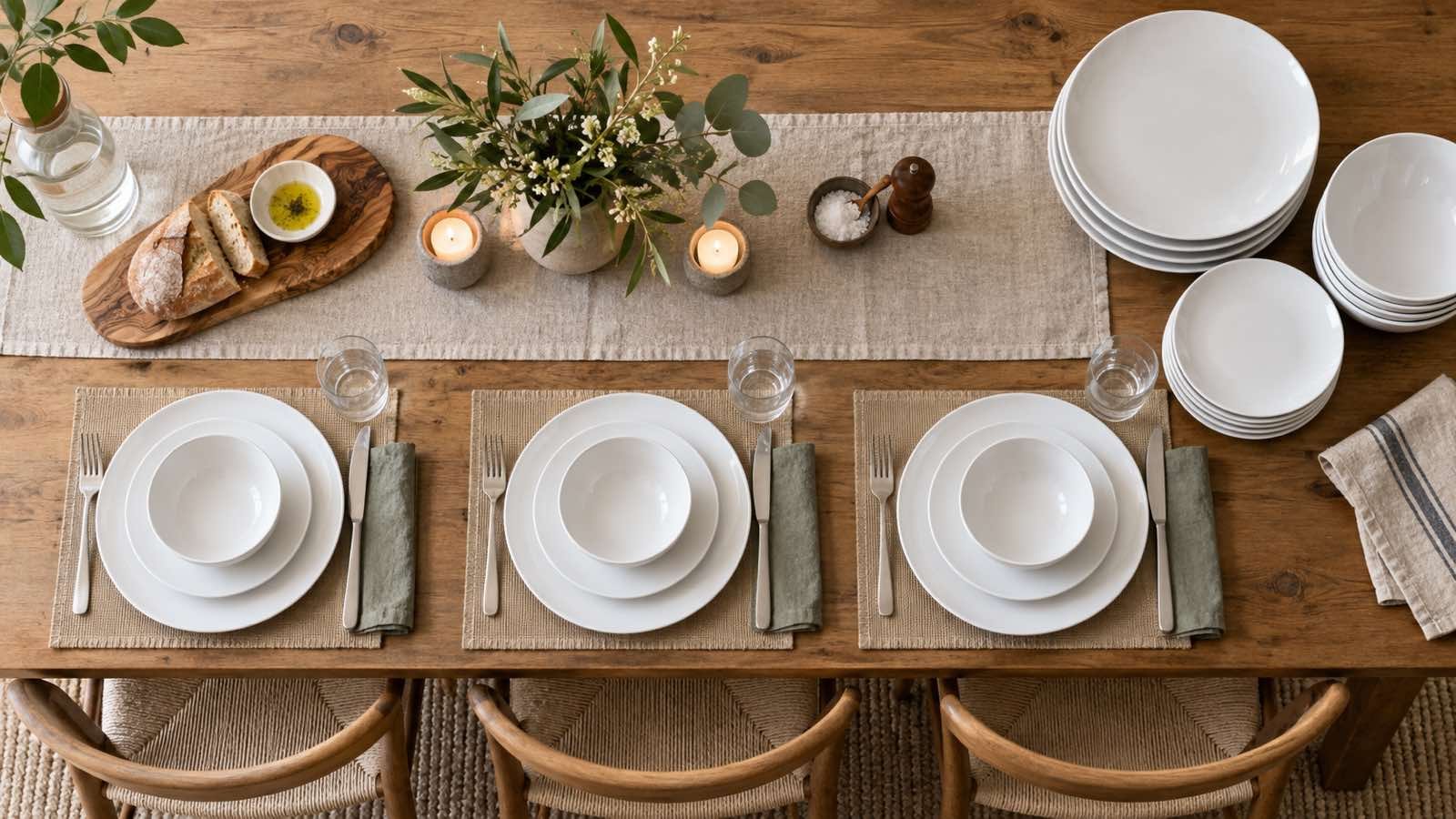
Agree what counts as an acceptable alternative. For an open stock line, customers may accept a different profile if it serves the same role and is described accurately. For a closely coordinated setting, shade and shape differences may require a separate range name. Do not merge a replacement item into the existing code merely because both products are white.
Give each family a recognizable internal reference and preserve version history when its composition changes. This helps sales staff explain the offer and warehouse staff pick the correct goods. It also makes customer feedback more useful: a comment about one bowl should be traceable to the product purchased, not a broad category containing several unrelated shapes.
Review the range after a defined selling period using your own sales records. Compare individual piece demand with setting demand and note which products customers request together. If bowls sell faster than plates, adjust the next inquiry rather than repeating the original ratio. A coherent wholesale white ceramic dinnerware range should remain commercially useful as well as visually consistent.
Conclusion
Wholesale white ceramic dinnerware selection works when a clear customer brief guides shade, shape, handling, and quantity decisions. Approve the selected pieces together and keep the supporting product records tied to exact item references. Separate coordinated settings from independent open stock lines, and confirm availability before making continuity promises. Contact Chengguo with your intended range and quantity plan to discuss suitable current stock options.
FAQ
They may coordinate, but the color name alone cannot establish a match. Compare physical samples together and review the relationship between shade, finish, rim, and profile. Decide whether you are offering a closely matched family or a deliberately varied selection. Keep the approved reference so later additions can be assessed consistently and described clearly to your customers.
Choose according to the way your customers purchase and replace products. Separate pieces can support restaurant replenishment and flexible buying quantities. A defined set can make a retail offer easier to explain, but its component quantities and packing need coordination. Calculate both the number of complete sets and any remaining pieces before approving the order, then confirm how each will be sold.
Keep exact item codes, approved samples, measurements, and previous order records. Ask the supplier to confirm current availability when preparing another purchase, and assess proposed alternatives against the original customer requirement. If an alternative changes the appearance or specification, identify it clearly as a separate item or revised range. Avoid promising indefinite availability of the same design without supporting confirmation.