

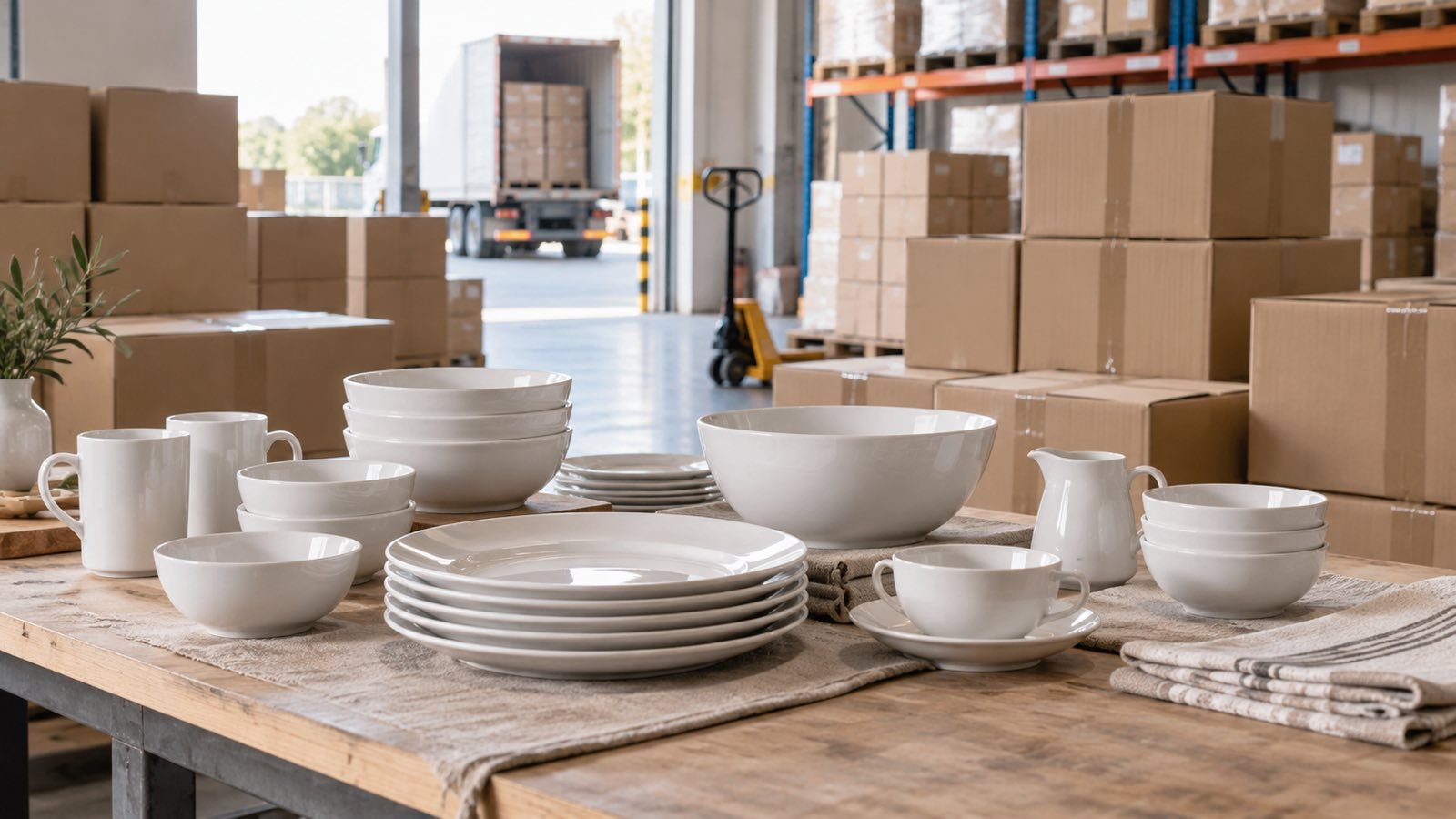
A container can be full while the assortment inside it is difficult to sell. Ready stock ceramic tableware gives importers the opportunity to combine available designs, but a useful mixed order needs more than a long selection list. This guide explains how to balance product roles, reconcile carton quantities, assess loading information, and approve a shipment that your warehouse and sales team can handle confidently.
Build a Mixed Tableware Order Around Customer Demand
Start with the customers who will receive the goods. A distributor supplying restaurants may need depth in a small group of plates and bowls. A retailer serving households may need several coordinated settings. Mixing products should help meet those needs, rather than simply increase the number of designs in the shipment. Give every selected item a defined commercial role.
Separate the assortment into core products, supporting products, and trial products. Core lines have a clear route to customers; supporting lines complete an offer; trial lines test a specific question about demand. These are planning categories, not fixed buying percentages. Set their quantities using your own sales records, customer commitments, storage space, and budget. A new business can begin with customer interviews and a smaller selection.
For ready stock ceramic tableware, check availability at the individual item level. A coordinated photograph does not establish that each shape is available in the same quantity. If bowls are limited, do not assume a large plate quantity can become an equally large dinnerware set. Record the quantity of complete combinations separately from the total number of pieces.
Browse ceramic plates for wholesale assortments with a written brief covering shape, size, finish, and intended customer. This gives the supplier a usable selection framework and makes proposed alternatives easier to assess.
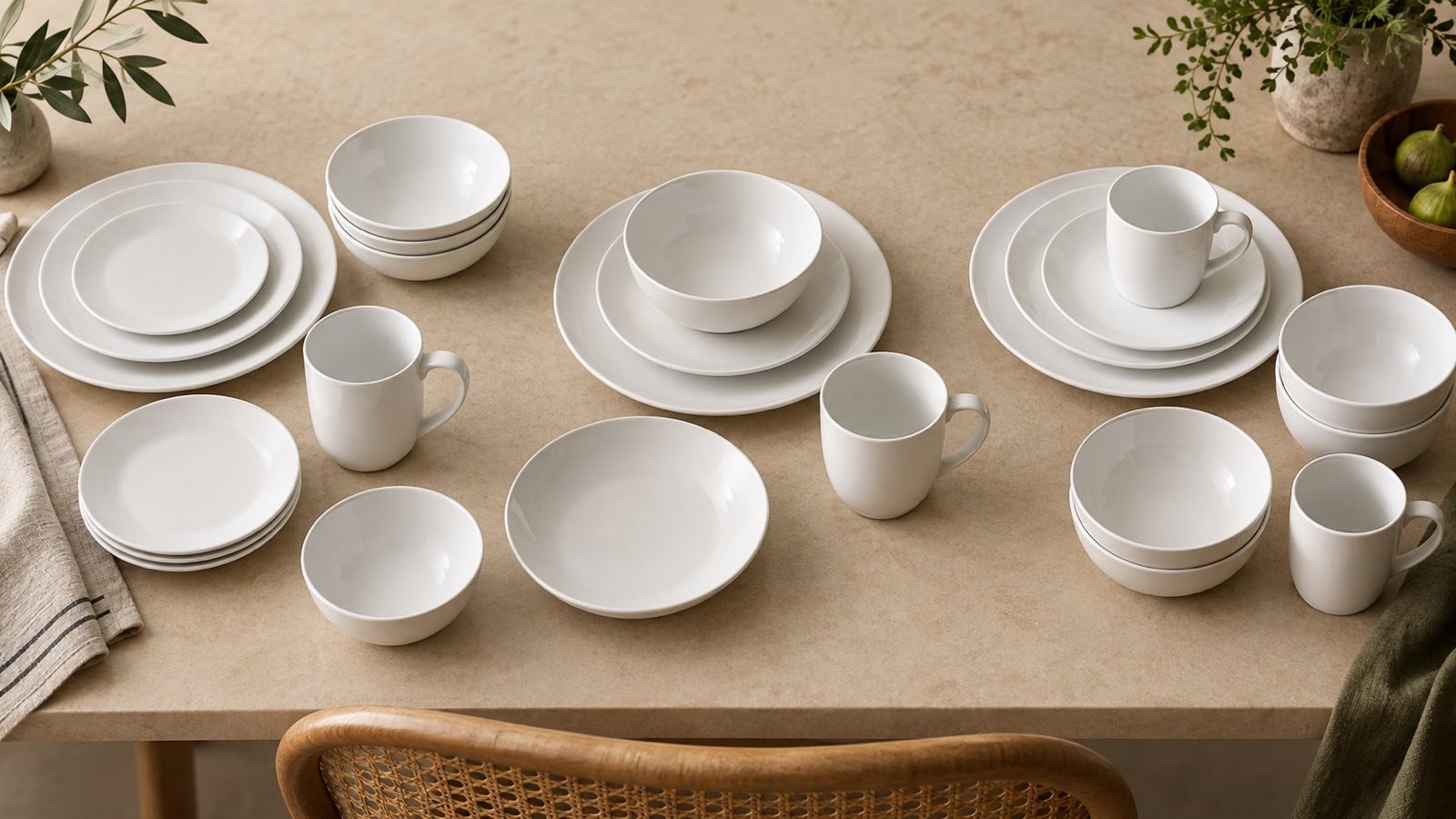
Reconcile Pieces Cartons and Commercial Value
A mixed order should have one master worksheet with a separate row for every item and packing configuration. Include the supplier code, description, approved reference, pieces per carton, ordered cartons, total pieces, quoted unit, and price. Keep the original quotation alongside the worksheet. The spreadsheet should explain the order without depending on a conversation remembered by one buyer.
Convert Every Line to the Same Basis
The following is an arithmetic illustration, not a Chengguo quotation or packing specification. If a plate is packed 24 pieces per carton and you order 30 cartons, the line contains 720 plates. If a bowl is packed 36 pieces per carton and you order 20 cartons, the line also contains 720 pieces. Equal carton counts would not have produced equal piece quantities.
| Illustrative item | Pieces per carton | Ordered cartons | Total pieces |
| Dinner plate | 24 | 30 | 720 |
| Bowl | 36 | 20 | 720 |
| Cup | 48 | 10 | 480 |
The example contains 60 cartons and 1,920 pieces. It can support at most 480 combinations containing one of each item, assuming every item is suitable for that combination. The remaining plates and bowls need their own sales plan. That distinction matters when a sales team describes an order as complete settings rather than separate pieces.
If a price is quoted per set, write down the exact set composition before calculating totals. If it is quoted per carton, divide by the confirmed carton quantity to compare piece costs. Do not compare a bowl price per piece with a plate price per dozen. Keep currency, trade terms, and included packing visible next to the price so a low number does not hide a different quotation basis.
Protect the Purpose of Each Line
Review ceramic bowls for matching ranges against the plates already chosen. Check whether their proportions and appearance work together, then confirm quantities independently. Products may belong in the same shipment without being presented as a matched set. That is a useful option when customers buy open stock pieces and value choice more than exact coordination.
Set a limit for trial purchases before discussing spare loading space. Additional ready stock ceramic tableware still consumes cash, receiving time, shelf space, and selling effort. A modest purchase is justified when it tests a clear customer need. Buying an unfamiliar design only to occupy space makes the final order harder to evaluate and can distract from the products customers already want.
Check Loading Inputs Before Choosing the Final Mix
Obtain outer carton dimensions and gross weight for each packing configuration. Net product weight and outer package weight answer different questions. A loading discussion also needs the number of cartons, any pallets or additional protection, and the intended transport arrangement. Do not estimate the whole shipment from one representative carton when different products use different packaging.
For a simple planning example, a rectangular carton measuring 0.40 by 0.30 by 0.25 meters has an external volume of 0.03 cubic meters. Fifty such cartons total 1.50 cubic meters before considering their arrangement. This multiplication is a volume estimate, not proof that a particular vehicle or container can accept the order. Real loading also depends on dimensions, weight, handling, and placement.
Ask the supplier and transport provider to review the proposed arrangement using confirmed package information. Container space and permitted loading weight are separate constraints. Available equipment, route conditions, and the agreed method of securing cartons also affect the decision. Obtain the applicable limits from the responsible transport provider instead of adopting a general internet figure as your shipment specification.

Use the following checks before approving the loading plan:
- Match every carton count to the latest purchase order revision.
- Confirm whether quoted dimensions include all outer packaging.
- Identify products that require a different handling or placement approach.
- Agree whether the shipment uses pallets and account for their space and weight.
- Confirm how carton marks connect each package to its item record.
- Record who approves changes if the proposed mix cannot be loaded as planned.
Avoid making the loading team responsible for commercial substitutions. If an item must be reduced or changed, purchasing should assess the effect on customer orders and approve the revised mix. A small change in one line can reduce the number of complete settings available for sale. Update the order worksheet and packing list together so everyone works from the same quantities.
Compare feasible transport options using the same selected goods. The relevant comparison is the total cost and handling arrangement for the order you can sell. A larger shipment is not automatically more economical if it requires unnecessary products. Keep delivery timing, warehouse access, and unloading capability in the discussion, particularly when your receiving site has limited space or equipment.
Approve Availability Packing and Receiving Together
Treat availability confirmation as a dated record. Ask the supplier to identify the quantities confirmed for your order, the conditions of any reservation, and the next milestone required from you. Ready stock ceramic tableware is an existing product selection, but that does not mean a preliminary list reserves goods indefinitely. Keep the confirmation connected to the exact product codes and packing details.
Approve physical references before finalizing a visually coordinated range. Compare the actual plate, bowl, and cup together where possible. Photographs help with selection, but they are a weaker basis for judging subtle color and proportion differences. Keep the agreed reference photos, measurements, and any sample identifiers in the same folder as the order worksheet.
Create a short change procedure with named contacts. It should state what happens if the requested quantity changes, a packing assumption is revised, or a selected design becomes unavailable before confirmation. Require a written proposal containing the affected line, the alternative, and the effect on price, quantities, and timing. Your acceptance should refer to that proposal instead of an ambiguous message such as “looks fine.”

Plan receiving before dispatch. Send your warehouse the item codes, expected carton counts, identifying photos, and storage instructions you have agreed. For mixed designs, a carton that looks similar externally may contain a different product. A clear package identification system reduces the chance of assigning goods to the wrong customer or shelf location when several lines arrive together.
After receiving the order, compare the actual assortment with the approved worksheet and record any differences through the agreed supplier process. Then review sales by product role. Did the core items move as expected? Did supporting pieces help complete customer purchases? Did trial lines generate repeat interest? Use those answers to improve the next mixed order instead of repeating its quantities automatically.
Keep commercial and operational records linked. A sales report expressed in pieces becomes less useful if purchasing records only cartons and no conversion factor. Maintain the confirmed pieces per carton for each shipment so your team can trace stock movements accurately. When packing changes on a later purchase, create a new conversion record rather than silently applying the old number.
Conclusion
A useful ready stock ceramic tableware mixed container order begins with a saleable assortment and ends with clear receiving records. Confirm quantities by item, convert packing units consistently, and have the proposed load reviewed using actual package information. Protect the purpose of each purchase when availability or loading details change. Contact Chengguo with your product mix, target quantities, and destination to discuss a current stock selection and quotation.
FAQ
Discuss the proposed designs and quantities with the supplier before assuming they can be combined. The practical answer depends on available stock, item minimums, packing arrangements, and the shipment plan. Keep each design on a separate order line even when several share a color or product type. This makes selection, quotation, loading, and warehouse receiving easier to reconcile.
There is no single useful number for every importer. Start with the products your customers need, then consider the work required to sample, describe, store, and sell each additional design. A compact assortment with sufficient depth may suit restaurant supply, while a retail range may need more variety. Add a design when its commercial role and manageable quantity are clear.
Existing goods can remove the need to wait for a new production run, but dispatch still depends on confirmed availability and the order process. Selection approval, packing, payment arrangements, transport booking, and documentation may remain outstanding. Ask for a dated readiness estimate tied to your specific assortment. Separate that estimate from transport time and the date your warehouse expects to receive the shipment.