

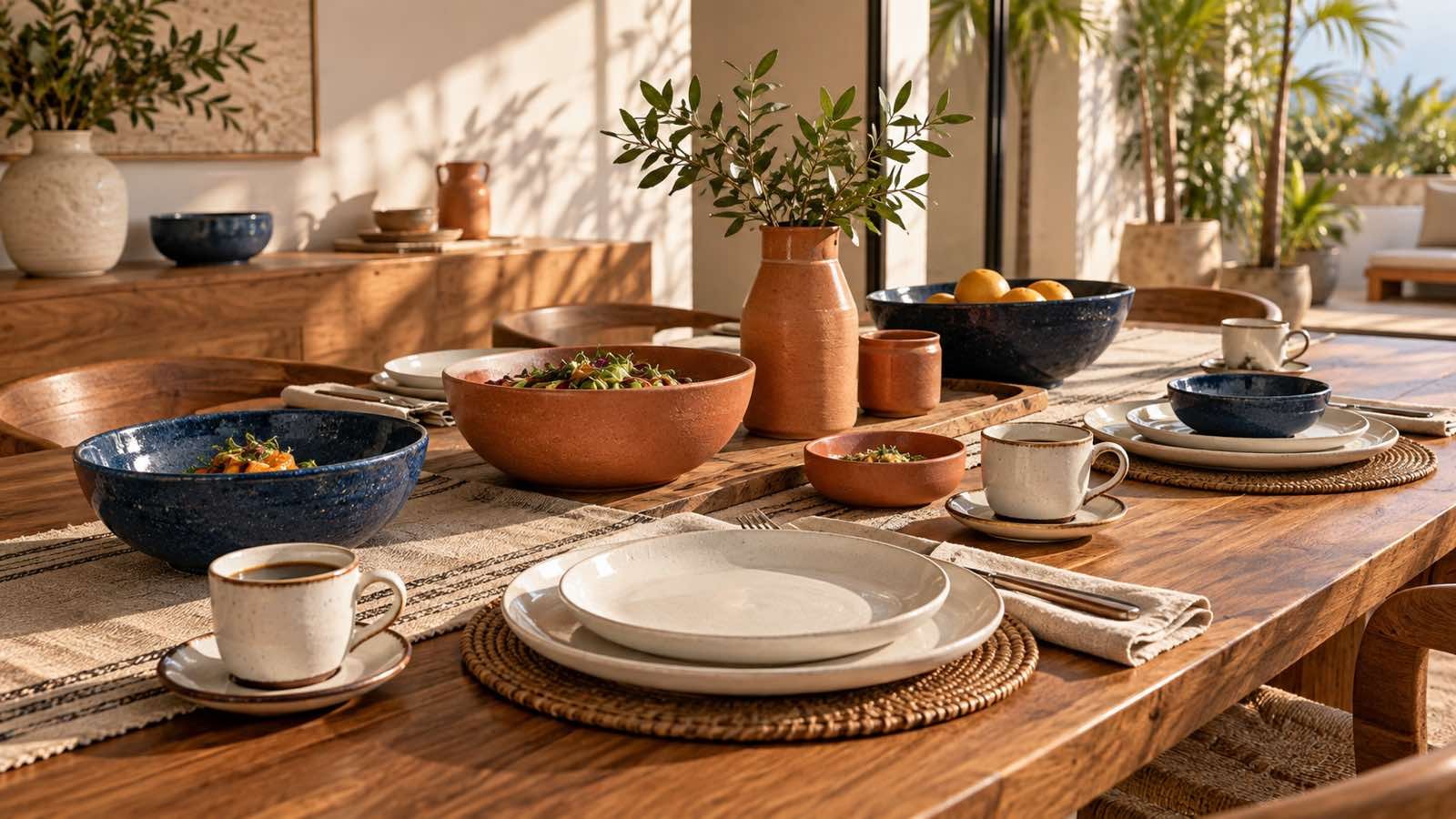
An attractive collection can receive very different responses from a supermarket buyer and a restaurant distributor in the same city. Ceramic tableware market trends in Latin America therefore need to be evaluated by country, channel, and purchasing occasion. This guide helps importers separate broad economic signals from practical product opportunities, then turn local evidence into a controlled ready stock buying plan.
Read Regional Trade Signals at the Right Scale
Latin America is a useful starting point for research, but it is too broad to function as a single customer profile. Start by naming the destination country, selling territory, customer type, and price position. A distributor serving independent restaurants faces different requirements from a retailer assembling coordinated home collections. Treat those distinctions as inputs to the assortment, not details to add after ordering.
The ECLAC 2025 international trade executive summary reports that Latin American and Caribbean imports of goods and services increased 7% in value in the first half of 2025 compared with a year earlier. This is a dated, economy-wide indicator. It does not measure ceramic tableware sales or establish that every country and customer channel expanded.
| Published regional indicator | Period | Reported change | What it cannot prove |
| Goods and services import value | First half of 2025 versus first half of 2024 | 7% increase | Tableware unit demand or country-level purchasing preferences |
| Goods and services export value | First half of 2025 versus first half of 2024 | 4% increase | A distributor’s likely sell-through or product margin |
Use this context to frame questions for local buyers. Ask whether purchasing budgets, order frequency, and delivery expectations have changed in their own businesses. Ceramic tableware market trends become commercially useful when a broad signal is supported by product-level evidence. Keep the publication period visible so historical observations are never mistaken for a current forecast.
Test Product Directions Within Specific Sales Channels
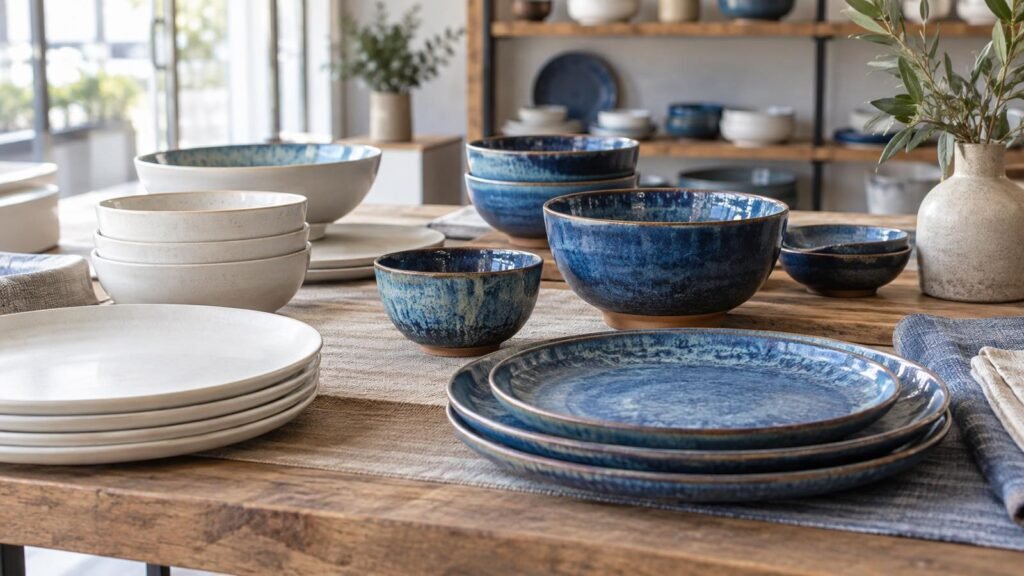
Build research around a small number of product directions that your customers can actually evaluate. Neutral everyday plates, coordinated bowl ranges, beverage service items, and decorative accents are possible assortment hypotheses. They are not claimed regional preferences. Show physical samples or consistent photographs and ask buyers to compare them against the products they already purchase.
For hospitality distribution, investigate replacement requirements, stackability, serving formats, and the balance between individual pieces and complete settings. Ask whether customers reorder the same shape or accept an approved alternative. A visually appealing plate has limited value if it cannot fit the customer’s service process. Record those functional constraints before testing colors or decorative details.
For homewares retail, examine shelf space, set composition, packaging presentation, and the price of completing a place setting. A buyer may like a bowl but reject the retail pack quantity. Another may prefer open-stock purchasing because customers replace individual pieces. Ceramic tableware market trends should therefore be described in terms of buying behavior as well as appearance.
Build a Repeatable Buyer Interview
Use the same questions for each customer so the answers can be compared. Record the customer channel and interview date, then ask what sold, what was reordered, and what remained unsold. Distinguish an opinion about an attractive sample from a willingness to purchase a defined quantity at a defined price. Keep customer statements anonymous in internal research unless you have permission to quote them.
- Which three tableware functions generate the most repeat orders in your business?
- Which sizes and pack quantities are difficult to find at your target price?
- Do customers buy individual pieces, coordinated sets, or a mixture?
- What arrival date would make a new collection commercially useful?
- What evidence would you need before placing a trial order?
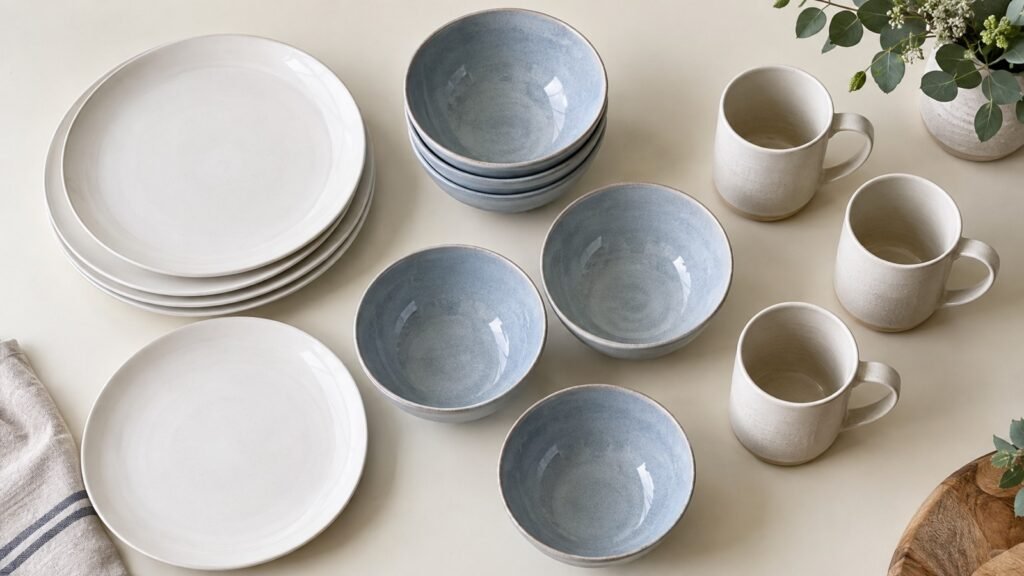
Use white porcelain dinner plates as one neutral comparison point, then assess alternatives against the same customer brief. Do not assume the linked product is available in the quantity required. Request a current specification and stock confirmation before adding it to a purchase plan.
A simple evidence register prevents enthusiasm from becoming an unsupported trend claim. For each product direction, record sample feedback, trial quantity, actual orders, reorder dates, and reasons for rejection. If interest disappears when the price is presented, the issue may be commercial positioning rather than design. Change one assumption at a time so the next test has a clear purpose.
Translate Market Research into a Trial Assortment
Limit the first purchase to a range that can answer a specific question. For example, test whether existing restaurant customers will add a coordinated bowl to their plate orders. This is a narrower and more useful objective than launching a large mixed collection to find out what sells. Define the test period and the decision that will follow it.
Use a hypothetical allocation to make the decision concrete. Imagine a trial of 1,200 pieces: 600 neutral plates, 360 bowls, and 240 beverage pieces. These quantities are an illustration, not a recommended minimum order or a prediction of Latin American preferences. Change the allocation to match customer commitments, carton quantities, and the amount of capital you can assign to learning.
| Trial group | Hypothetical pieces | Share of trial | Question being tested |
| Neutral plates | 600 | 50% | Will current customers reorder the core item? |
| Coordinated bowls | 360 | 30% | Does the bowl increase the value of existing orders? |
| Beverage pieces | 240 | 20% | Is there enough demand for a separate service category? |
Define success before shipment. You might track the proportion sold within the review window, the number of customers who reorder, and gross profit after local distribution costs. Choose thresholds from your own business requirements. Selling most of a trial to one customer provides different evidence from repeat purchases by several independent accounts.
When considering white ceramic bowl sets, verify the dimensions and individual item quantities needed for the test. A set photograph should not be treated as a confirmed packing specification. Separate each saleable unit in the buying sheet and show how the pieces will be offered locally.
Ceramic tableware market trends can change between sample review and replenishment. Keep the trial’s commercial context alongside its results: selling price, promotion, available stock, and customer coverage. A promotion may explain an unusually fast first order. A delayed arrival may explain slow movement. Without this context, the next purchase can repeat the wrong lesson.
Protect the Range with Local Cost and Reorder Controls
Evaluate each target country separately for import procedures, applicable product requirements, labeling, and landed cost. Ask the local broker and relevant specialist to verify current requirements for the actual products and intended market. This article does not assign a common regional duty rate or compliance rule. Keep those checks linked to the shipment that will enter that destination.
Price the range in the currency used for customer sales as well as the purchasing currency. Track the exchange rate assumption, quotation validity, domestic delivery cost, and customer payment period. If the commercial model depends on a rate remaining unchanged, record the sensitivity. A collection can meet its sales target while missing its cash or margin objective.
Plan for the Second Order Before the First Launch
Ready stock sourcing can support a trial because buyers can assess existing designs and quantities. However, repeat availability needs separate confirmation. Agree on which characteristics must remain consistent and which alternatives customers will accept. For a core hospitality line, shape and service compatibility may be more important than adding another decorative option.

Create an approval record for substitutions. Include photographs, measurements, material description, glaze appearance, packaging, and customer consent where needed. Do not advertise a replacement as identical solely because it appears similar online. Keeping accurate product records helps the sales team explain available options without making promises the supply team cannot support.
Review ceramic tableware market trends through a regular commercial meeting rather than an annual prediction alone. Compare inquiries, trial conversions, repeat orders, gross profit, and aged inventory. If an attractive direction produces weak repeat business, reduce its allocation while investigating the cause. If a functional item earns consistent reorders, consider deepening its availability before adding more designs.
Chengguo is a stock ceramic tableware supplier based in Chaozhou with more than 20 years of export experience. Use a supplier discussion to test the feasibility of your researched assortment, including quantities and packing. Product availability is one part of the decision; local customer evidence should determine which assortment deserves the investment.
Conclusion
Ceramic tableware market trends in Latin America are most useful when tied to a specific country, customer channel, and measurable buying behavior. Use regional statistics as context, then validate product directions with samples, controlled trials, and repeat orders. Keep landed cost and replenishment assumptions visible throughout the test. Contact Chengguo with your target channel and trial assortment to discuss current stock options.
FAQ
There is no single design preference that should be assumed for the whole region. Start with the country, customer channel, price position, and intended use. Compare a small group of samples with local buyers and record actual orders as well as opinions. Neutral, coordinated, or colorful products can be tested as hypotheses, but their allocation should follow evidence from your own customers.
Regional import growth provides economic context, but it can reflect many products, price changes, and shipment timing effects. It does not establish tableware unit sales or retail sell-through. Use it to guide further questions, then examine relevant product data and your own channel results. Keep the reporting period and product scope visible whenever a statistic appears in an internal buying recommendation.
Define the question the trial must answer and the capital available for it. Use customer commitments, pack quantities, and a realistic selling window to select the mix. Set review measures before ordering, including repeat purchases and margin after local costs. The trial should be large enough to provide useful evidence while remaining manageable if one product direction receives less demand than expected.